
Buying a mini excavator is not simply about choosing the machine with the most features.
The right choice depends on how well the machine’s configuration matches the working environment, project requirements, operator needs, and long-term operating costs.
For contractors, landscapers, farmers, and small construction businesses, understanding which features actually affect productivity can make the purchasing decision more practical and cost-effective.
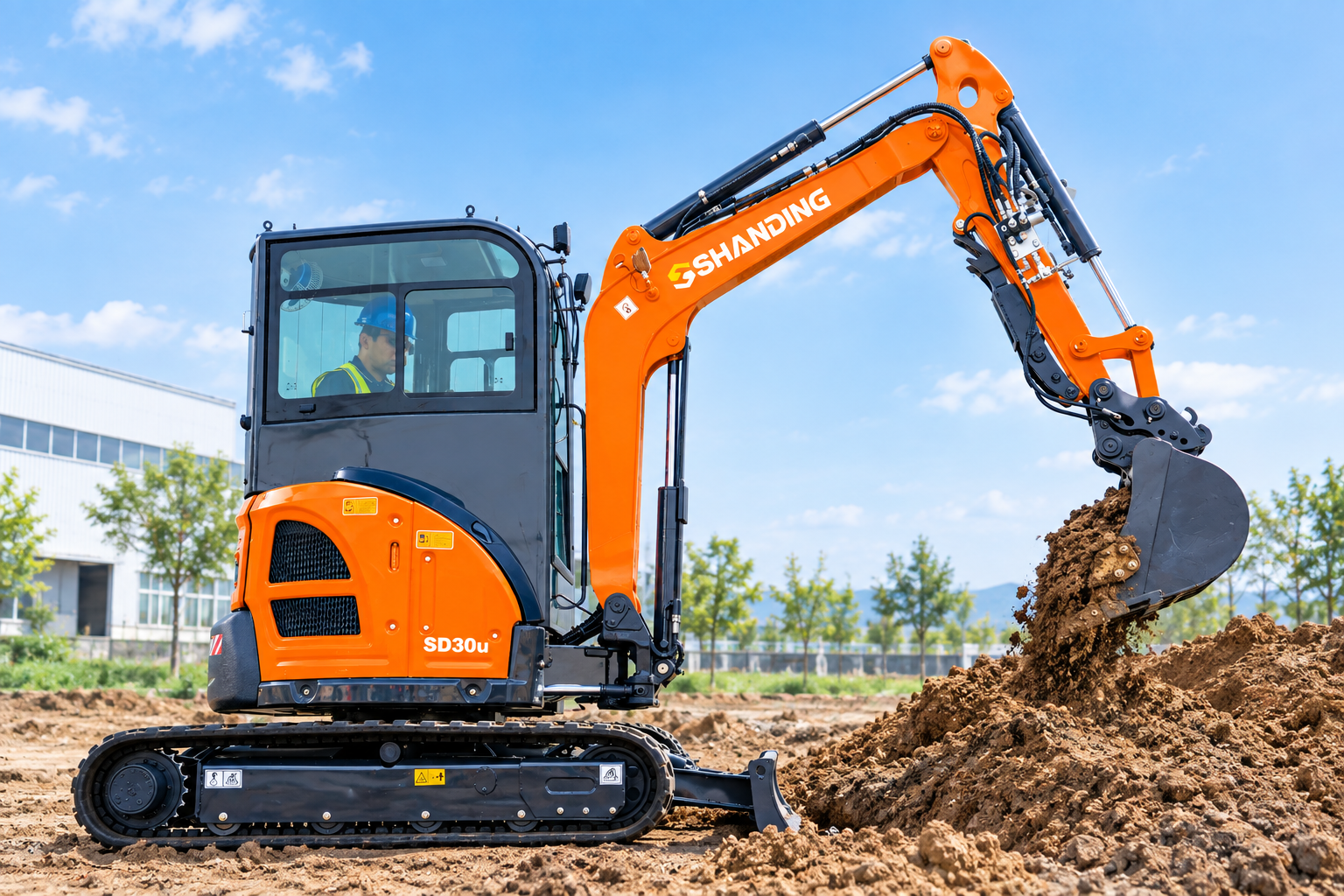
1. Compact Design and Maneuverability
One of the main advantages of a mini excavator is its ability to work in confined spaces.
A compact design can make it easier to operate between buildings, along narrow roads, or inside residential projects.
When comparing machines, buyers should consider overall machine dimensions, tail swing, and turning capability rather than focusing only on the machine’s operating weight.
For urban and residential projects, maneuverability can directly affect how easily a machine moves between different work areas.
2. Hydraulic Control and Responsiveness
Hydraulic performance influences how smoothly the boom, arm, bucket, and other working functions respond to operator input.
A well-matched hydraulic system can provide smoother movements and more precise control.
This is particularly important for trenching, landscaping, utility installation, and other jobs where accurate movement is required.
Instead of looking only at hydraulic pressure, buyers should consider the overall coordination between hydraulic components and the machine’s working functions.
3. Operator Comfort and Visibility
Operator comfort is another practical feature that should not be overlooked.
A well-designed operator station can provide better visibility, convenient control placement, and reduced physical strain during extended operation.
Good visibility is especially valuable when working near buildings, vehicles, underground utilities, or other workers.
A comfortable operator can also maintain more consistent control throughout a working day.
4. Attachment Compatibility
A mini excavator becomes more versatile when it can work with different attachments.
Depending on the project, buyers may need buckets, hydraulic breakers, augers, grapples, or other tools. Before purchasing, check whether the excavator’s hydraulic system, mounting system, and auxiliary hydraulic lines are compatible with the intended attachments.
This allows one machine to perform different types of work instead of being limited to a single application.
5. Maintenance Accessibility
A machine that is easy to maintain can save time over its working life.
Important maintenance points such as the engine, filters, hydraulic components, grease points, and other service areas should be reasonably accessible. Easy access can simplify routine inspections and reduce unnecessary downtime.
For businesses that depend on equipment availability, serviceability is a practical feature rather than simply a design detail.
6. Build Quality and Component Reliability
The overall durability of a mini excavator depends on the quality and compatibility of its major components.
The frame, boom, arm, undercarriage, hydraulic components, engine, and electrical system all contribute to long-term machine performance. Buyers should therefore evaluate the machine as a complete system rather than judging quality from a single specification.
Manufacturer production standards and quality-control processes are also important considerations when comparing different suppliers.
7. Safety Features
Safety should be considered before performance specifications.
Depending on the machine and market, buyers may look for features such as a reliable braking system, emergency controls, operator protection structures, clear visibility, stable working design, and appropriate warning indicators.
The specific safety configuration should also meet the requirements of the intended market and working environment.
8. After-Sales Support
A mini excavator is a long-term equipment investment, so support after purchase can be as important as the machine itself.
Before buying, it is useful to understand the manufacturer’s spare-parts availability, technical support, warranty policy, service network, and communication process.
For overseas buyers, reliable manufacturer support can be particularly important because maintenance and replacement parts may need to be coordinated across international markets.
How Should Buyers Prioritize Features?
There is no single configuration that is ideal for every project.
A better approach is to evaluate features according to actual working conditions:
Work environment → required functions → machine configuration → operator needs → maintenance → after-sales support
For example, a landscaping contractor working in residential areas may prioritize compact dimensions, smooth control, visibility, and attachment compatibility.
A contractor performing repetitive excavation work may place greater emphasis on productivity, durability, and serviceability.
The most valuable feature is therefore not necessarily the most advanced one—it is the feature that directly supports the machine’s intended application.
Conclusion
When buying a mini excavator, buyers should look beyond individual specifications and evaluate the machine as a complete working system.
Compactness, hydraulic control, operator comfort, attachment compatibility, maintenance accessibility, build quality, safety, and after-sales support can all influence the machine’s practical value.
For manufacturers such as Shanding, understanding these real-world requirements is essential to developing compact construction equipment that can serve different working environments and international markets.

