
Choosing the right mini excavator size is one of the most important decisions before starting a construction, landscaping, or agricultural project.
A machine that is too small may reduce productivity, while an oversized excavator can increase operating costs and limit flexibility.
The ideal mini excavator should match your job requirements, working environment, digging depth, lifting capacity, and transportation needs.
Understanding these factors helps contractors select equipment that delivers better efficiency and long-term value.
Why Mini Excavator Size Matters
Mini excavators are available in different weight classes, usually ranging from under 1 ton to more than 8 tons.
The operating weight directly affects machine performance, including digging force, stability, fuel consumption, and mobility.
A suitable excavator size can help you:
- Improve job efficiency and reduce working time
- Lower fuel and maintenance costs
- Access narrow or restricted areas easily
- Achieve better balance between power and flexibility
The goal is not to choose the largest machine, but the one that provides the right performance for your specific application.
Common Mini Excavator Sizes and Applications
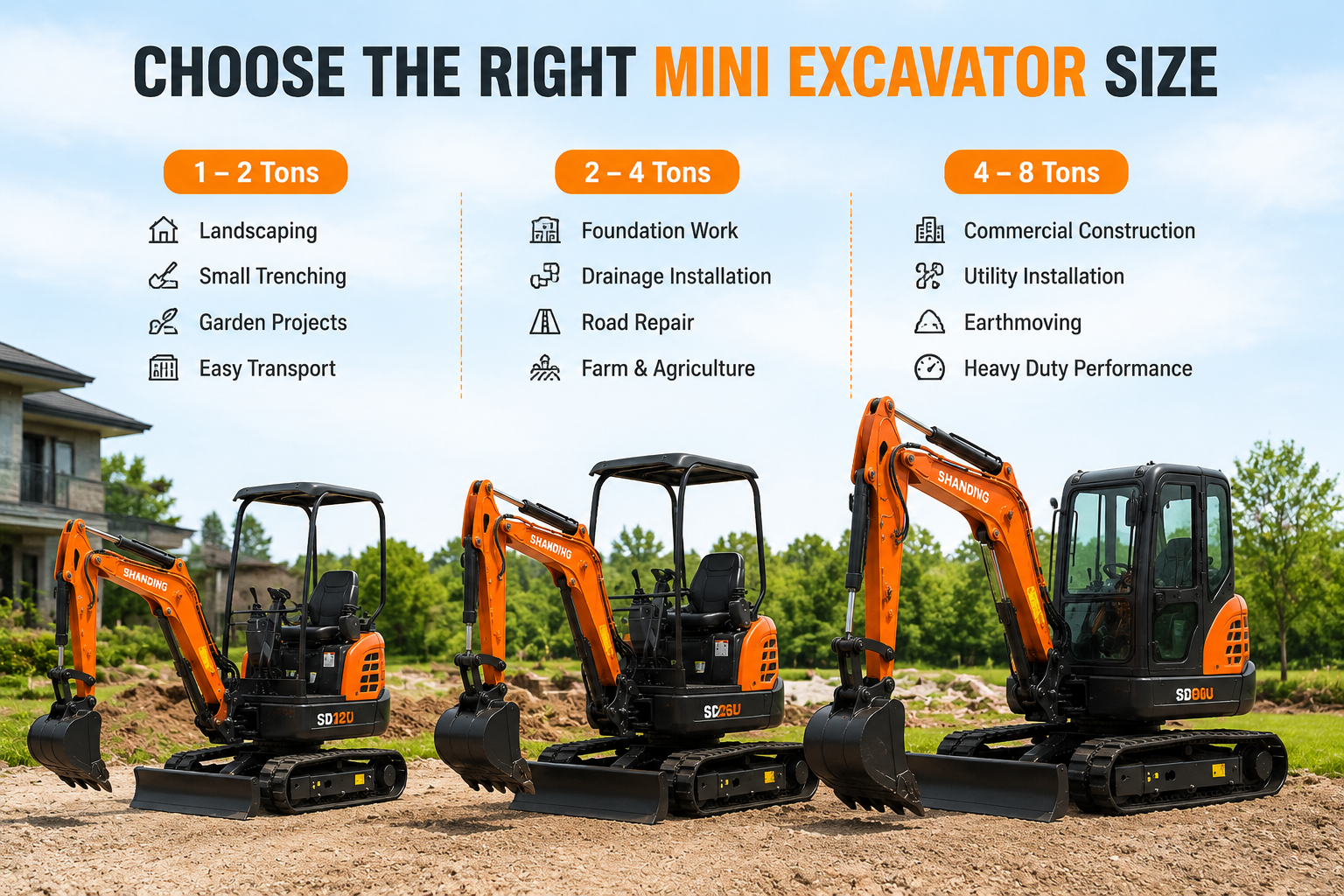
1. Compact Mini Excavators (1–2 Tons)
Small mini excavators are designed for light-duty projects where mobility and precision are more important than maximum power.
Typical applications:
- Residential landscaping
- Garden maintenance
- Small trenching projects
- Underground cable installation
- Backyard construction
Advantages:
- Easy transportation with small trailers
- Excellent performance in narrow spaces
- Lower fuel consumption
- Suitable for homeowners and small contractors
2. Small Mini Excavators (2–4 Tons)
The 2–4 ton class is one of the most popular choices for contractors because it provides a good balance between power and versatility.
Typical applications:
- Foundation digging
- Drainage installation
- Road repair projects
- Farm work
- Landscaping construction
Advantages:
- Stronger digging force than smaller models
- Suitable for a wider range of attachments
- Better stability for daily commercial use
For many small businesses, a 2.5-ton mini excavator is often an ideal solution because it combines compact size with professional-level performance.
3. Medium Mini Excavators (4–8 Tons)
Medium-sized mini excavators are designed for heavier construction tasks that require higher digging force and lifting capacity.
Typical applications:
- Large landscaping projects
- Commercial construction
- Utility installation
- Earthmoving operations
Advantages:
- Higher hydraulic power
- Greater digging depth
- Improved productivity on demanding jobs
However, these machines require more transportation space and may have higher operating costs.
Key Factors to Consider When Choosing a Mini Excavator Size
1. Type of Project
Different jobs require different levels of power.
For example:
- Landscaping → 1–3 ton mini excavator
- Farm projects → 2–4 ton mini excavator
- Construction and utility work → 3–8 ton mini excavator
Understanding your main application is the first step in choosing the correct size.
2. Working Space
Jobsite conditions directly influence equipment selection.
If you work in:
- Residential areas
- Narrow streets
- Small gardens
- Indoor demolition projects
A compact mini excavator with a small turning radius is usually more practical.
3. Required Digging Depth and Capacity
Before purchasing, check:
- Maximum digging depth
- Bucket capacity
- Lifting ability
- Hydraulic performance
A machine must have enough power to complete the job efficiently without excessive strain.
4. Transportation Requirements
A larger excavator may offer more power, but transportation can become more difficult.
Consider:
- Trailer capacity
- Road regulations
- Transportation frequency
For contractors who move machines between multiple jobsites, a compact model often provides better flexibility.
Choosing the Right Mini Excavator for Maximum Value
The best mini excavator is the one that matches your workload rather than simply having the highest specifications.
For small contractors, landscaping companies, and agricultural users, a compact excavator with reliable hydraulic performance, easy maintenance, and flexible attachments can provide excellent long-term value.
As a professional mini excavator manufacturer, Shanding provides compact excavators designed for various applications, helping global customers improve productivity while reducing operating costs.

