
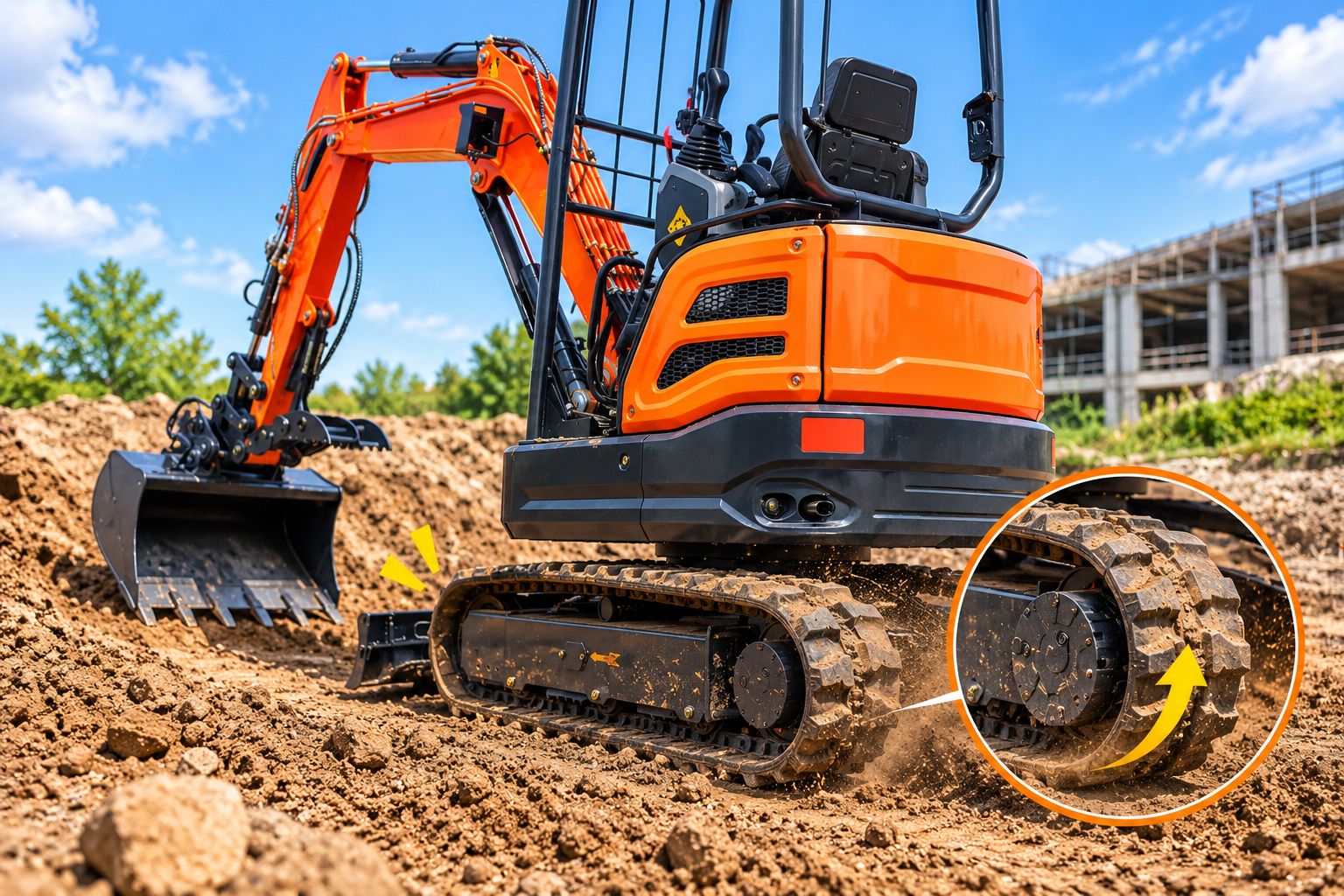
Mini excavator track slippage is a common undercarriage problem that can affect machine stability, traction, and operating efficiency.
It may occur when the tracks lose grip on the ground or fail to engage properly with the drive sprockets.
Understanding the causes of track slippage helps operators reduce downtime, prevent unnecessary wear, and maintain reliable machine performance.
1. Incorrect Track Tension
Improper track tension is one of the most common causes of track slippage.
When tracks are too loose, they may not engage properly with the drive sprockets and idlers.
This can cause the tracks to shift, jump over sprocket teeth, or even come off during turning.
On the other hand, excessively tight tracks increase friction and mechanical stress on rollers, idlers, and sprockets, accelerating undercarriage wear.
Solution: Check track sag regularly and adjust tension according to the manufacturer’s specifications.
2. Worn Drive Sprockets and Rollers
Drive sprockets transfer power from the travel motor to the tracks. Over time, repeated contact causes sprocket teeth and other undercarriage components to wear.
When sprocket teeth become worn, their engagement with the track links becomes less effective. Damaged rollers and idlers can also affect track alignment and stability.
Solution: Inspect sprockets, rollers, and idlers for uneven wear or damage. Replace components when they reach the manufacturer’s service limits.
3. Mud and Debris Accumulation
Mud, gravel, stones, and other materials can become trapped between the tracks and undercarriage components.
This buildup may interfere with track movement, change effective track tension, and prevent proper engagement between the tracks and sprockets.
The problem is particularly common when working in wet soil, clay, and muddy construction environments.
Solution: Clean the undercarriage regularly, especially around the drive sprockets, rollers, and idlers.
4. Challenging Ground Conditions
Ground conditions have a direct influence on track traction.
Loose sand, wet clay, muddy surfaces, and uneven terrain reduce the friction between the tracks and the ground.
As a result, the tracks may rotate without generating sufficient forward movement.
Operating on steep slopes or uneven surfaces can also increase uneven loading on the undercarriage.
Solution: Select an appropriate travel route, avoid excessive turning on soft ground, and use controlled movements when working on slopes.
5. Improper Operating Techniques
Aggressive turning, sudden direction changes, and excessive travel speed can place unnecessary stress on the track system.
For example, repeatedly turning sharply on rocky or uneven surfaces increases lateral forces on the tracks. This can contribute to track misalignment, premature wear, and derailment.
Solution: Operate smoothly, avoid unnecessary sharp turns, and reduce travel speed when working on rough terrain.
6. Damaged or Aging Tracks
Rubber tracks naturally deteriorate through repeated use and exposure to harsh working conditions.
Cracks, damaged rubber lugs, exposed steel cords, and worn internal components can reduce track strength and stability.
Incorrect track specifications or incompatible replacement tracks may also affect proper engagement with the undercarriage.
Solution: Inspect rubber tracks regularly and replace damaged tracks with compatible parts that meet the machine manufacturer’s specifications.
How to Prevent Mini Excavator Track Slippage
Preventive maintenance is essential for keeping a mini excavator’s undercarriage in good condition.
Operators should follow several basic practices:
- Check track tension before operation.
- Inspect sprockets, rollers, and idlers for abnormal wear.
- Remove mud, stones, and debris from the undercarriage.
- Avoid aggressive turning on rocky or uneven surfaces.
- Replace damaged tracks and worn components promptly.
- Follow the manufacturer’s operation and maintenance guidelines.
Conclusion
Mini excavator track slippage can result from incorrect track tension, worn undercarriage components, debris accumulation, challenging ground conditions, and improper operating techniques.
Regular inspections and correct operating practices help maintain track engagement, improve machine stability, and extend undercarriage service life.
Choosing a reliable mini excavator with a well-designed undercarriage and maintaining it properly are both important for achieving consistent performance on different construction sites.

