
Mini excavators have become essential machines in construction, landscaping, agriculture, municipal engineering, and property maintenance. Their compact size, versatility, and cost-effectiveness make them an excellent investment for contractors and equipment owners alike.
However, choosing the right mini excavator requires more than simply comparing prices. Understanding your project requirements and evaluating key machine specifications can help you avoid costly mistakes and maximize long-term productivity.
In this guide, we’ll explore the top 10 factors you should consider before buying a mini excavator.
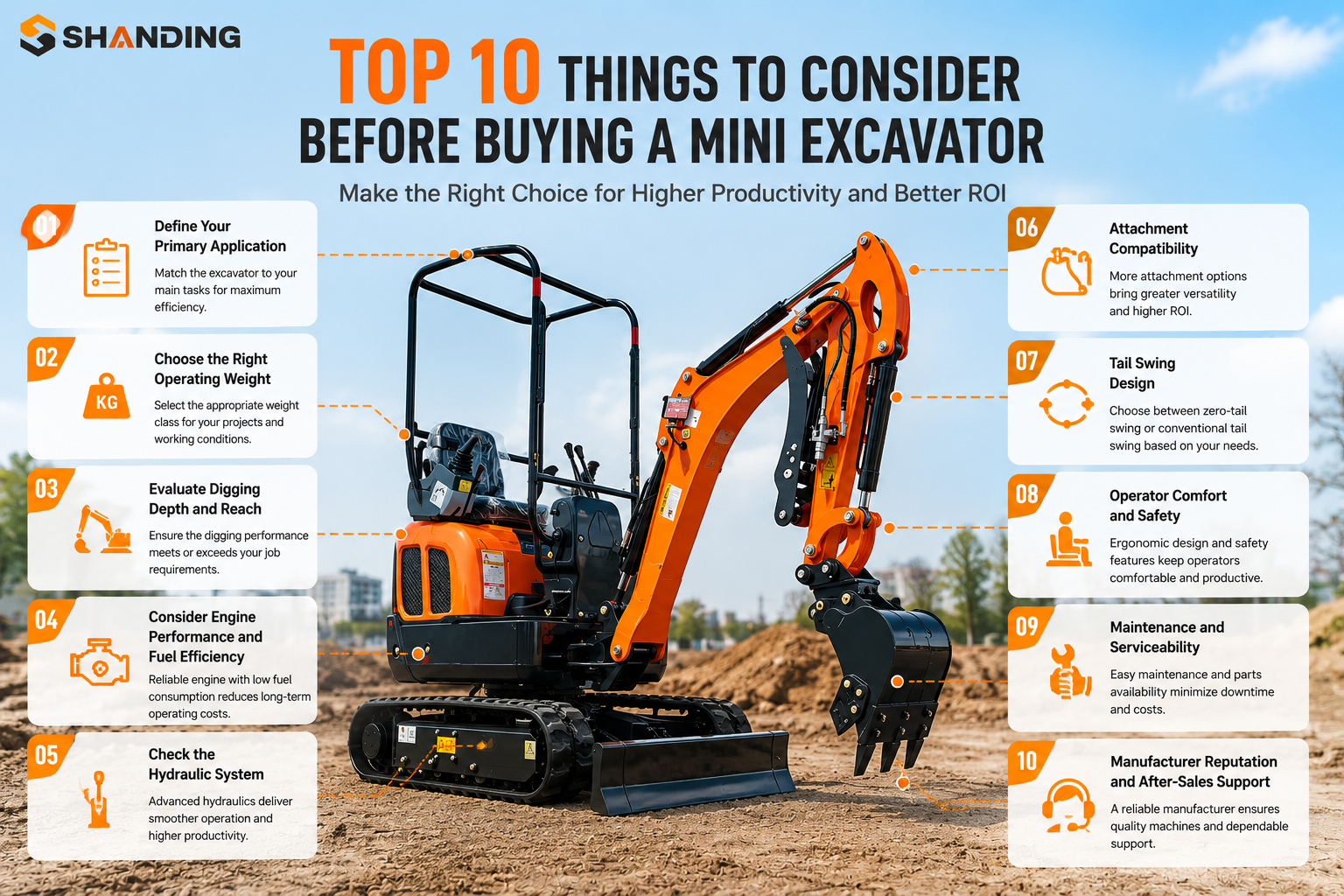
1. Define Your Primary Application
Before selecting a mini excavator, determine how you plan to use it.
Different applications require different machine capabilities:
- Landscaping and gardening
- Trenching and utility installation
- Farm and agricultural work
- Residential construction
- Demolition projects
- Road maintenance
A machine designed for light landscaping may not provide sufficient digging force for heavy-duty construction work. Matching the excavator to your primary tasks ensures optimal performance and return on investment.
2. Choose the Right Operating Weight
Mini excavators are available in various weight classes, typically ranging from 1 ton to 6 tons.
Common categories include:
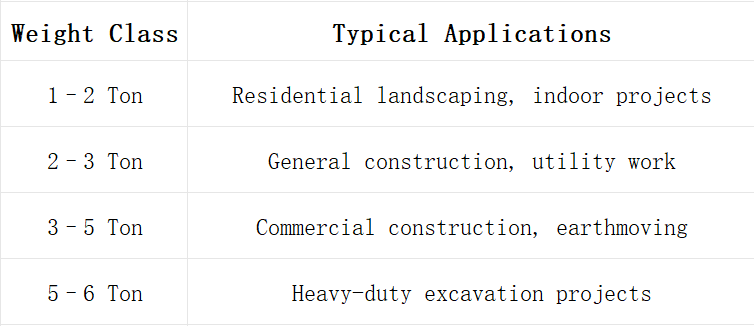
Larger machines offer greater digging power but may be difficult to transport and operate in confined spaces.
3. Evaluate Digging Depth and Reach
One of the most important specifications is digging performance.
Key measurements include:
- Maximum digging depth
- Maximum digging reach
- Dumping height
- Ground-level reach
The machine should comfortably exceed the requirements of your most common jobs. Choosing a machine with insufficient reach can reduce efficiency and increase project costs.
4. Consider Engine Performance and Fuel Efficiency
The engine directly impacts productivity and operating expenses.
Look for:
- Reliable diesel engines
- Low fuel consumption
- Stable hydraulic output
- Compliance with local emission standards
Modern mini excavators equipped with efficient engines can significantly reduce fuel costs over thousands of operating hours.
5. Check the Hydraulic System
Hydraulics are the heart of any excavator.
A high-quality hydraulic system provides:
- Smooth operation
- Faster cycle times
- Better attachment performance
- Reduced operator fatigue
Pay attention to hydraulic flow rates and auxiliary hydraulic circuits if you plan to use attachments such as breakers, augers, or grapples.
6. Attachment Compatibility
The versatility of a mini excavator largely depends on the attachments it can support.
Popular attachments include:
- Hydraulic breakers
- Augers
- Grapples
- Rippers
- Tilt buckets
- Quick hitches
A machine with multiple attachment options can perform the work of several pieces of equipment, improving utilization and profitability.
7. Tail Swing Design
Mini excavators generally feature either conventional tail swing or zero-tail swing designs.
Zero-Tail Swing
Advantages:
- Safer near walls and obstacles
- Ideal for urban construction
- Better maneuverability
Conventional Tail Swing
Advantages:
- Improved stability
- Larger counterweight
- Often stronger lifting performance
Your working environment should determine which design is most suitable.
8. Operator Comfort and Safety
Operator comfort directly influences productivity.
Important features include:
- Ergonomic controls
- Adjustable seat
- Clear visibility
- Low vibration levels
- Protective canopy or enclosed cab
- ROPS/FOPS safety certification
Comfortable operators are generally more productive and less prone to fatigue-related errors.
9. Maintenance and Serviceability
Easy maintenance reduces downtime and ownership costs.
Consider:
- Accessible service points
- Simplified filter replacement
- Durable components
- Availability of spare parts
Regular maintenance can significantly extend machine lifespan and preserve resale value.
When comparing brands, investigate the availability of technical support and replacement parts in your market.
10. Manufacturer Reputation and After-Sales Support
The machine itself is only part of the investment.
A reliable manufacturer should provide:
- Quality control during production
- Warranty support
- Spare parts availability
- Technical assistance
- Responsive customer service
Strong after-sales support can save considerable time and money throughout the ownership cycle.
For international buyers, choosing an experienced manufacturer with export expertise is especially important.
Why Shanding Mini Excavators Are a Smart Choice
Shanding has specialized in compact construction equipment manufacturing for years, serving customers across Europe, North America, Australia, Southeast Asia, and other global markets.
Shanding mini excavators offer:
- Compact and durable designs
- Fuel-efficient engines
- Advanced hydraulic systems
- Multiple attachment compatibility
- Easy maintenance access
- Competitive pricing
- Professional export support
Whether you are a contractor, equipment dealer, farmer, or rental company, Shanding provides reliable mini excavator solutions designed to meet diverse working conditions.
Final Thoughts
Purchasing a mini excavator is a significant investment that can impact productivity and profitability for years to come. By carefully evaluating application requirements, machine specifications, operating costs, attachment compatibility, and manufacturer support, buyers can make informed decisions and avoid expensive mistakes.
The best mini excavator is not necessarily the largest or cheapest option—it is the one that delivers the right balance of performance, reliability, versatility, and long-term value for your specific needs.
If you’re looking for a dependable compact excavator backed by professional manufacturing expertise, Shanding mini excavators are worth considering for your next project.

