
Buying a mini excavator is a long-term investment that directly affects construction efficiency, operating cost, and project flexibility. Whether for landscaping, farming, or small construction work, choosing the right machine requires more than comparing prices.
A structured evaluation based on mechanical engineering principles, lifecycle cost theory, and real working conditions can significantly reduce purchase risk.
Below are the top 10 essential factors you should check before making a decision.
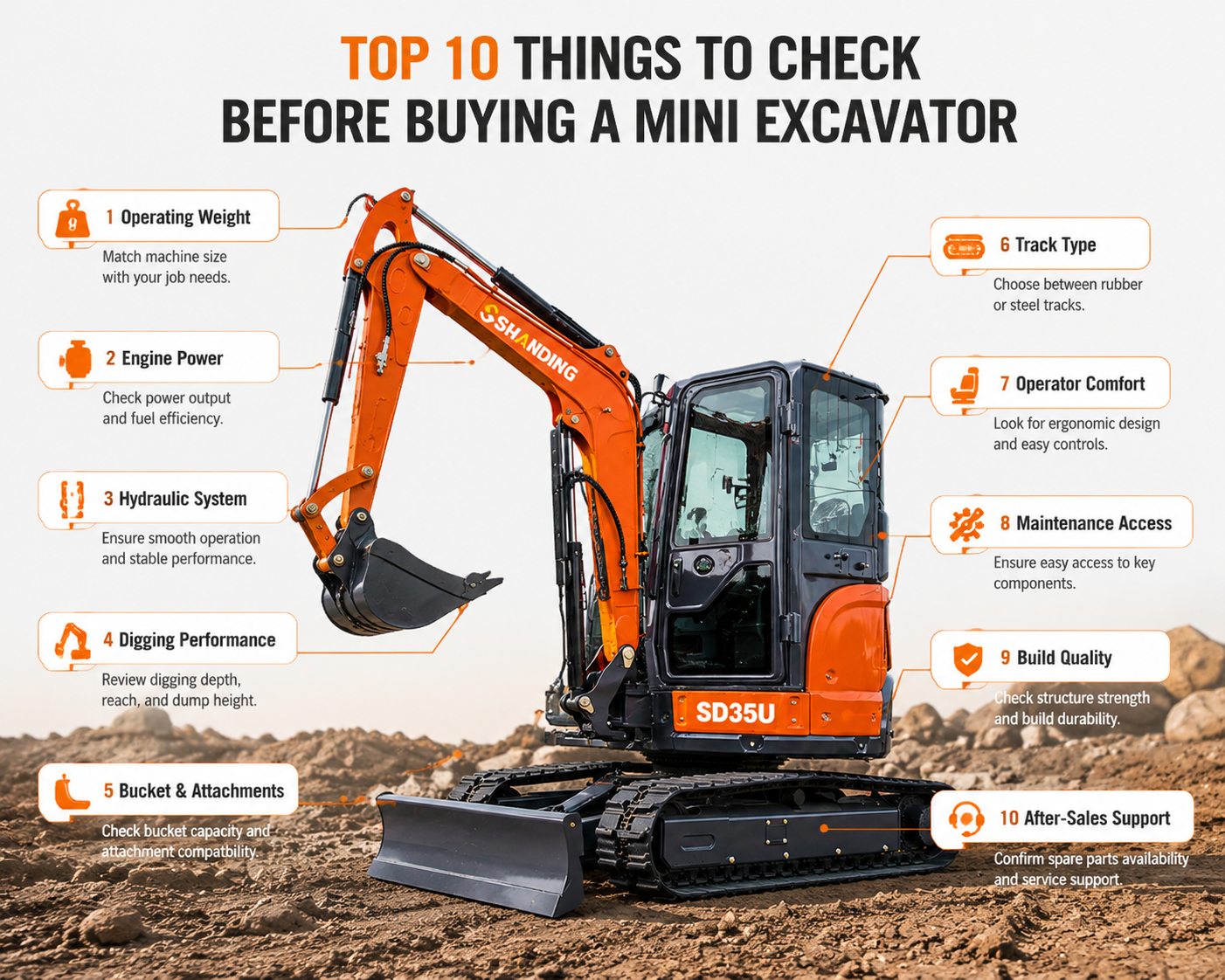
1. Operating Weight and Job Suitability
Mini excavators typically range from 0.8 to 6 tons. According to load distribution principles, heavier machines provide better stability but reduce maneuverability in tight spaces.
Choose the weight class based on your working environment rather than power alone.
2. Engine Power and Fuel Efficiency
Engine performance determines digging force and cycle speed.
However, higher horsepower does not always mean better efficiency.
Modern diesel engines follow the principle of “optimal power-to-consumption ratio,” so check fuel usage per hour, not just engine size.
3. Hydraulic System Quality
The hydraulic system is the core of any excavator. It controls digging force, arm speed, and precision.
Look for stable hydraulic pressure and responsive control valves. A high-quality system reduces energy loss and improves operational accuracy.
4. Digging Depth and Reach
Excavation performance is defined by geometry: maximum digging depth, radius, and dump height.
Ensure these specifications match your real job requirements, especially for trenching, foundation work, or drainage projects.
5. Bucket Capacity and Attachments Compatibility
Bucket size directly affects productivity per cycle. Larger buckets increase output but require more hydraulic power.
Also check whether the machine supports attachments such as augers, breakers, or grapples to expand functionality.
6. Track Type: Rubber or Steel
Rubber tracks are suitable for urban or landscaping work due to low ground damage. Steel tracks offer better durability in rocky or heavy-duty environments.
This choice depends on ground pressure distribution and surface protection requirements.
7. Cabin Comfort and Operator Control
Ergonomics plays a key role in long working hours. Modern machines use vibration reduction systems and joystick control based on human-machine interaction principles.
Better comfort leads to higher productivity and lower operator fatigue.
8. Maintenance Accessibility
Machines designed with modular components reduce downtime.
Check if filters, hydraulic lines, and engine parts are easy to access. According to maintenance engineering theory, lower service complexity directly reduces lifecycle cost.
9. Build Quality and Structural Reinforcement
Boom, arm, and chassis strength determine long-term durability. High-stress points should use reinforced welding and high-tensile steel.
This reduces deformation risk under repeated load cycles.
10. After-Sales Support and Spare Parts Availability
Even the best machine requires maintenance. Availability of spare parts and technical support is critical for minimizing downtime.
A reliable supply chain ensures continuous operation and protects your investment value.
Conclusion
Choosing a mini excavator is not only about comparing specifications—it is about matching engineering performance with real working conditions.
By evaluating these 10 key factors, buyers can make a more rational and cost-effective decision.
For construction companies and contractors looking for reliable compact equipment, brands like Shanding focus on balancing performance, durability, and operational efficiency to meet diverse global job site requirements.

