
Which Track Type Is Better for Your Excavator?
Introduction
When choosing an Mini excavator, many buyers focus on engine power, hydraulic systems, or operating weight.
However, one critical factor is often underestimated:The type of track.
Rubber tracks and steel tracks are designed for completely different working environments.
Choosing the wrong one can reduce efficiency, increase maintenance costs, and shorten machine lifespan.
So which option is better?
The answer depends on your jobsite conditions, operating frequency, and long-term cost expectations.
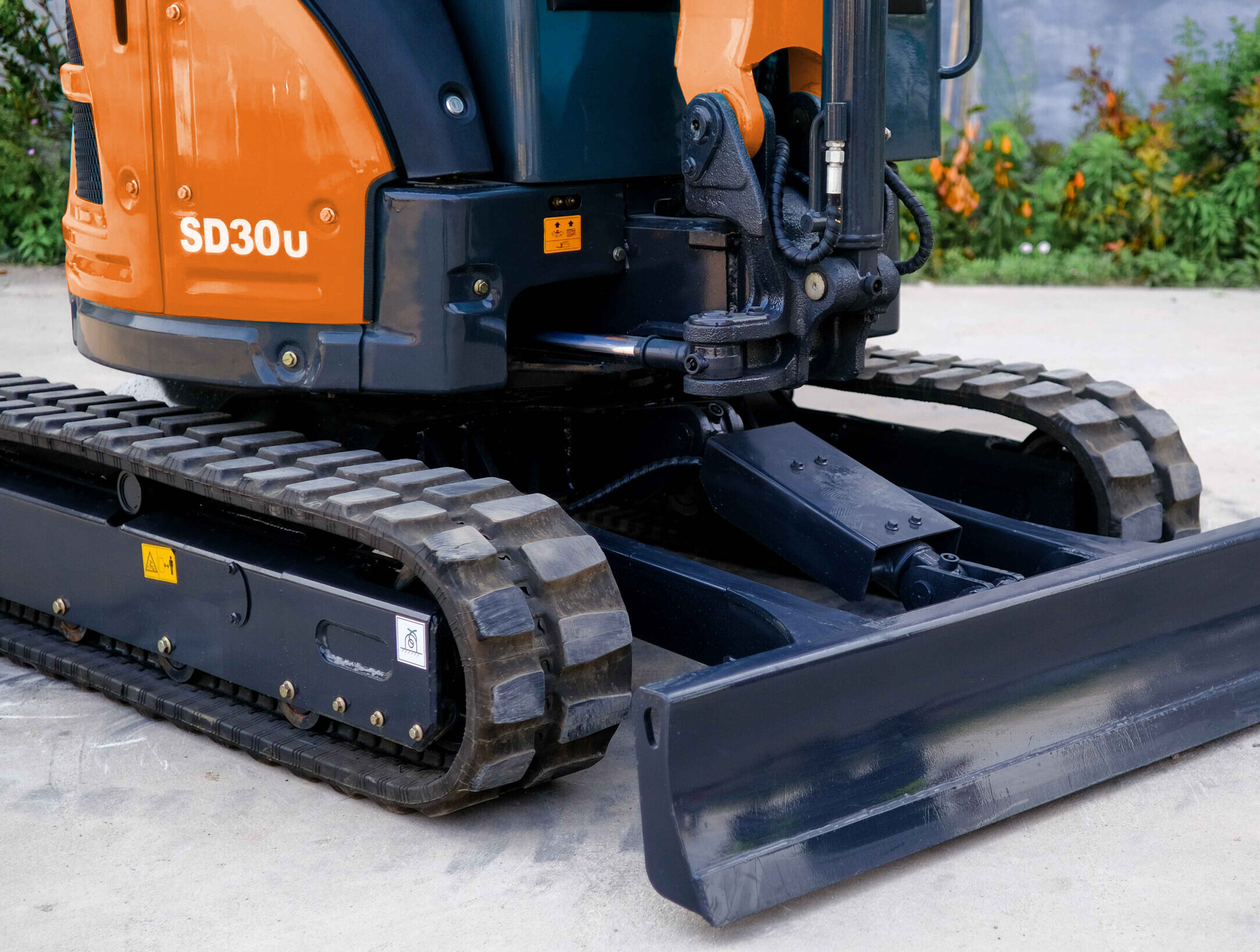
1. What Are Rubber Tracks?
Rubber tracks are made from reinforced rubber combined with internal steel cords.
They are commonly used on compact excavators and mini excavators working in sensitive environments.
Their biggest advantage is low surface damage.
Rubber tracks distribute machine weight more evenly, reducing pressure on finished ground surfaces such as: Asphalt Concrete Lawns and residential driveways.
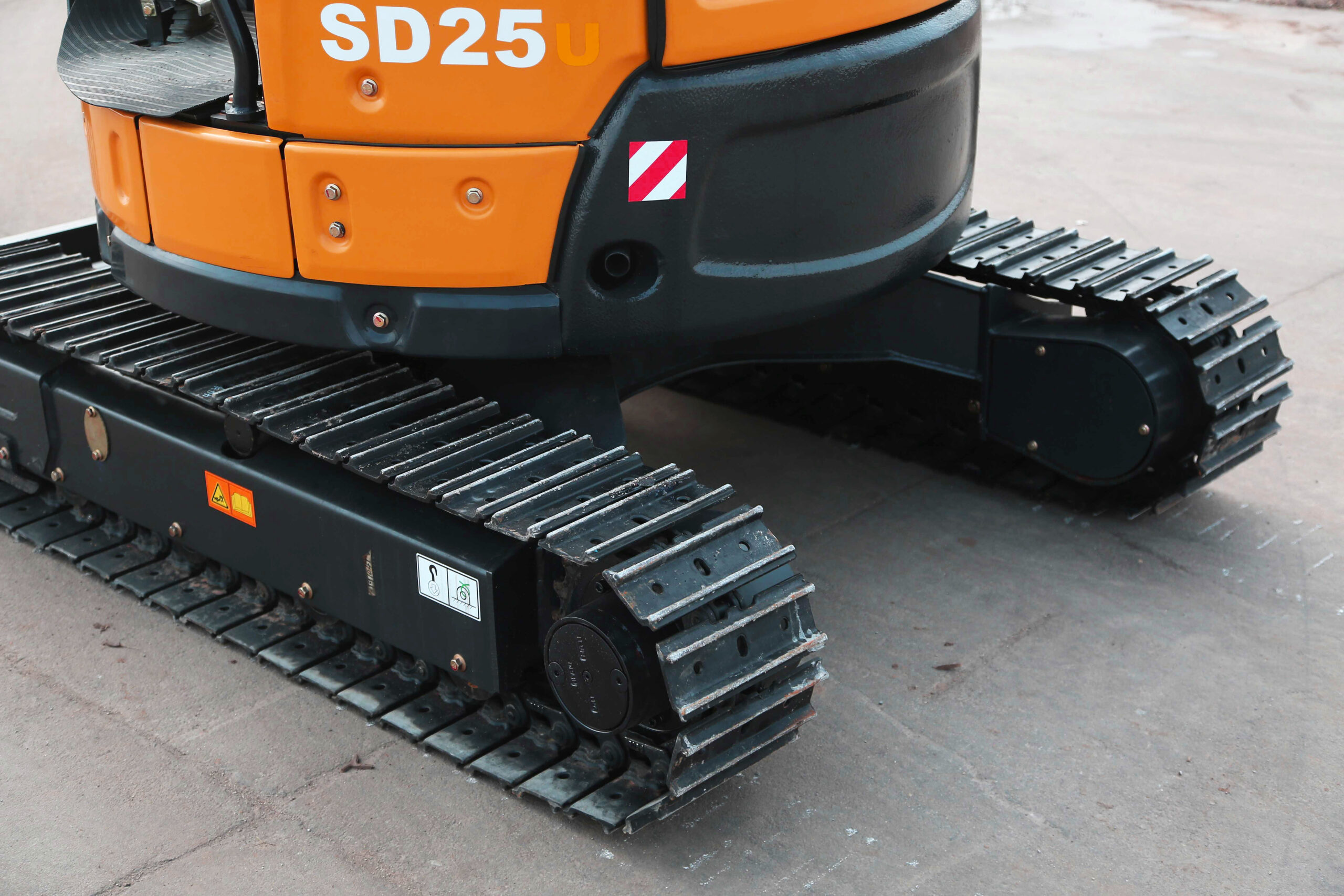
2.What Are Steel Tracks?
Steel tracks are built for heavy-duty environments. They offer stronger traction and higher durability under extreme conditions.
Unlike rubber tracks, steel tracks perform better on:
- rocky terrain
- demolition sites
- muddy ground
- uneven construction areas
Their rigid structure allows the machine to maintain stability even under heavy loads.
3. Ground Pressure and Surface Protection
From an engineering perspective, rubber tracks create lower vibration and less surface friction.
This is why they are widely preferred in:urban projects, landscaping, agriculture,and indoor demolition work.
Steel tracks, while more durable, can damage finished surfaces and create stronger vibration during operation.
4. Durability Comparison
Steel tracks generally last longer in harsh environments because they resist sharp rocks, abrasive surfaces, and heavy impact loads.
Rubber tracks, on the other hand, are more vulnerable to tearing, punctures, and accelerated wear under extreme conditions.
However, in soft or moderate terrain, rubber tracks may actually provide sufficient lifespan with lower operating costs.
5. Operating Comfort Matters More Than Many Think
Rubber tracks absorb vibration more effectively, creating smoother operation and better operator comfort.
This is particularly important for long working hours, residential projects,and precision landscaping tasks.
Steel tracks tend to produce more noise and vibration, especially on paved roads.
6. Maintenance and Replacement Costs
Rubber tracks are usually easier and faster to replace. They also reduce wear on roads and transport trailers.
Steel tracks often require more maintenance on rollers, pins, bushings, and track tension systems.
However, for extremely demanding environments, steel tracks may reduce long-term replacement frequency.
7. Which Track Type Is Better for Different Industries?
Rubber Tracks Are Better For:
1.Landscaping
2.Agriculture
3.Residential construction
4.Municipal projects
5.Indoor demolition
Steel Tracks Are Better For:
1. Mining
2. Quarry work
3. Heavy demolition
4. Rocky terrain
5. Large-scale construction
8.The Real Decision Is About Application
There is no universally “better” track type.
The correct choice depends on:terrain conditions,machine size,transportation frequency,and operational priorities.
For compact excavators used in urban or light-duty environments, rubber tracks are often the smarter economic choice.
For high-impact heavy-duty operations, steel tracks remain unmatched in durability.
Final Thoughts
Modern excavator buyers are no longer choosing tracks based only on tradition.
Today, the focus is shifting toward total operating cost, efficiency, operator comfort, and jobsite adaptability.
Understanding the strengths and limitations of both rubber and steel tracks helps buyers make smarter long-term investment decisions.
FAQ
Q1: Do rubber tracks wear out faster?
Yes, especially in rocky or highly abrasive environments.
Q2: Are steel tracks stronger?
Generally yes. Steel tracks are more durable under heavy-duty conditions.
Q3: Which track type is more comfortable?
Rubber tracks usually provide smoother and quieter operation.
Q4: Can mini excavators use steel tracks?
Yes, some mini excavators can be equipped with steel tracks for tougher environments.

