
Why Mini Excavators Are Essential for Residential Construction
As residential construction projects continue to grow in complexity, contractors are increasingly turning to mini excavators for efficient and precise site work.
Their compact size, versatility, and low operating costs make them an ideal solution for home builders, landscapers, and renovation professionals.
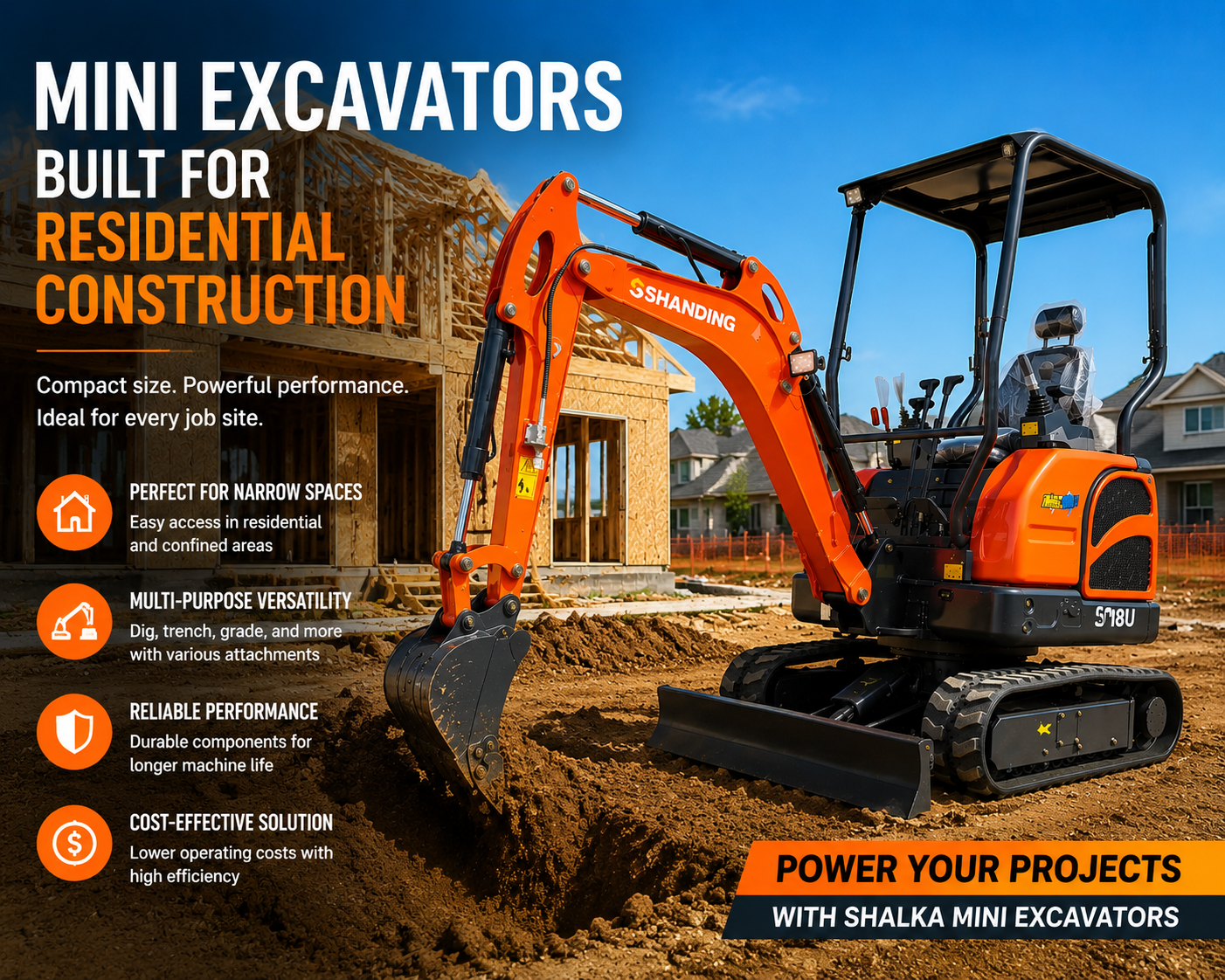
Key Advantages of Mini Excavators
1. Easy Access to Confined Areas
Unlike larger construction equipment, mini excavators can operate in narrow spaces such as residential backyards, side yards, and urban building sites. Their compact design minimizes disruption to surrounding structures and landscaping.
2. Improved Productivity
Mini excavators can perform multiple tasks, including digging foundations, trenching for utilities, grading land, and removing debris. When equipped with attachments such as augers, breakers, or grapples, one machine can replace several pieces of equipment, reducing labor requirements and project timelines.
3. Reduced Ground Damage
Many mini excavators use rubber tracks that distribute machine weight evenly across the ground. This design helps protect driveways, lawns, and finished surfaces—an important consideration in residential construction environments.
4. Lower Operating Costs
Compared with larger excavators, mini excavators consume less fuel, require less maintenance, and are easier to transport. For small and medium-sized residential projects, they provide an excellent balance between performance and cost efficiency.
Common Residential Applications
Mini excavators are widely used for:
- Foundation excavation
- Utility trenching
- Drainage installation
- Swimming pool preparation
- Landscaping projects
- Fence and post-hole digging
- Demolition of small structures
- Site grading and leveling
According to construction equipment productivity principles, using appropriately sized machinery can significantly improve work efficiency while reducing unnecessary operating expenses.
For residential projects, a mini excavator often delivers the highest return on investment.
Choosing the Right Mini Excavator
When selecting a mini excavator for residential construction, contractors should consider:
- Project size and excavation depth
- Site accessibility
- Hydraulic performance
- Attachment compatibility
- Fuel efficiency
- Maintenance requirements
For most residential applications, machines in the 1.5 to 3-ton class offer the ideal combination of power, maneuverability, and versatility.
Conclusion
Mini excavators have become an indispensable tool in modern residential construction.
Their compact design, operational flexibility, and cost-effectiveness allow contractors to complete projects faster and more efficiently while minimizing site disturbance.
Whether for foundation work, landscaping, or utility installation, a reliable mini excavator can greatly enhance construction productivity and project profitability.
Shanding mini excavators are designed to meet the demands of residential construction professionals, delivering dependable performance, easy operation, and versatile attachment options for a wide range of jobsite requirements.

