
When comparing mini excavators, horsepower (HP) is one of the specifications buyers notice first.
However, a higher horsepower rating does not automatically mean a machine will dig faster, lift more, or perform better in every application.
Actual performance depends on how effectively the engine works with the hydraulic system, operating weight, pump flow, hydraulic pressure, and machine design.
Manufacturer specifications commonly list engine power separately from hydraulic flow, pressure, and digging force, showing that these are related but different performance parameters.
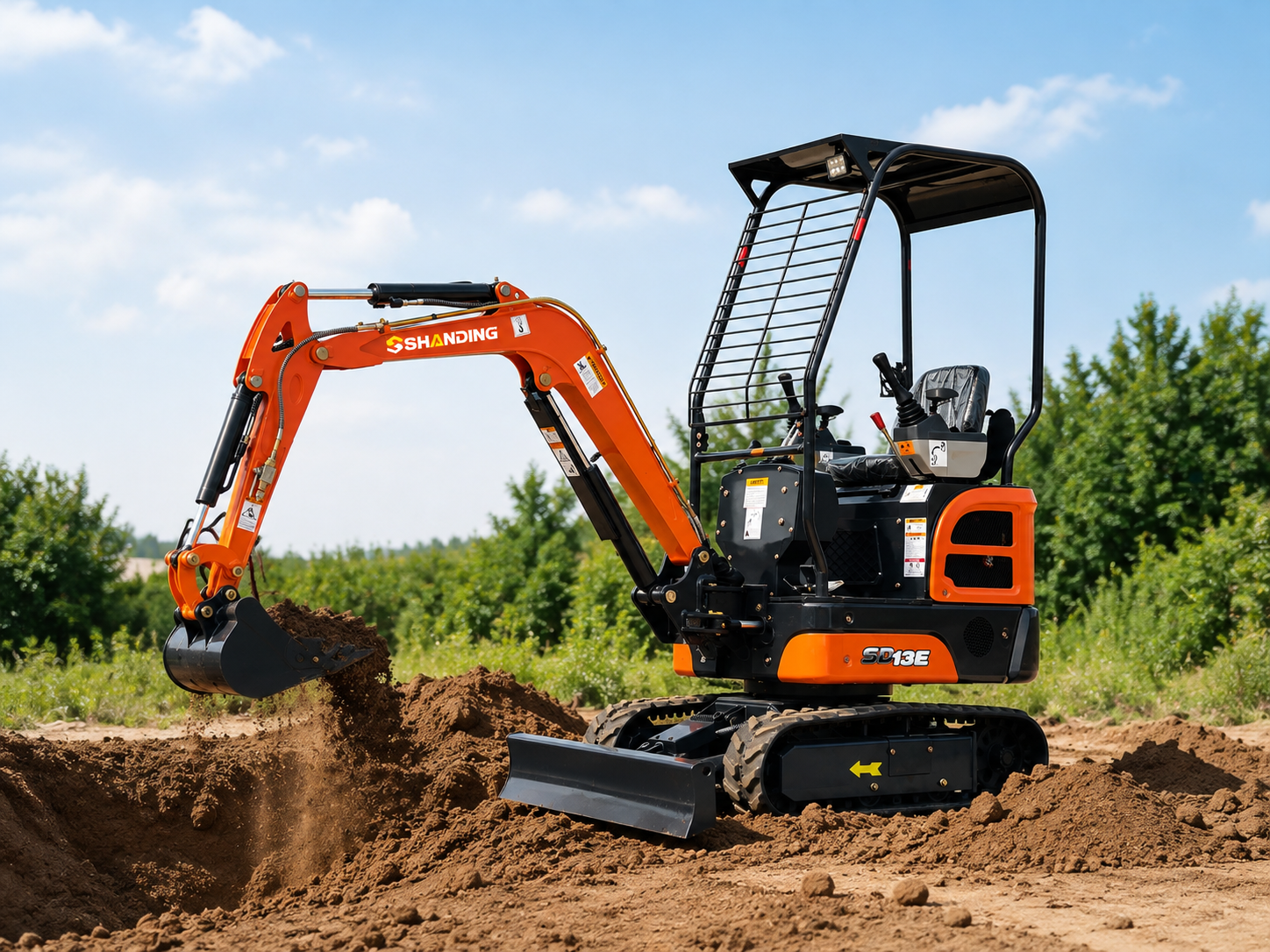
What Does Horsepower Mean on a Mini Excavator?
Horsepower describes the engine’s ability to produce mechanical power.
In a hydraulic mini excavator, the basic power path is:
Engine → Hydraulic Pump → Hydraulic Flow & Pressure → Cylinders/Motors → Working Equipment
The engine supplies power to the hydraulic pump, while the hydraulic system converts that power into movement and working force.
Therefore, horsepower is an important foundation, but it is not the same as digging force.
For example, Yanmar’s ViO25-6B combines a 20.4 HP engine with specified hydraulic pressure, pump capacity, and digging-force figures. These specifications work together to define the machine’s actual operating performance.
Does More Horsepower Mean More Digging Force?
Not necessarily.
Digging force is strongly influenced by hydraulic pressure and cylinder geometry, while engine power determines how much energy is available to drive the hydraulic system.
A useful simplified relationship is:
Hydraulic Power ≈ Pressure × Flow
This means a machine with a well-matched hydraulic system can make effective use of its engine power.
Caterpillar, for example, publishes engine, hydraulic pressure, pump flow, and bucket/arm digging-force specifications separately for its compact excavators.
So when comparing two mini excavators, don’t look at HP alone. Check the complete performance package.
How Horsepower Affects Working Efficiency
Although more horsepower does not automatically create greater digging force, sufficient engine power can improve overall productivity.
Higher available power can help the machine:
- Maintain performance under heavy hydraulic loads
- Operate multiple functions more effectively
- Recover more quickly when working under demanding conditions
- Support higher hydraulic flow when the system is designed for it
- Run power-demanding attachments more effectively
This is why engine power becomes increasingly important when the machine is frequently performing demanding excavation or attachment work.
Horsepower and Hydraulic System Must Be Matched
A powerful engine cannot compensate for an inefficient hydraulic system.
The hydraulic pump, control valves, cylinders, and motors must be properly matched to the engine.
A machine with excessive engine power but poorly matched hydraulics may not deliver proportional improvements in productivity.
Conversely, a properly engineered machine can make effective use of a relatively compact engine.
For instance, manufacturer specifications for compact excavators show that engine output and hydraulic characteristics vary together across machine sizes rather than following a simple “more HP = better” rule.
Consider the Job Before Choosing Horsepower
The ideal horsepower depends on what the mini excavator will actually do.
Light Landscaping
For landscaping, light trenching, and residential maintenance, excessive horsepower may provide little practical benefit.
Compact dimensions, low ground pressure, and maneuverability can be more important.
General Construction
For regular excavation, grading, and material handling, a balanced combination of horsepower, hydraulic performance, and operating weight is more valuable than maximum engine output.
Heavy-Duty Applications
If the machine frequently operates hydraulic breakers, augers, grapples, or other demanding attachments, engine power and auxiliary hydraulic performance become more important.
For example, hydraulic attachment performance depends on available flow and pressure, not horsepower alone.
Don’t Ignore Operating Weight
Horsepower should also be considered together with operating weight.
A larger engine in a very lightweight machine does not automatically make it suitable for heavy excavation.
Machine stability, counterweight, undercarriage design, hydraulic performance, and digging force all contribute to real-world productivity.
This is why professional buyers should evaluate the complete specification sheet rather than ranking machines by HP alone.
What Specifications Should You Compare?
When evaluating mini excavators, look at these specifications together:
- Engine horsepower– Available engine power.
- Hydraulic flow– Determines how much hydraulic oil can be delivered to the system or attachment.
- Hydraulic pressure– Influences the force generated by hydraulic actuators.
- Bucket and arm digging force– Provides a more direct indication of excavation capability.
- Operating weight– Affects stability, traction, and transportation.
- Auxiliary hydraulic flow– Particularly important when using hydraulic attachments.
A good mini excavator is not necessarily the one with the highest HP.
It is the one where these specifications are properly balanced for the intended job.
Final Thoughts
More horsepower can be useful, but more horsepower alone does not guarantee better mini excavator performance.
The best choice comes from matching engine power with hydraulic efficiency, operating weight, digging force, and the demands of your typical applications.
For buyers comparing mini excavators, HP should be treated as one part of the performance equation—not the entire equation.
A well-matched powertrain and hydraulic system can provide better productivity, smoother operation, and more efficient use of engine power.

