
Weather conditions can significantly affect mini excavator performance, operating efficiency, component life, and jobsite safety. Temperature, rain, snow, humidity, and wind can change hydraulic behavior, engine cooling, ground conditions, and traction.
Understanding these effects helps operators adjust machine operation and maintenance rather than simply stopping work whenever weather changes.
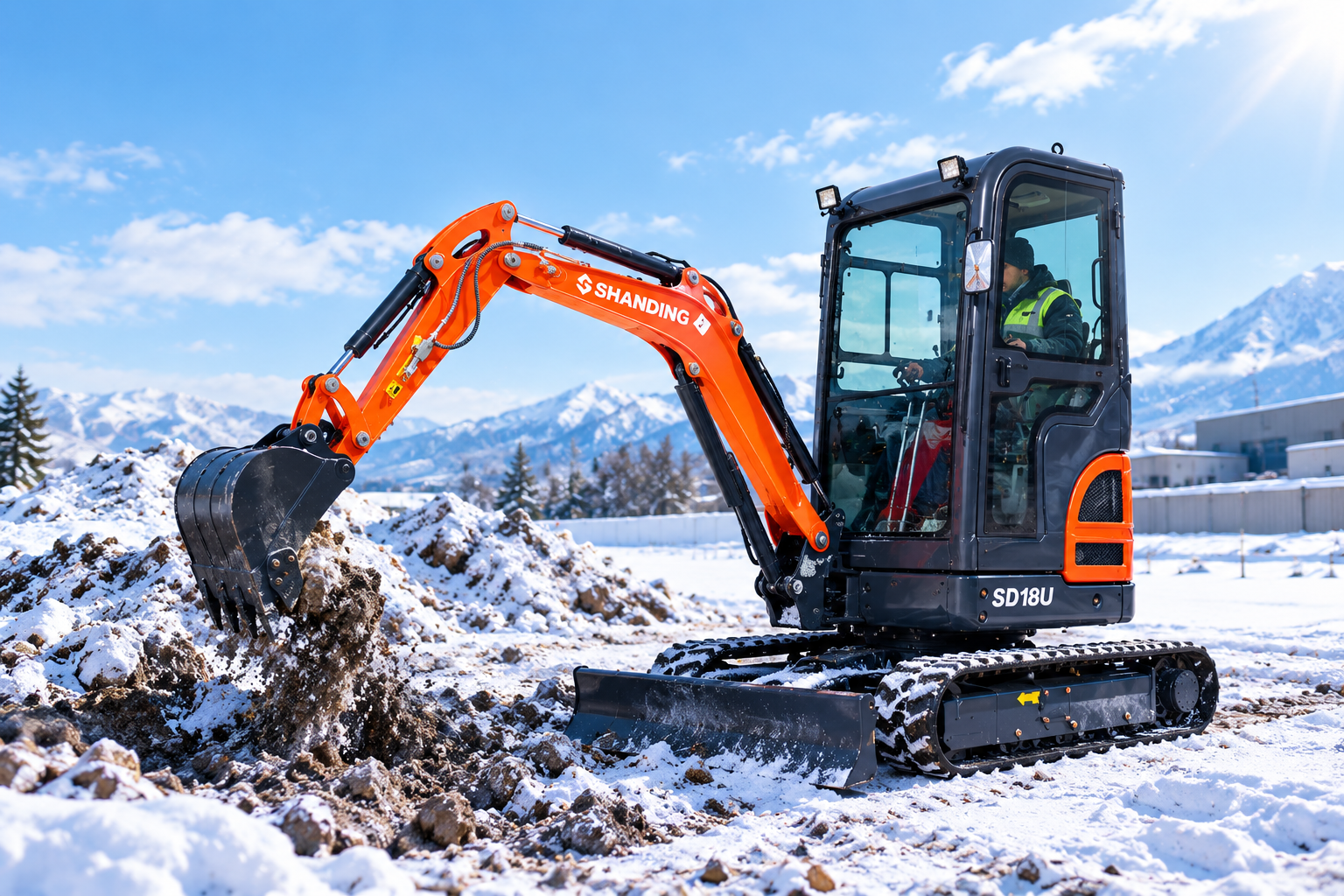
1. Cold Weather Can Slow Hydraulic Performance
Low temperatures increase the viscosity of hydraulic oil.
Thicker oil creates greater resistance as it moves through pumps, valves, hoses, and cylinders, which can make hydraulic movements slower during startup.
Cold weather can also affect:
- Battery starting performance
- Engine oil flow
- Hydraulic response
- Fuel system operation
- Rubber track flexibility
Before heavy operation, allow the machine to warm up according to the manufacturer’s instructions.
Using the correct oil and lubricant for the expected temperature range is also important.
The key principle is simple: lower temperature → higher fluid viscosity → greater flow resistance → potentially slower hydraulic response.
Operators should always follow the specific operating and maintenance manual for the excavator model.
2. Hot Weather Increases Cooling Demands
High temperatures place additional demand on the engine and hydraulic cooling systems.
During continuous digging, hydraulic components generate heat because some input energy is converted into thermal energy through internal friction and pressure losses.
If heat cannot be removed efficiently, hydraulic oil temperature can rise and machine performance may decline.
For hot-weather operation, operators should:
- Check coolant levels before operation
- Keep the radiator and hydraulic cooler free of debris
- Inspect cooling hoses for leaks
- Monitor engine and hydraulic temperatures
- Avoid unnecessary operation at maximum load
Caterpillar specifically recommends checking coolant levels and removing debris from the radiator and cooling system, particularly when working in hot climates.
3. Rain Can Change Ground Conditions
Rain often affects a mini excavator more through the ground beneath the machine than through the machine itself.
Wet soil can lose firmness and traction, increasing the possibility of:
- Track slipping
- Rutting
- Reduced stability
- Difficult traveling
- Excavation-wall instability
OSHA defines adequate ground conditions in terms of factors such as slope, compaction, and firmness, emphasizing that equipment needs sufficiently supportive ground.
After heavy rainfall, operators should reassess the work area before continuing.
This is particularly important when working near excavation edges, slopes, trenches, or previously disturbed soil.
For excavation work, OSHA also requires attention to water accumulation and inspections after rainstorms or other events that can increase hazards.
4. Snow and Ice Reduce Traction
Snow and ice can reduce the friction between rubber tracks and the ground.
Frozen soil may also become harder and more difficult to penetrate, while thawing conditions can make the surface soft and unstable.
Operators should:
- Remove snow and ice around the tracks
- Check track condition before traveling
- Reduce travel speed
- Avoid sudden turns
- Pay attention to slopes and frozen ground
- Reassess conditions when temperatures rise and frozen soil begins to thaw
The important consideration is not simply the air temperature but how temperature changes affect the ground underneath the machine.
5. Wind Can Affect Stability
Wind generally has less influence on a compact excavator than temperature or ground conditions, but strong winds can become important when the boom, bucket, or other attachment is raised.
A raised attachment increases the machine’s exposed area and can change the position of the machine’s center of gravity.
When combined with uneven ground or a slope, strong wind can increase stability risks.
During severe weather, keep attachments as low as practical and avoid lifting operations when conditions exceed the limits specified by the manufacturer.
6. Humidity and Dust Increase Maintenance Requirements
High humidity can contribute to corrosion, while dry and dusty conditions can increase contamination around filters, radiators, cooling systems, and moving components.
Regular cleaning is therefore particularly important in extreme environments.
A practical inspection should include:
- Air and fuel filters
- Radiator and hydraulic cooler
- Hydraulic hoses and fittings
- Track and undercarriage components
- Electrical connections
- Engine compartment
Keeping cooling and filtration systems clean helps the machine maintain stable performance under demanding conditions.
7. Adjust Operation Instead of Relying on Weather Alone
Weather itself does not determine whether a mini excavator can operate safely.
The more important question is how the weather has changed the machine and the jobsite.
Before starting work, consider:
- Temperature– Can the hydraulic and engine systems operate within their recommended range?
- Ground firmness– Can the ground adequately support the machine?
- Traction– Are the tracks gripping the surface effectively?
- Visibility– Can the operator clearly see the working area?
- Water accumulation– Has rain changed excavation or drainage conditions?
- Wind– Could strong wind affect elevated attachments or stability?
This approach is more reliable than using a simple rule such as “do not operate in rain” or “do not operate below a certain temperature.”
Conclusion
Weather conditions can influence a mini excavator through hydraulic fluid behavior, engine cooling, traction, ground stability, visibility, and component wear.
Cold weather mainly affects fluid viscosity and starting performance, while hot weather increases cooling requirements.
Rain and snow primarily change ground firmness and traction, and strong wind can affect stability when attachments are raised.
For operators, the best strategy is to combine weather awareness, daily inspection, correct maintenance, and model-specific operating instructions.
This helps a mini excavator maintain reliable performance across changing jobsite conditions.

