
Operating a mini excavator on slopes requires more than careful driving.
Ground conditions, machine orientation, center of gravity, bucket position, and travel speed all affect stability.
A simple principle is that the steeper the slope and the higher the machine’s center of gravity, the greater the risk of sliding or tipping.
OSHA also defines ground conditions in terms of slope, firmness, compaction, and drainage, emphasizing that equipment must be adequately supported by the ground.
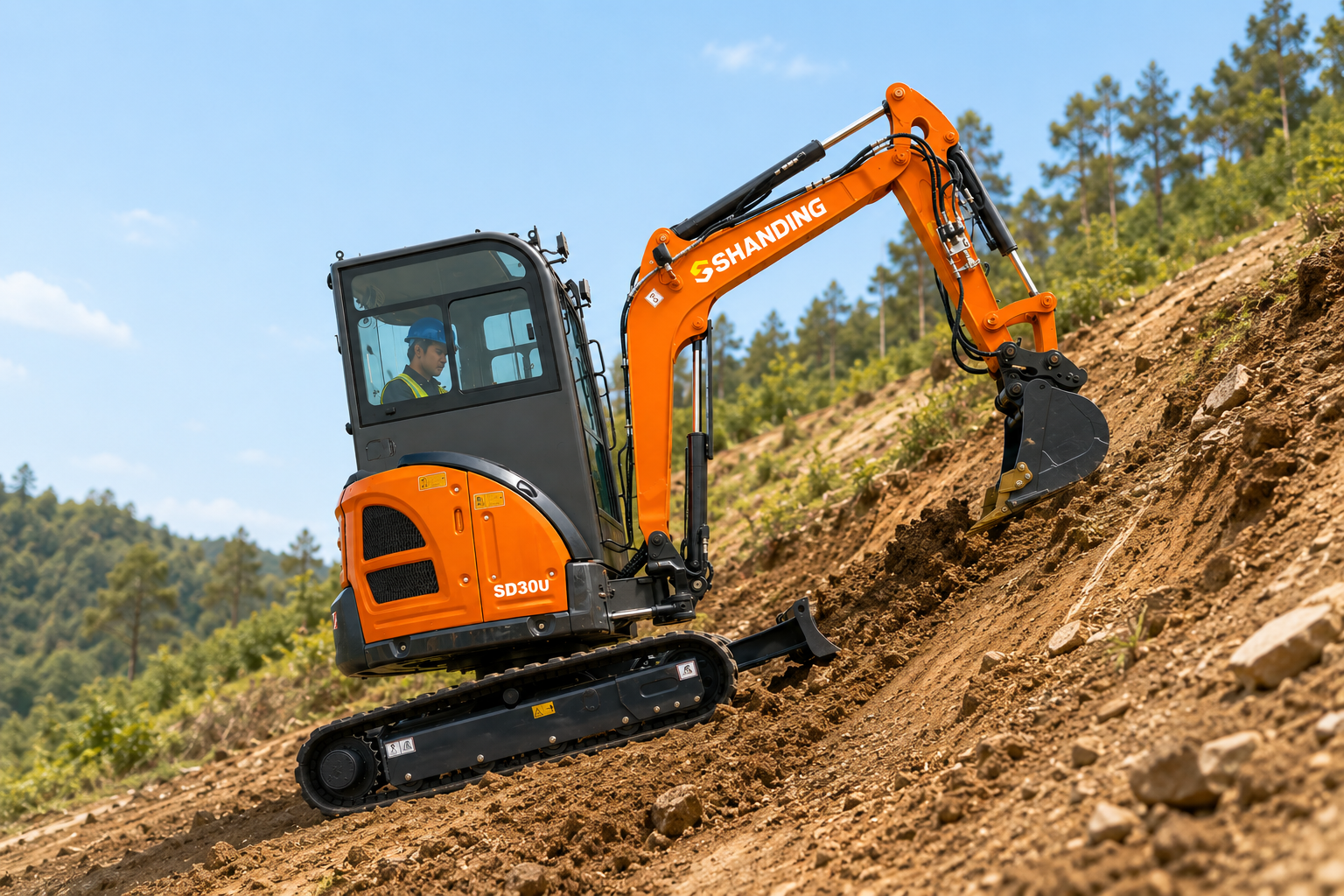
1. Check the Slope Before Operation
Before moving onto a slope, inspect the ground carefully.
Look for:
- Loose soil or gravel
- Mud and standing water
- Recently filled areas
- Uneven or eroded surfaces
- Edges of trenches or excavations
- Obstacles that could affect track contact
Wet or loose soil can significantly reduce traction and stability.
If the ground cannot adequately support the machine, do not operate on the slope until conditions are improved.
2. Follow the Manufacturer’s Slope Limits
There is no universal safe slope angle for every mini excavator.
The maximum allowable operating angle depends on the machine’s design, weight distribution, undercarriage, attachment, and ground conditions.
Therefore, operators should always check the manufacturer’s operating manual and model-specific limits before working on slopes.
This is particularly important because the stability of a machine can change considerably when an attachment is raised or when material is carried at a distance from the machine.
3. Travel Straight Up and Down Whenever Possible
When traveling on a slope, operating straight up or down the slope is generally preferable to traveling sideways across it.
Cross-slope travel increases the potential for lateral instability.
Caterpillar’s operating guidance similarly recommends traveling straight up and down slopes rather than across steep slopes and maintaining a controlled speed.
Avoid sudden turns, rapid acceleration, or abrupt braking.
4. Keep the Bucket Low During Travel
A low bucket helps keep the machine’s center of gravity closer to the ground.
When traveling on a slope:
- Keep the attachment close to the ground.
- Avoid carrying the bucket high.
- Maintain a slow, controlled speed.
- Avoid unnecessary swing movements.
- Keep the machine’s movements smooth.
Raising a heavy attachment changes the machine’s center of gravity and can reduce stability.
5. Position the Machine Carefully During Excavation
When digging on a slope, position the mini excavator on the most stable and level surface available.
Avoid placing the tracks close to:
- Excavation edges
- Unstable slopes
- Loose backfill
- Soft ground
- Unsupported trench walls
Excavation itself can also change ground stability.
OSHA notes that soil type, environmental conditions, and surcharge loads from equipment can affect the safe configuration of excavation slopes.
6. Avoid Excessive Loads on Slopes
A full bucket increases the machine’s effective load and can shift the center of gravity, particularly when the boom and arm are extended.
For slope work:
Smaller load + low attachment position + slow movement = better stability
Do not use the excavator’s maximum digging or lifting capacity simply because the machine can achieve it under ideal conditions.
7. Use the Blade for Additional Support When Appropriate
The dozer blade can help provide additional support during certain operations, but it should not be treated as a substitute for a stable working surface or a manufacturer’s approved operating procedure.
Before positioning the blade, make sure the ground beneath it can support the applied load.
8. Stop When Conditions Become Unsafe
Stop the machine immediately if you notice:
- Track slipping
- Ground cracking or movement
- Excessive machine rocking
- Sudden loss of traction
- Soil sliding beneath the tracks
- Unusual attachment movement
If an excavation is involved, visible cracking, edge subsidence, slumping, or material rolling into the excavation can indicate ground distress. OSHA identifies these as warning signs requiring attention.
Final Thoughts
Safe slope operation is mainly about controlling risk rather than relying on machine size or operator experience.
Check the ground, follow the mini excavator manufacturer’s slope limits, keep the attachment low, travel slowly, and avoid unnecessary side-hill operation.
For contractors using mini excavators in landscaping, construction, drainage, and other uneven-terrain applications, selecting a machine with an appropriate undercarriage and maintaining good operating habits can make slope work safer and more predictable.
Important: This article provides general operating guidance, not a substitute for the specific safety instructions, slope limits, and operating procedures in the manufacturer’s manual.
Always follow local regulations and the instructions for your specific mini excavator.

