
The hydraulic pump is one of the most important components of a mini excavator.
It converts mechanical energy from the engine into hydraulic energy, supplying pressurized oil to the cylinders, motors, and other hydraulic components.
Its condition directly affects digging force, operating speed, and overall machine efficiency.
Proper hydraulic pump maintenance helps reduce component wear, prevent unexpected breakdowns, and extend the service life of a mini excavator.
Here are several essential maintenance practices.
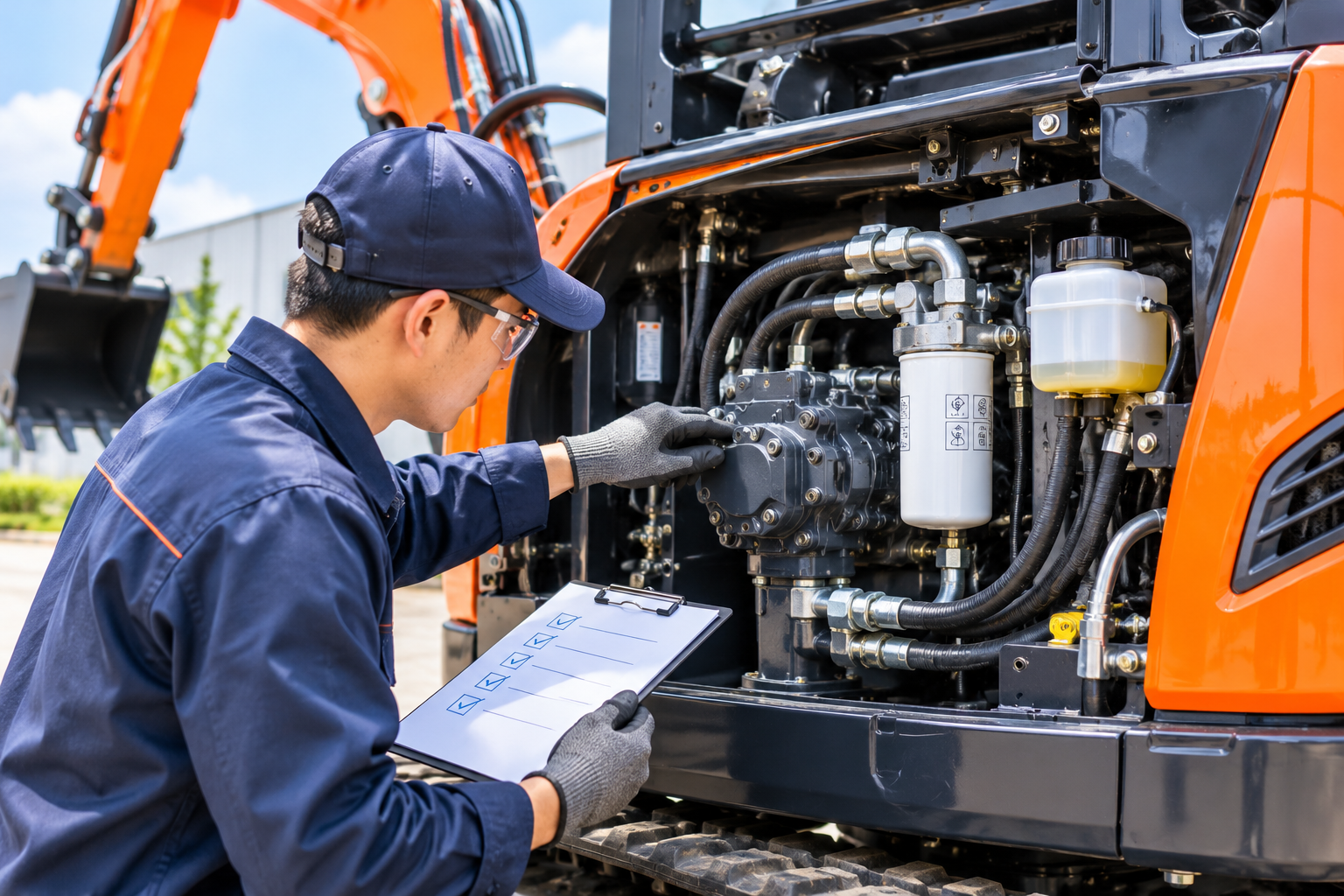
1. Check Hydraulic Oil Level and Quality Regularly
Hydraulic oil transfers power and lubricates moving components inside the pump. Insufficient or contaminated oil can cause poor lubrication, overheating, and premature pump wear.
Operators should:
- Check the hydraulic oil level according to the manufacturer’s instructions.
- Look for unusual discoloration, foam, or signs of water contamination.
- Use the recommended hydraulic oil grade.
- Avoid mixing incompatible hydraulic oils.
Maintaining clean hydraulic oil is essential for protecting internal pump components.
2. Replace Hydraulic Filters on Schedule
Hydraulic filters remove dirt, metal particles, and other contaminants from the oil.
When a filter becomes clogged, it can restrict oil flow and increase the risk of pump damage.
To maintain proper filtration:
- Inspect filter indicators regularly, if equipped.
- Replace hydraulic filters at the intervals specified in the maintenance manual.
- Clean the surrounding area before opening the filter housing.
- Keep replacement filters and installation components free from contamination.
Regular filter replacement helps maintain stable hydraulic flow and protects sensitive hydraulic components.
3. Inspect Hydraulic Hoses and Connections
Damaged hoses, loose fittings, and leaking connections can reduce hydraulic efficiency and allow contaminants to enter the system.
During routine inspections, check for:
- Oil leakage around pump connections and fittings.
- Cracks, bulges, or abrasion on hydraulic hoses.
- Loose fittings and damaged seals.
- Unusual vibration or noise around the pump.
Any damaged components should be repaired or replaced promptly to prevent further hydraulic system problems.
4. Prevent Hydraulic Oil Overheating
Excessive hydraulic oil temperature reduces oil viscosity and weakens its ability to maintain an effective lubricating film.
Prolonged overheating can accelerate wear on pump components and seals.
To prevent overheating:
- Keep hydraulic oil at the recommended level.
- Maintain clean hydraulic oil coolers and radiator surfaces.
- Avoid continuous operation beyond the machine’s rated capacity.
- Allow the hydraulic system to warm up appropriately in cold conditions.
Stable operating temperatures help maintain hydraulic pump efficiency and reliability.
5. Avoid Running the Pump Without Sufficient Oil
A hydraulic pump relies on a continuous supply of oil for lubrication and cooling.
Insufficient oil can cause cavitation, increased friction, and internal damage.
Always check the hydraulic oil level before starting the machine.
If unusual pump noise, excessive vibration, or irregular hydraulic movement occurs, stop operation and investigate the cause.
Never operate the hydraulic pump without sufficient hydraulic oil.
6. Follow the Manufacturer’s Maintenance Schedule
Different mini excavator models have different hydraulic pump designs, oil capacities, and maintenance requirements.
Following the manufacturer’s maintenance schedule is therefore essential.
A practical maintenance routine includes:
- Daily: Check hydraulic oil level and inspect for visible leaks.
- Regular intervals: Inspect hoses, fittings, filters, and hydraulic oil condition.
- Scheduled servicing: Replace hydraulic oil and filter elements according to the operation and maintenance manual.
- When abnormalities occur: Arrange professional inspection of pump pressure, flow, and internal components.
Machines operating in dusty environments or using hydraulic attachments such as breakers may require more frequent hydraulic system maintenance.
Conclusion
Maintaining a mini excavator hydraulic pump requires attention to oil quality, filtration, hose condition, operating temperature, and scheduled servicing.
These practices help reduce unnecessary wear, maintain consistent hydraulic performance, and minimize equipment downtime.
For contractors, equipment rental companies, and machine owners, regular hydraulic pump maintenance is an important part of controlling operating costs and extending the service life of mini excavators.
Choosing a well-designed mini excavator and following proper maintenance procedures can help ensure reliable performance across different construction applications.

