
Engine accessibility is an important design factor that affects mini excavator maintenance efficiency, inspection accuracy, and long-term operating costs.
When key engine components are easy to reach, operators and technicians can complete routine checks more efficiently and identify potential problems before they lead to major failures.
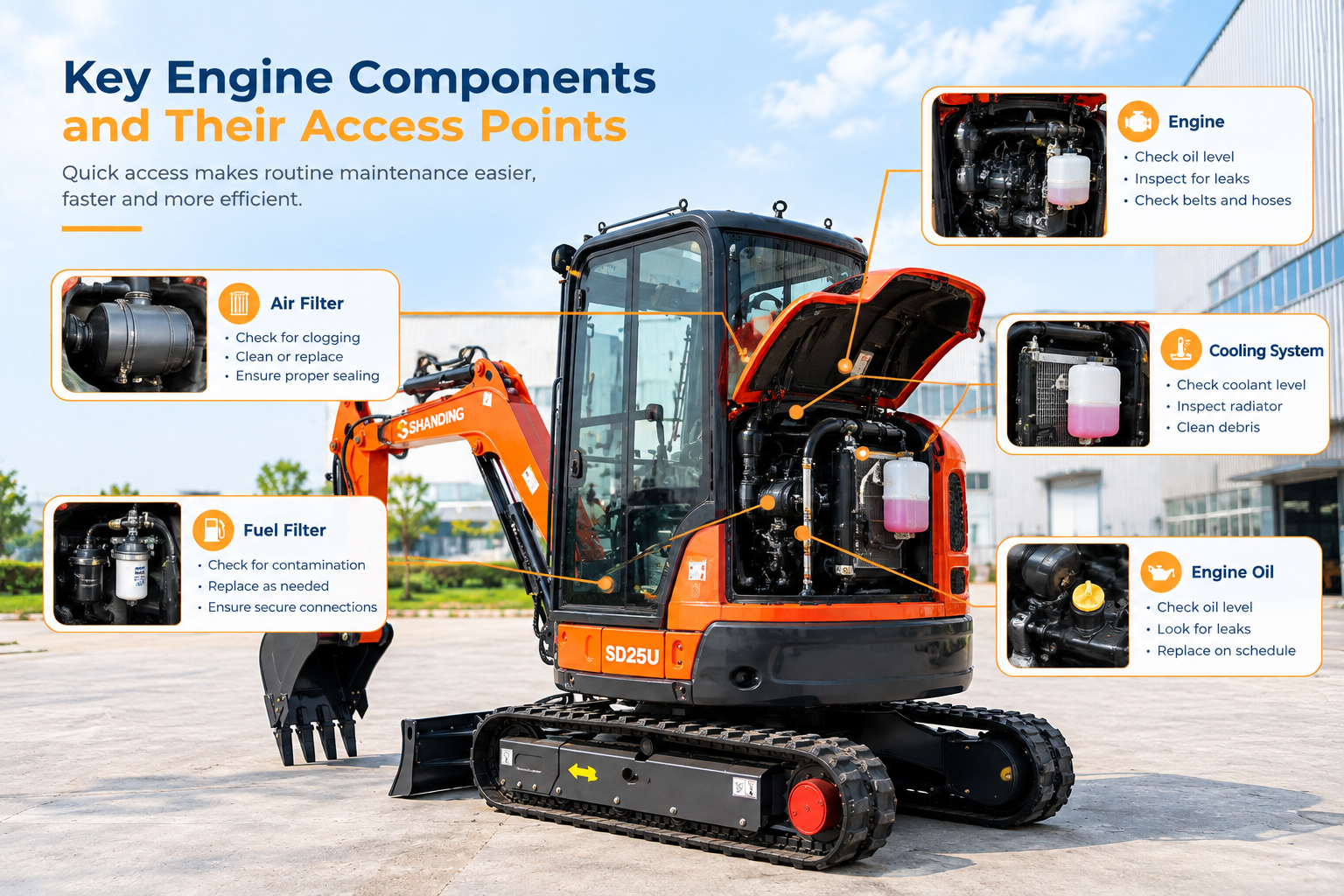
1. Faster Routine Inspections
Mini excavators require regular inspection of engine oil, coolant, air filters, fuel filters, belts, and hoses.
If these components are easy to access, technicians can check their condition with less disassembly.
Convenient access encourages operators to follow maintenance schedules consistently, helping detect leaks, loose connections, and abnormal wear at an early stage.
2. Reduced Maintenance Time and Labor Costs
Poor engine accessibility may require technicians to remove additional covers or components before performing simple maintenance tasks. This increases service time and labor requirements.
A well-designed engine compartment provides sufficient working space around frequently serviced components.
This can shorten routine maintenance procedures and reduce equipment downtime, particularly for rental fleets and contractors operating multiple machines.
3. Improved Fault Detection
Clear visibility and convenient access make it easier to identify oil leaks, damaged hoses, loose wiring, and signs of overheating.
Early detection matters because minor issues can develop into more serious mechanical problems if they remain unnoticed.
However, accessibility alone does not guarantee reliability; effective maintenance also depends on inspection procedures, component quality, and operator practices.
4. Easier Filter Replacement and Servicing
Air, oil, and fuel filters require periodic inspection or replacement according to the manufacturer’s maintenance schedule.
If filters are positioned in accessible locations, replacement is generally simpler and less likely to involve unnecessary disassembly.
When evaluating a mini excavator, buyers should check whether common service points can be reached with standard tools and whether the engine hood or access panels can be opened safely in typical working conditions.
5. What Should Buyers Look for?
When comparing mini excavators, buyers should evaluate engine accessibility alongside performance and operating cost. Important considerations include:
- Access panels: Can the engine compartment be opened easily and securely?
- Service-point layout: Are filters, fluid reservoirs, and inspection points easy to locate?
- Working clearance: Is there enough space to perform routine servicing safely?
- Maintenance documentation: Does the manufacturer provide clear service intervals and procedures?
- Parts and technical support: Are replacement filters and other routine service parts readily available?
- These factors help buyers estimate practical maintenance requirements rather than relying on machine specifications alone.
Conclusion
Engine accessibility directly influences how efficiently a mini excavator can be inspected, serviced, and returned to work.
A service-friendly design can reduce routine maintenance time, support earlier fault detection, and help control labor costs over the machine’s service life.
For contractors, rental businesses, and equipment importers, evaluating engine access before purchasing a mini excavator is a practical step toward managing downtime and long-term ownership costs.

