
For overseas buyers, choosing a mini excavator supplier is not simply a matter of finding the lowest price.
Supplier capability can directly affect machine quality, delivery reliability, operating costs, spare-parts availability, and after-sales support.
A structured comparison helps buyers reduce purchasing risks and identify a supplier that offers long-term value.
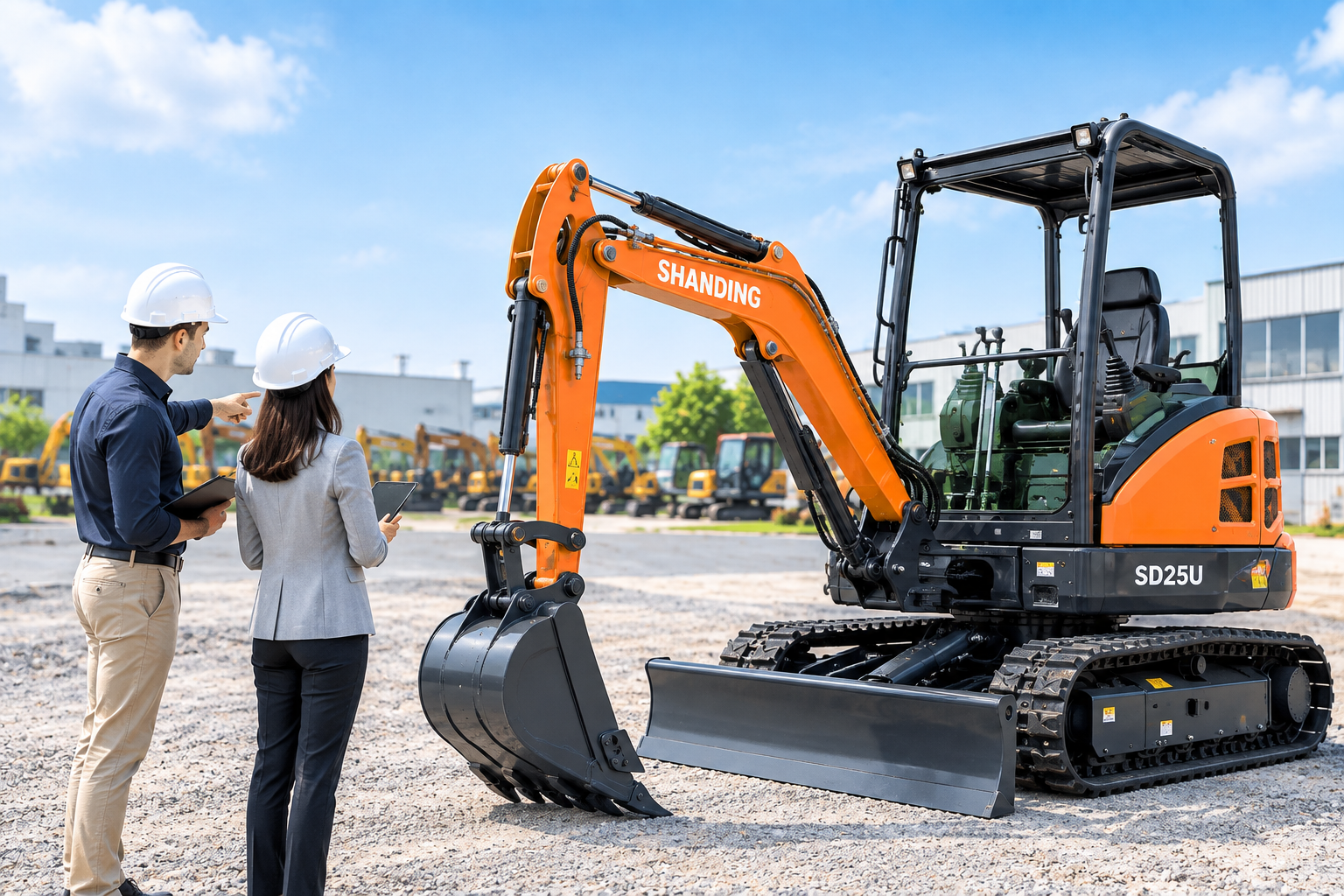
1. Compare Product Specifications
Start by comparing the specifications of similar mini excavator models.
Important factors include:
- Operating weight
- Engine power
- Maximum digging depth
- Maximum digging reach
- Bucket capacity
- Hydraulic system performance
- Tail-swing configuration
- Track width
- Attachment compatibility
Specifications should be evaluated according to the intended working conditions rather than simply selecting the machine with the largest numbers.
2. Evaluate Manufacturing and Quality Control
Supplier reliability depends heavily on manufacturing capability and quality-control procedures.
Buyers should consider whether the supplier has:
- Its own manufacturing facilities
- Standardized assembly procedures
- Component inspection processes
- Hydraulic and functional testing
- Final machine inspection before shipment
Consistent production and testing can reduce the probability of early mechanical or hydraulic problems.
3. Compare Total Cost, Not Just Purchase Price
A lower quotation does not always mean a lower overall cost.
The total cost of ownership may include:
Purchase price + shipping + spare parts + maintenance + fuel + downtime
Therefore, buyers should compare similar configurations and calculate the expected operating cost over the machine’s service life.
4. Check Spare Parts Availability
Spare-parts support is particularly important for overseas buyers because international shipping can increase downtime.
Before purchasing, ask the supplier about:
- Common spare-parts availability
- Parts ordering procedures
- Lead times
- Parts compatibility
- Technical documentation
A supplier with a reliable parts supply system can help keep machines operating efficiently after delivery.
5. Compare Warranty and After-Sales Support
Warranty terms should be clearly understood before placing an order.
Buyers should check:
- Warranty period
- Covered components
- Warranty exclusions
- Technical support channels
- Troubleshooting assistance
- Response time
Good after-sales support is especially valuable when the buyer’s operators are working far from the supplier’s factory.
6. Examine Export and Delivery Experience
International machinery sales involve more than manufacturing.
Export experience can influence documentation, packaging, logistics coordination, and delivery reliability.
Buyers can ask whether the supplier has experience exporting to their target market and whether the supplier can provide the necessary shipping and machine documentation.
7. Compare Communication and Technical Capability
Communication quality is an important indicator of supplier reliability.
A professional supplier should be able to explain specifications, working limitations, maintenance requirements, attachment compatibility, and delivery conditions clearly.
Fast communication is useful, but accurate and technically relevant communication is more important.
8. Request Comparable Quotations
When comparing suppliers, buyers should request quotations based on similar specifications and configurations.
A useful comparison should include:
- Machine model
- Standard configuration
- Optional attachments
- Warranty
- Spare parts
- Packaging
- Delivery terms
- Payment terms
Comparing quotations on the same basis makes price differences easier to understand.
Conclusion
Overseas buyers should evaluate mini excavator suppliers through a combination of product quality, manufacturing capability, total cost, spare-parts support, warranty, export experience, and communication.
The best supplier is not necessarily the one offering the lowest initial price.
A more reliable choice is a supplier that can provide consistent machine quality, transparent purchasing conditions, dependable after-sales support, and long-term service capability.
For overseas buyers, a structured supplier comparison can reduce purchasing risks and support better long-term equipment performance.

