
When choosing a mini excavator, many buyers focus on engine power first. A higher horsepower rating often seems to represent stronger performance. However, engine power is only one part of the machine’s capability.
For excavation work, digging force, hydraulic efficiency, and overall machine balance are equally important factors.
Understanding the difference between engine power and digging force helps buyers select the right mini excavator for their specific applications.
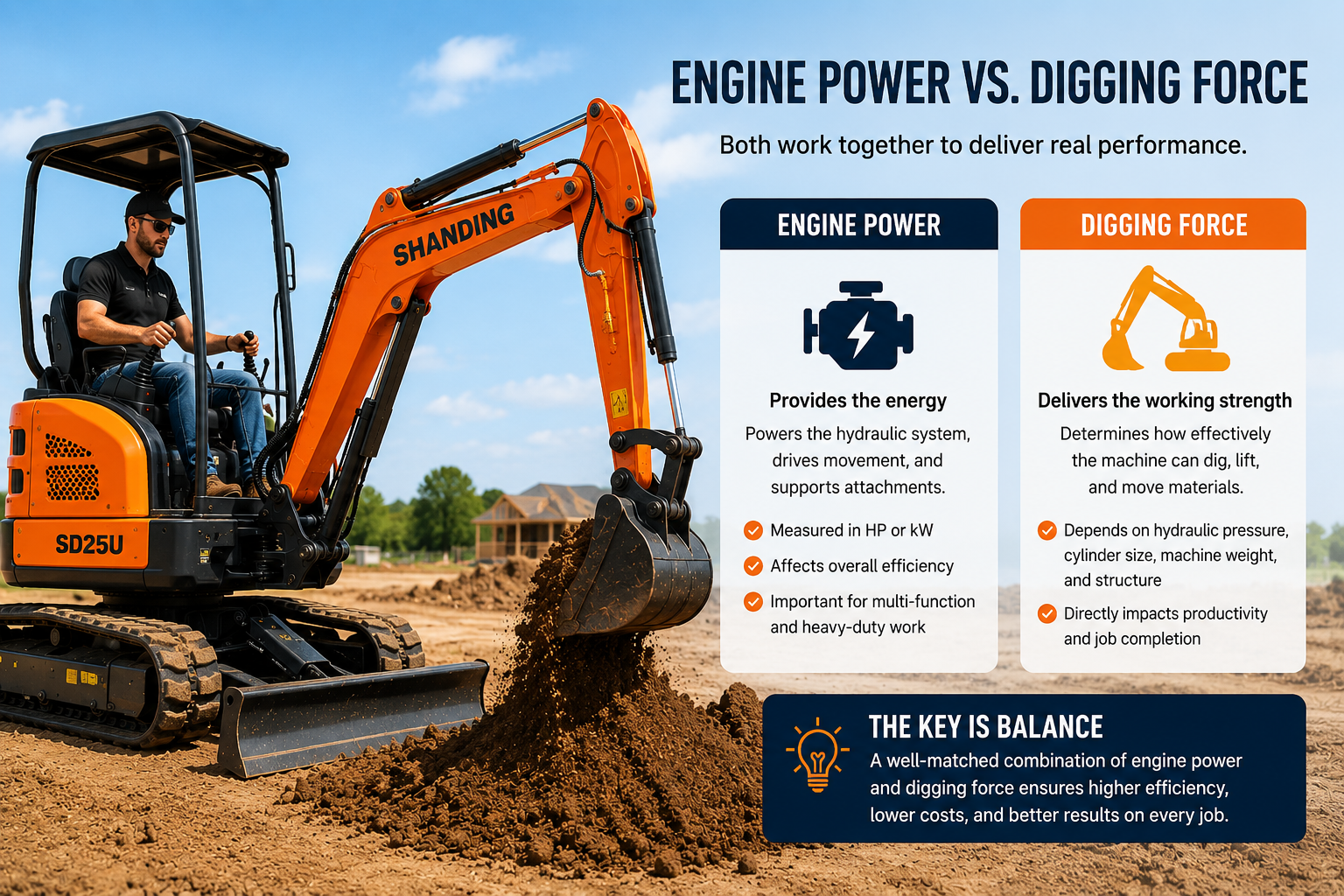
Understanding Engine Power
Engine power refers to the energy output generated by the excavator’s engine, usually measured in horsepower (HP) or kilowatts (kW). The engine provides the power needed to operate the hydraulic system, drive the tracks, and support different attachments.
A more powerful engine can improve:
- Working efficiency during heavy-duty tasks
- Stability when operating under high loads
- Performance with hydraulic attachments
- Fuel efficiency when matched with proper system design
However, engine power alone does not determine excavation performance.
A high-power engine cannot deliver maximum productivity if the hydraulic system and working components are not optimized.
The Role of Digging Force
Digging force is the actual force produced by the bucket and arm to break, lift, and move materials. It is mainly affected by:
- Hydraulic pressure and flow rate
- Cylinder size
- Boom and arm design
- Bucket capacity
- Machine weight and stability
According to hydraulic principles, higher hydraulic pressure allows cylinders to generate greater force, which directly improves digging capability.
This means a well-designed hydraulic system can help a compact excavator achieve strong digging performance even with a smaller engine.
Which One Matters More?
The answer depends on the working environment.
For general tasks such as landscaping, trenching, and farm projects, a balanced combination of engine power and digging force is usually more important than maximum horsepower.
For challenging jobs, such as:
- Digging hard soil or clay
- Excavating deep trenches
- Handling heavy materials
- Using hydraulic attachments
A strong digging force becomes a key advantage because it directly affects productivity and job completion time.
Why Balance Matters in Mini Excavators
A reliable mini excavator requires a complete power system where the engine, hydraulic system, and structure work together. Excessive engine power without efficient hydraulic performance may increase fuel consumption without improving actual productivity.
Manufacturers like Shanding focus on matching engine output with hydraulic performance, ensuring mini excavators deliver stable power, strong digging ability, and efficient operation across different job sites.
Conclusion
Engine power and digging force are not competing factors—they work together.
Engine power provides the energy source, while digging force determines how effectively that energy is converted into excavation performance.
When selecting a mini excavator, buyers should consider the complete machine design rather than focusing only on horsepower.
A properly balanced excavator can provide better efficiency, lower operating costs, and longer service life.

