
Buying a mini excavator is a significant investment for contractors, landscapers, farmers, and property owners.
A low purchase price does not always mean better value.
The real question is whether the machine can deliver enough productivity and reliability to justify its total ownership cost.
Here are the key factors to evaluate before buying a mini excavator.
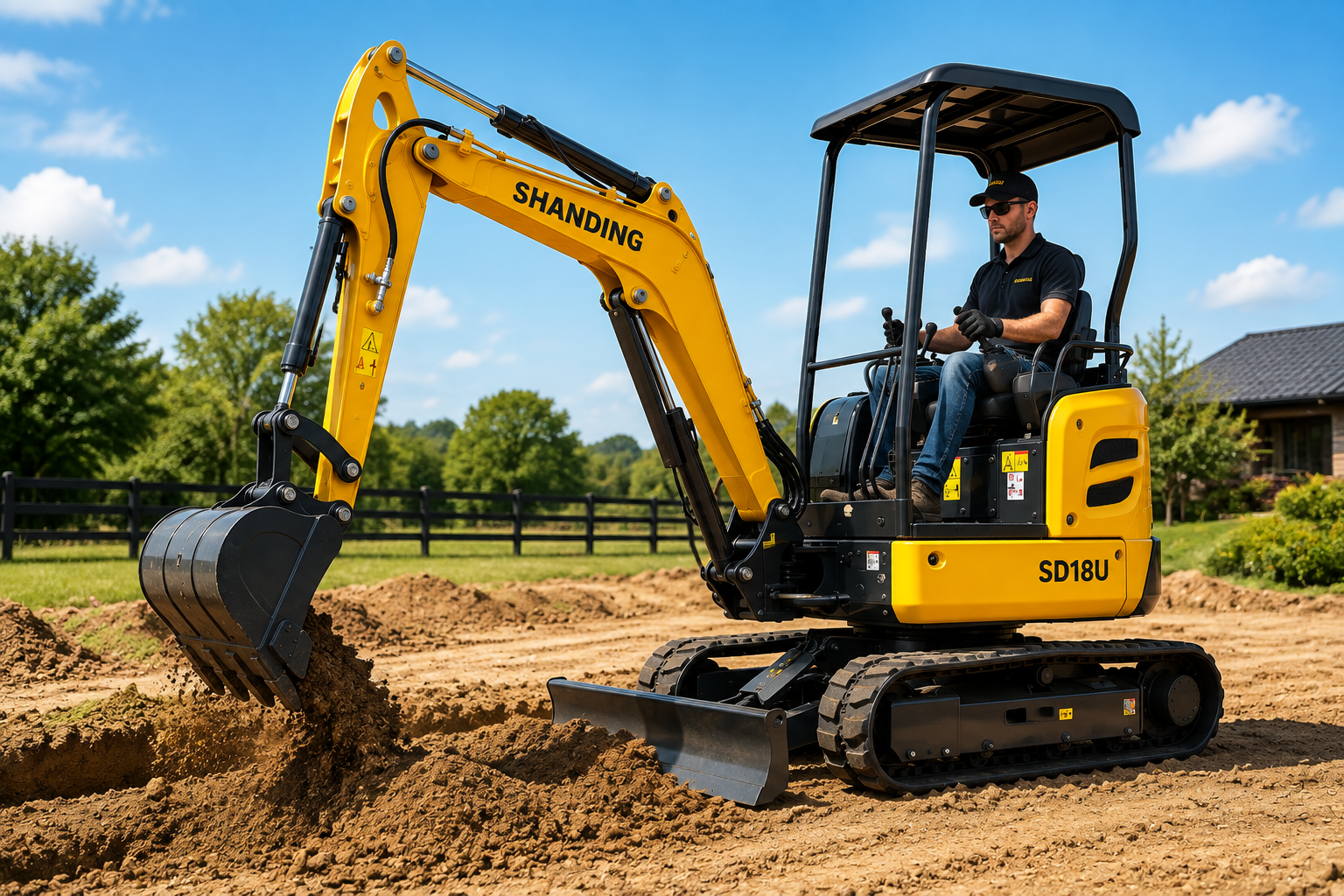
1. Compare the Total Cost of Ownership
The purchase price is only the starting point.
A practical evaluation should consider Total Cost of Ownership (TCO):
TCO = Purchase Price + Fuel + Maintenance + Repairs + Transport − Resale Value
A machine with a higher initial price can sometimes provide better long-term value if it consumes less fuel, requires less maintenance, has better parts availability, and maintains a stronger resale value.
Before making a decision, estimate the expected costs over at least three to five years.
2. Match the Machine to Your Workload
A mini excavator is more likely to be worth buying when it will be used regularly.
For example, contractors who frequently perform trenching, landscaping, foundation preparation, drainage, or small demolition work can spread the equipment cost across many operating hours.
If the machine will only be used occasionally, renting may sometimes be more economical.
The key factor is utilization rate, not simply the purchase price.
A simple calculation is:
Annual Equipment Cost ÷ Annual Working Hours = Approximate Cost per Operating Hour
The more productive hours you get from the machine, the easier it is to justify the investment.
3. Evaluate Productivity, Not Just Horsepower
Horsepower is important, but it does not tell the whole story.
When comparing machines, consider:
- Digging depth
- Digging reach
- Bucket capacity
- Hydraulic flow
- Lifting capacity
- Swing performance
- Travel speed
- Machine stability
The right combination of these specifications determines how efficiently the excavator performs real jobs.
A properly matched mini excavator can reduce manual labor and complete repetitive excavation tasks more consistently.
4. Check Maintenance and Parts Availability
A reliable machine should be easy to maintain.
Before buying, check whether routine service items such as filters, hydraulic components, hoses, seals, and undercarriage parts are readily available in your market.
Maintenance simplicity also matters.
Regular preventive maintenance helps control long-term operating costs and reduces the risk of unexpected downtime.
For overseas buyers, it is especially important to confirm the supplier’s spare-parts support and after-sales service before placing an order.
5. Consider Attachments and Versatility
A mini excavator becomes more valuable when one machine can perform multiple tasks.
Depending on your projects, useful attachments may include:
- Different digging buckets
- Hydraulic breakers
- Augers
- Hydraulic thumbs
- Grading buckets
- Rakes
If you regularly change attachments for different jobs, one excavator can potentially replace several specialized machines and improve equipment utilization.
6. Look at Reliability and Resale Value
A machine that performs well but frequently breaks down can become expensive because downtime also has a cost.
When evaluating a mini excavator, consider:
Reliability + Maintenance Support + Resale Value = Long-Term Equipment Value
A well-maintained machine with a reliable service network is generally easier to operate and potentially easier to resell later. Resale value should therefore be included when comparing different purchase options.
7. Use a Simple Buy-or-Not Test
Before purchasing, ask yourself five questions:
- Will I use the machine frequently enough?
- Can it handle my main types of work?
- Are fuel and maintenance costs manageable?
- Can I obtain spare parts and technical support easily?
- Can the machine retain reasonable value after several years?
If the answer is “yes” to most of these questions, the mini excavator is more likely to be a worthwhile investment.
Conclusion
A mini excavator is worth buying when it provides a good balance of purchase cost, productivity, reliability, operating cost, versatility, and resale value.
Instead of choosing the cheapest machine, buyers should evaluate the machine’s total cost of ownership and expected working hours.
The best mini excavator is not necessarily the one with the lowest price—it is the one that delivers the greatest value throughout its working life.
For contractors and businesses that need dependable equipment for regular excavation work, choosing the right mini excavator can improve productivity while reducing dependence on manual labor and equipment rental.

