
Buying a mini excavator is a significant investment for contractors, landscapers, rental businesses, and equipment distributors.
While a low purchase price may seem attractive, the best mini excavator for the money is not necessarily the cheapest machine.
It is the one that delivers reliable performance, efficient operation, and manageable ownership costs over its service life.
Understanding machine specifications, jobsite requirements, and total cost of ownership (TCO) can help buyers make a more informed decision.
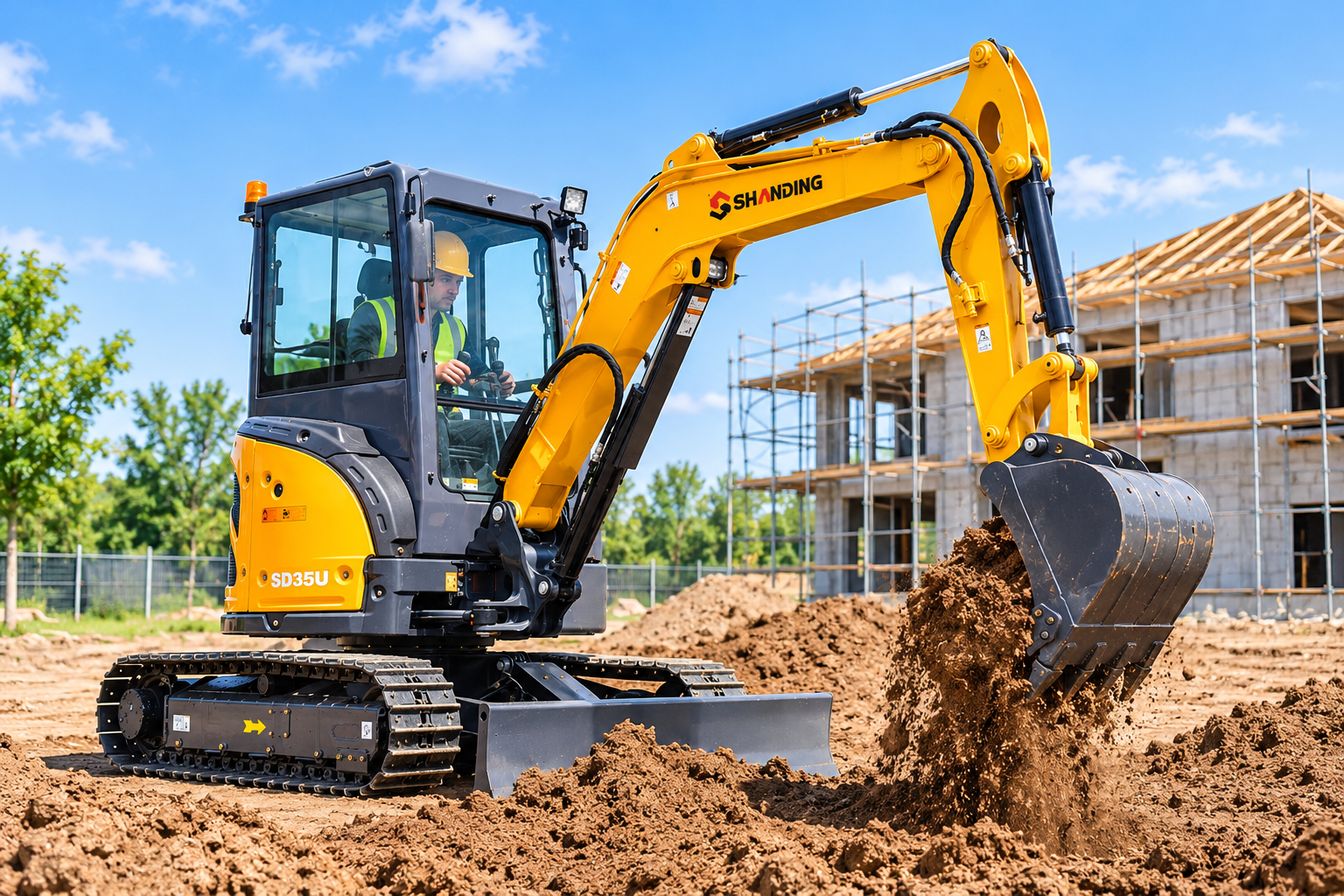
1. Choose the Right Operating Weight
Operating weight is one of the most important factors when selecting a mini excavator.
It affects digging performance, ground pressure, lifting capacity, and transportation requirements.
A machine that is too small may lack the digging force and stability required for demanding jobs.
Conversely, an oversized excavator may increase transportation costs and limit access to confined areas.
Consider the following general applications:
- 1–2 ton mini excavators: Suitable for landscaping, residential projects, and light utility work.
- 2–3 ton mini excavators: A practical choice for contractors handling drainage, trenching, and general construction.
- 3–5 ton mini excavators: Offer greater digging capability and are suitable for more demanding construction and earthmoving tasks.
The ideal operating weight depends on soil conditions, required digging depth, jobsite access, and transportation capacity.
2. Evaluate Digging Performance and Hydraulic Efficiency
A mini excavator’s productivity depends on more than engine horsepower.
Important performance specifications include:
- Maximum digging depth
- Maximum digging reach
- Bucket digging force
- Arm digging force
- Hydraulic flow and pressure
Digging force is influenced by hydraulic pressure, cylinder dimensions, and the mechanical geometry of the boom, arm, and bucket.
A machine with higher hydraulic pressure does not automatically deliver better digging performance.
The entire hydraulic system and working geometry must be considered.
Buyers should compare specifications under consistent measurement conditions and select a machine that meets their actual workload requirements.
3. Consider Fuel Consumption and Operating Costs
Fuel consumption directly affects the cost of operating a mini excavator.
A machine with efficient engine performance and a well-matched hydraulic system can help reduce fuel expenses over time.
However, actual fuel consumption varies according to engine load, soil conditions, operator behavior, and working hours.
When comparing machines, consider:
- Engine efficiency under typical workloads
- Fuel consumption per operating hour
- Hydraulic system performance
- Maintenance intervals
- Availability and cost of replacement parts
A useful calculation is:
Fuel Cost per Year = Average Fuel Consumption per Hour × Annual Operating Hours × Fuel Price
This calculation allows buyers to estimate annual fuel expenses and compare machines based on their expected operating conditions.
4. Calculate the Total Cost of Ownership
The purchase price is only one part of the overall cost of owning a mini excavator.
Total cost of ownership (TCO) includes the major expenses incurred throughout the machine’s service life.
A simplified model is:
TCO = Purchase Cost + Operating Costs + Maintenance and Repair Costs + Transportation Costs − Resale Value
For a more accurate comparison, buyers should also consider financing costs, insurance, attachments, and downtime.
A machine with a lower initial price may become more expensive if it requires frequent repairs, consumes more fuel, or experiences extended downtime.
For contractors, the cost per operating hour is often a more useful comparison than the purchase price alone.
5. Check Maintenance Accessibility and Parts Availability
Regular maintenance is essential for maintaining excavator performance and extending component life.
Before purchasing, evaluate how easily operators can access:
- Engine oil and fuel filters
- Air filters
- Hydraulic filters
- Coolant and fluid inspection points
- Grease fittings
- Undercarriage components
Easy maintenance access can reduce service time and help prevent maintenance-related downtime.
For overseas buyers, spare parts availability and technical support are especially important.
Confirm the availability of commonly replaced components, maintenance documentation, warranty conditions, and after-sales support before making a purchase.
6. Select Attachments Based on Your Applications
The right attachments can significantly improve the versatility of a mini excavator.
Common attachments include:
- General-purpose buckets
- Narrow trenching buckets
- Hydraulic breakers
- Augers
- Hydraulic thumbs
- Grading buckets
Before purchasing attachments, verify compatibility with the excavator’s hydraulic flow, operating pressure, mounting system, and auxiliary hydraulic configuration.
Choosing compatible attachments helps maintain hydraulic performance and reduces the risk of unnecessary equipment wear.
7. Consider Transportation and Jobsite Access
Transportation requirements can influence the overall value of a mini excavator.
Buyers should evaluate the machine’s transport weight, overall dimensions, track width, and loading requirements.
For residential construction and landscaping, compact dimensions and reduced tail swing can improve maneuverability in confined spaces.
For overseas buyers, transportation planning should also include shipping dimensions, container loading requirements, and applicable import regulations.
A machine that fits the jobsite and transportation system can help reduce logistical expenses and improve operational flexibility.
8. Compare Machines Based on Long-Term Value
When evaluating different mini excavators, avoid making decisions based solely on advertised prices.
A practical comparison should include:
- Purchase price: Initial investment and included configuration.
- Performance: Digging depth, digging force, and hydraulic capability.
- Fuel efficiency: Expected fuel consumption under typical workloads.
- Maintenance: Service intervals and accessibility.
- Parts support: Availability and delivery time of spare parts.
- Versatility: Compatibility with required attachments.
- Transportation: Operating weight and overall dimensions.
- Reliability: Component quality, warranty, and service support.
The best-value machine is the one that meets the required performance standards while maintaining reasonable operating costs and dependable productivity.
Conclusion
Choosing the best mini excavator for the money requires a balanced evaluation of purchase price, performance, fuel efficiency, maintenance, and long-term operating costs.
By matching operating weight and specifications to actual jobsite requirements, buyers can avoid unnecessary investment and improve equipment utilization.
For contractors, rental businesses, and international equipment distributors, a reliable mini excavator with practical specifications and accessible maintenance support can provide better long-term value than a machine selected solely for its low initial price.
Shanding offers a range of mini excavators designed for different construction, landscaping, and earthmoving applications. Buyers can evaluate the appropriate model based on operating weight, digging performance, jobsite conditions, and intended use.
Contact Shanding to explore mini excavator options that match your operational requirements and equipment investment goals.

