
Engine overheating is a common issue that can affect mini excavator performance, reliability, and service life.
When the engine temperature exceeds its normal operating range, the machine may lose power, consume more fuel, or suffer serious mechanical damage.
Understanding the causes of overheating helps operators identify problems early and maintain stable performance on the jobsite.
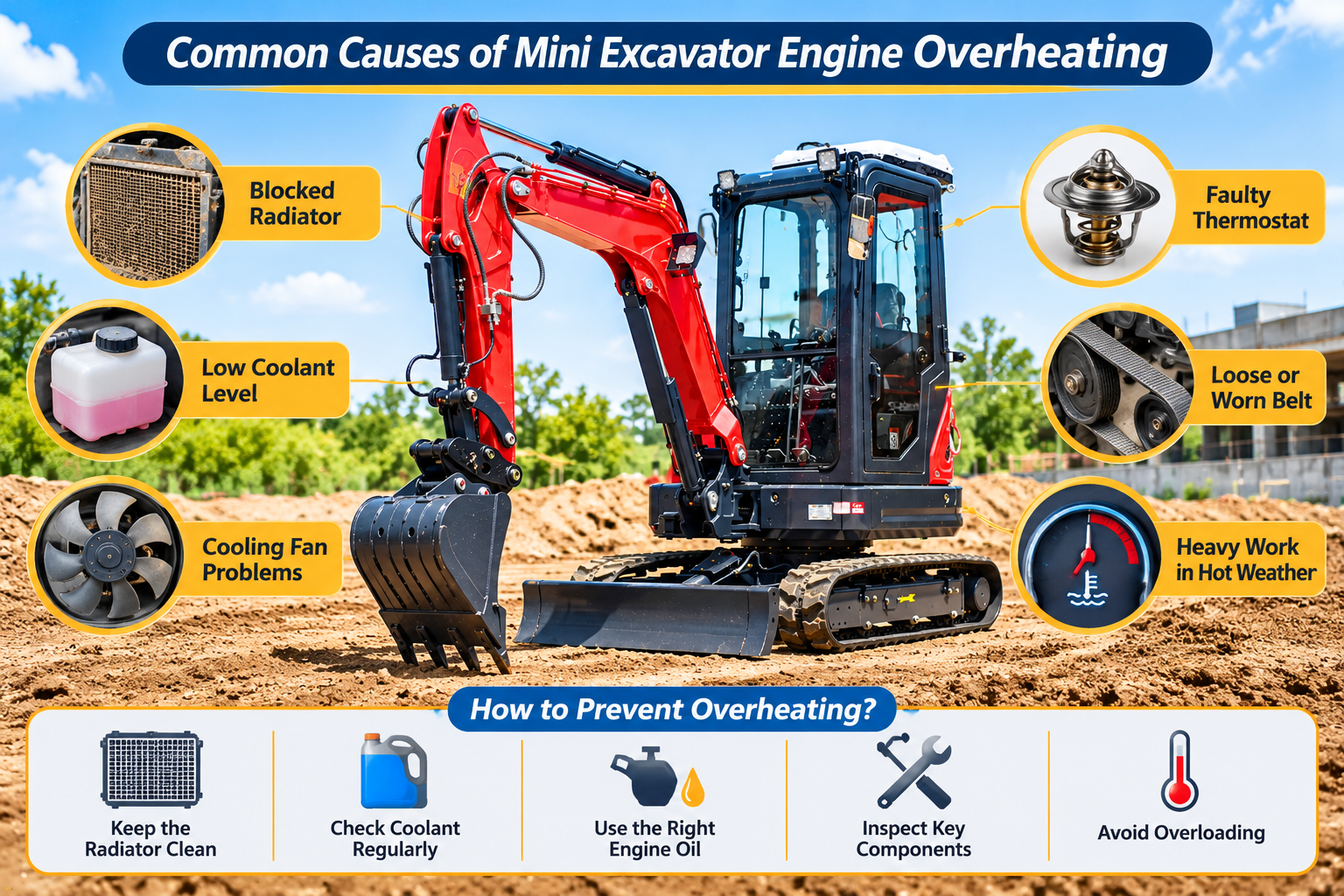
1. A Blocked Radiator or Restricted Airflow
The radiator transfers heat from the engine coolant to the surrounding air. Its cooling efficiency depends on sufficient airflow through the radiator fins.
Dust, mud, grass, and debris can accumulate on the radiator surface, reducing airflow and heat transfer.
This is particularly common when mini excavators operate in dusty construction sites or landscaping environments.
Prevention:
- Inspect the radiator and cooling fins regularly.
- Remove dust and debris using suitable low-pressure air or water.
- Avoid damaging the radiator fins during cleaning.
A clean radiator helps maintain effective heat dissipation and reduces the risk of overheating.
2. Low Coolant Level or Coolant Leakage
Coolant absorbs heat from the engine and carries it to the radiator. When the coolant level is too low, the system cannot transfer heat efficiently.
Common causes include:
- Leaking hoses or loose connections
- Damaged radiator seals
- A faulty radiator cap
- Water pump leakage
- Insufficient coolant during maintenance
Operators should check the coolant level before operation and inspect the cooling system for visible leaks. Always use the coolant type and concentration specified by the engine manufacturer.
3. A Faulty Thermostat
The thermostat regulates coolant circulation according to engine temperature.
When the engine is cold, the thermostat restricts coolant flow to help the engine reach its operating temperature. Once the engine warms up, it opens to allow coolant to circulate through the radiator.
If the thermostat becomes stuck closed, coolant circulation may be restricted, causing the engine temperature to rise rapidly.
A faulty thermostat should be inspected and replaced according to the manufacturer’s service procedures.
4. Cooling Fan or Fan Belt Problems
The cooling fan helps move air through the radiator, especially when the excavator operates at low travel speeds or remains stationary during excavation.
A damaged fan, loose belt, or slipping belt can reduce airflow and cooling efficiency.
Regular inspection should include:
- Fan blade condition
- Belt tension and wear
- Fan drive operation
- Unusual noise or vibration
If the fan or belt is damaged, repair or replacement may be necessary to restore proper cooling performance.
5. Excessive Engine Load and High Ambient Temperature
Mini excavators generate more heat when operating under heavy loads. Continuous digging in hard soil, prolonged high-speed operation, or working in hot weather can increase the cooling system’s thermal demand.
When heat generation exceeds the cooling system’s ability to dissipate it, engine temperature rises.
To reduce overheating risk:
- Avoid continuous operation beyond the machine’s rated capacity.
- Allow appropriate cooling periods during demanding work.
- Keep the cooling system clean.
- Follow the recommended operating procedures.
Matching the machine’s capabilities to jobsite requirements helps maintain stable engine temperature and improve operating efficiency.
6. Incorrect Engine Oil or Insufficient Lubrication
Engine oil reduces friction between moving components and helps carry heat away from internal engine parts.
Low oil levels, unsuitable oil viscosity, or deteriorated oil can increase friction and contribute to excessive heat generation.
7. How to Prevent Mini Excavator Engine Overheating
Preventive maintenance is one of the most effective ways to reduce overheating-related downtime.
A practical inspection routine includes:
- Checking coolant and engine oil levels before starting work
- Inspecting hoses, connections, and the radiator for leaks
- Cleaning radiator fins and cooling components
- Checking fan and belt condition
- Monitoring the temperature gauge during operation
- Following the engine manufacturer’s maintenance intervals
If the engine overheats, stop the machine safely and allow it to cool.
Never open a hot radiator cap, as pressurized coolant or steam can cause serious burns.
If the temperature continues to rise after basic checks, contact qualified service personnel.
Conclusion
Mini excavator engine overheating is commonly caused by restricted radiator airflow, low coolant, thermostat failure, cooling fan problems, excessive engine load, or insufficient lubrication.
Regular inspections and proper operating practices help maintain efficient heat transfer, reduce unexpected downtime, and extend engine service life.
For contractors and equipment owners, understanding these causes is an important part of keeping mini excavators reliable and productive across different jobsite conditions.

