
Choosing the right bucket is essential for improving mini excavator productivity, reducing fuel consumption, and minimizing equipment wear.
Different jobs require different bucket designs, capacities, and cutting-edge configurations. Selecting a bucket based on soil conditions and job requirements helps operators work more efficiently and protect the machine.
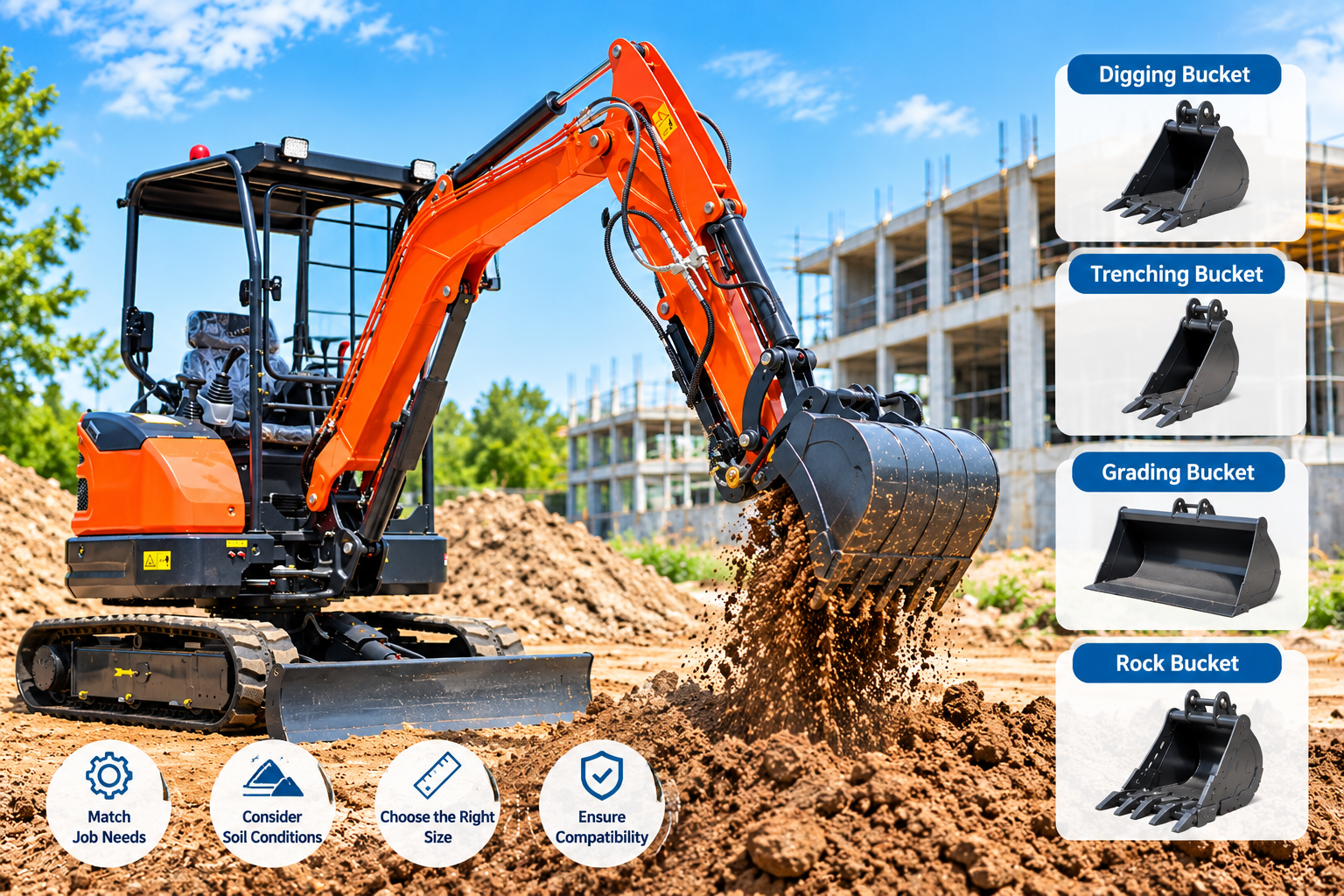
1. Understand the Main Types of Mini Excavator Buckets
Mini excavator buckets are designed for specific applications. The most common types include:
- Digging Bucket: A general-purpose bucket for everyday excavation, trenching, and soil removal. It offers a practical balance between capacity and digging performance.
- Trenching Bucket: A narrow bucket designed for digging precise trenches for pipes, cables, and drainage systems. Its smaller width helps reduce unnecessary soil disturbance.
- Grading Bucket: A wider bucket with a smooth cutting edge, suitable for leveling soil, backfilling, and finishing surfaces.
- Heavy-Duty Bucket: Built with reinforced materials and wear-resistant components for demanding conditions such as compacted soil, gravel, and abrasive materials.
- Rock Bucket: Designed with stronger structures and specialized teeth to handle rocky or highly abrasive ground.
The bucket’s shape, width, and cutting edge affect how effectively it penetrates the ground and retains material.
2. Match Bucket Selection to Soil Conditions
Soil type directly affects digging resistance and bucket performance.
- Soft Soil: A larger-capacity bucket can improve productivity because the material is relatively easy to penetrate and load.
- Clay: Sticky clay may adhere to the bucket. A suitable bucket shape and smooth interior can help reduce material buildup.
- Gravel and Sand: General-purpose buckets are often suitable, but bucket capacity should be matched to the machine’s lifting capability.
- Rocky or Compact Soil: A narrower, reinforced bucket with suitable teeth can improve penetration and reduce excessive stress on the bucket structure.
The basic principle is to select a bucket that provides sufficient penetration without exceeding the excavator’s hydraulic and structural limits.
3. Choose the Correct Bucket Width and Capacity
Bucket width affects excavation accuracy, cycle time, and the amount of material removed.
A narrow bucket is useful for utility trenches and confined spaces. A wider bucket can reduce the number of passes during bulk excavation or grading.
However, a larger bucket is not always more productive. If the bucket is too large for the machine, it may increase cycle time, reduce stability, and place excessive loads on the boom, arm, and hydraulic system.
When selecting bucket capacity, consider:
- Excavator operating weight and lifting capacity
- Hydraulic digging force
- Material density
- Required trench or excavation dimensions
- Jobsite access and working space
For mini excavators, the bucket should be sized according to the machine’s specifications rather than capacity alone.
4. Consider Bucket Teeth and Cutting Edges
Bucket teeth influence penetration, while cutting edges affect surface finishing and material handling.
Toothed buckets are generally effective for excavation because the teeth concentrate force into smaller contact areas, helping the bucket penetrate the ground.
Smooth-edge buckets are more suitable for grading, leveling, and finishing tasks where a clean surface is important.
Replace worn or damaged teeth when penetration performance declines. Excessive tooth wear can increase digging resistance and place additional stress on the bucket and excavator.
5. Check Compatibility with the Mini Excavator
Before purchasing a bucket, confirm that it matches the excavator’s attachment interface and operating specifications.
Important compatibility factors include:
- Pin diameter and pin spacing
- Bucket width and capacity
- Machine operating weight
- Hydraulic system requirements, if applicable
- Quick coupler compatibility
An incompatible bucket may affect digging performance, working geometry, or safety. Always refer to the manufacturer’s specifications before installing an attachment.
6. Evaluate Total Operating Cost
The lowest-priced bucket is not necessarily the most economical option. A bucket that matches the application can improve productivity and reduce wear-related costs.
Consider the following factors:
- Initial purchase price
- Wear resistance and expected service life
- Replacement teeth and cutting-edge costs
- Maintenance requirements
- Productivity under typical jobsite conditions
For contractors who use mini excavators across multiple applications, investing in different bucket types may be more efficient than using one bucket for every task.
Conclusion
Choosing the right mini excavator bucket depends on the job, soil conditions, bucket capacity, cutting-edge design, and machine compatibility.
A properly matched bucket can improve digging efficiency, reduce unnecessary machine stress, and support lower operating costs.
For contractors and equipment buyers, understanding these factors helps ensure that a mini excavator performs effectively across different construction, landscaping, and utility projects.

