
The boom cylinder is one of the key hydraulic components of a mini excavator.
It controls the movement of the boom, allowing the machine to lift, lower, and position its working equipment during excavation.
Understanding how the boom cylinder works helps operators and equipment buyers evaluate machine performance, hydraulic efficiency, and maintenance requirements.
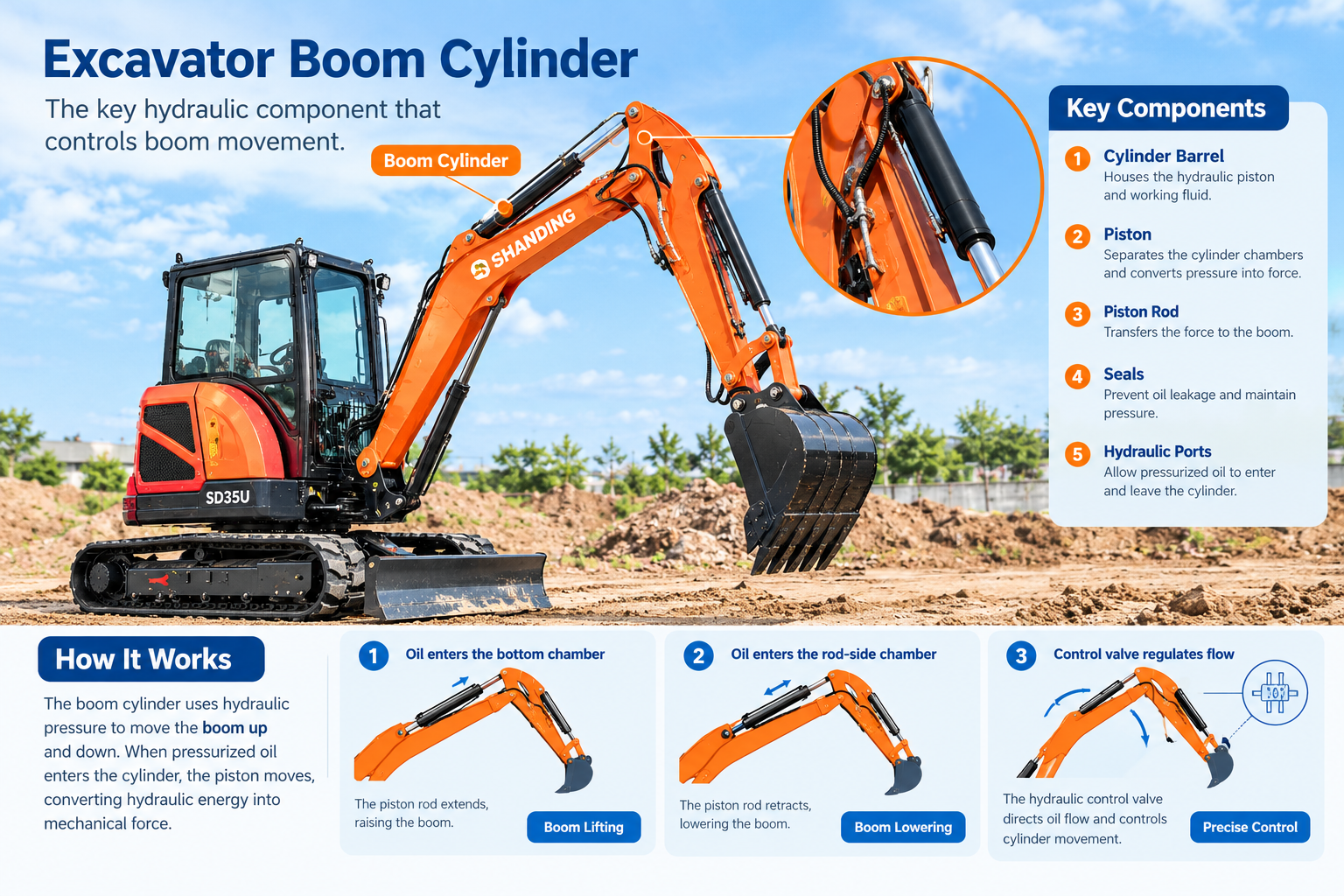
1. What Is an Excavator Boom Cylinder?
An excavator boom cylinder is a hydraulic actuator that converts hydraulic energy into mechanical force.
It is typically installed between the excavator’s upper structure and boom.
By extending or retracting, the cylinder changes the boom’s position and controls its movement.
A typical boom cylinder consists of:
- Cylinder Barrel: Houses the hydraulic piston and working fluid.
- Piston: Separates the cylinder chambers and converts hydraulic pressure into force.
- Piston Rod: Transfers the force generated by the piston to the boom.
- Seals: Prevent hydraulic fluid leakage and maintain pressure.
- Hydraulic Ports: Allow pressurized oil to enter and leave the cylinder.
These components work together to provide controlled boom movement.
2. Why Is the Boom Cylinder Important for Mini Excavator Performance?
The boom cylinder directly affects several aspects of machine operation.
Lifting and Lowering the Boom
The cylinder provides the force required to raise and lower the boom, allowing operators to position the arm and bucket for excavation.
Digging Performance
The boom cylinder helps maintain the correct boom position during digging. Its force and movement influence the machine’s ability to work efficiently at different depths and distances.
However, overall digging performance also depends on the arm cylinder, bucket cylinder, hydraulic system, and machine geometry.
Working Range
The boom cylinder’s stroke length and mounting geometry determine part of the boom’s movement range.
Together with the boom length, arm length, and bucket configuration, these factors influence the machine’s maximum digging depth and working reach.
Operating Efficiency
Smooth and responsive boom movement allows operators to position the bucket accurately, reduce unnecessary movements, and improve productivity.
3. What Factors Affect Boom Cylinder Performance?
Several factors influence the performance and reliability of a mini excavator boom cylinder.
Hydraulic Pressure: The available system pressure determines the force the cylinder can generate for a given effective piston area.
Cylinder Bore and Rod Diameter: These dimensions influence the cylinder’s force output, speed characteristics, and structural capacity.
Stroke Length: A longer stroke allows greater linear movement, but the final boom range also depends on the machine’s geometry.
Hydraulic Flow Rate: Oil flow affects cylinder movement speed. Higher flow can increase speed, provided the system is designed to handle it.
Seal Condition: Worn or damaged seals can cause internal leakage, reducing efficiency and affecting movement control.
Proper cylinder design and hydraulic system matching are essential for reliable operation.
4. How to Maintain a Mini Excavator Boom Cylinder
Regular inspection helps prevent hydraulic problems and extends component service life.
- Check for Oil Leakage: Inspect the cylinder barrel, piston rod, seals, and hydraulic connections.
- Inspect the Piston Rod: Look for scratches, corrosion, or damage that may affect seal performance.
- Monitor Boom Movement: Slow, uneven, or drifting movement may indicate hydraulic or mechanical problems.
- Maintain Hydraulic Oil Quality: Contaminated oil can accelerate wear in hydraulic components.
- Inspect Mounting Pins and Bushings: Excessive clearance can increase stress on the cylinder and boom connections.
If the boom drifts downward while the controls are neutral, possible causes include internal cylinder leakage, control valve leakage, or other hydraulic issues.
A proper diagnosis is necessary before replacing components.
Maintenance should always follow the manufacturer’s service instructions.
Conclusion
The excavator boom cylinder is essential for controlling boom movement and positioning the working equipment.
By converting hydraulic pressure into mechanical force, it enables the mini excavator to lift, lower, and position the boom during construction tasks.
Its performance depends on hydraulic pressure, cylinder dimensions, oil flow, seal condition, and machine geometry.
For contractors and equipment buyers, understanding the boom cylinder helps evaluate mini excavator performance and recognize the importance of proper hydraulic maintenance.

