
When choosing a mini excavator, buyers often focus on machine size, digging depth, and engine power.
However, weight is another important specification that affects jobsite performance, transportation, and equipment selection.
Two commonly used terms are operating weight and transport weight. Although they may appear similar, they describe different conditions of the machine.
Understanding the difference helps contractors, equipment dealers, and overseas buyers make more informed purchasing and transportation decisions.
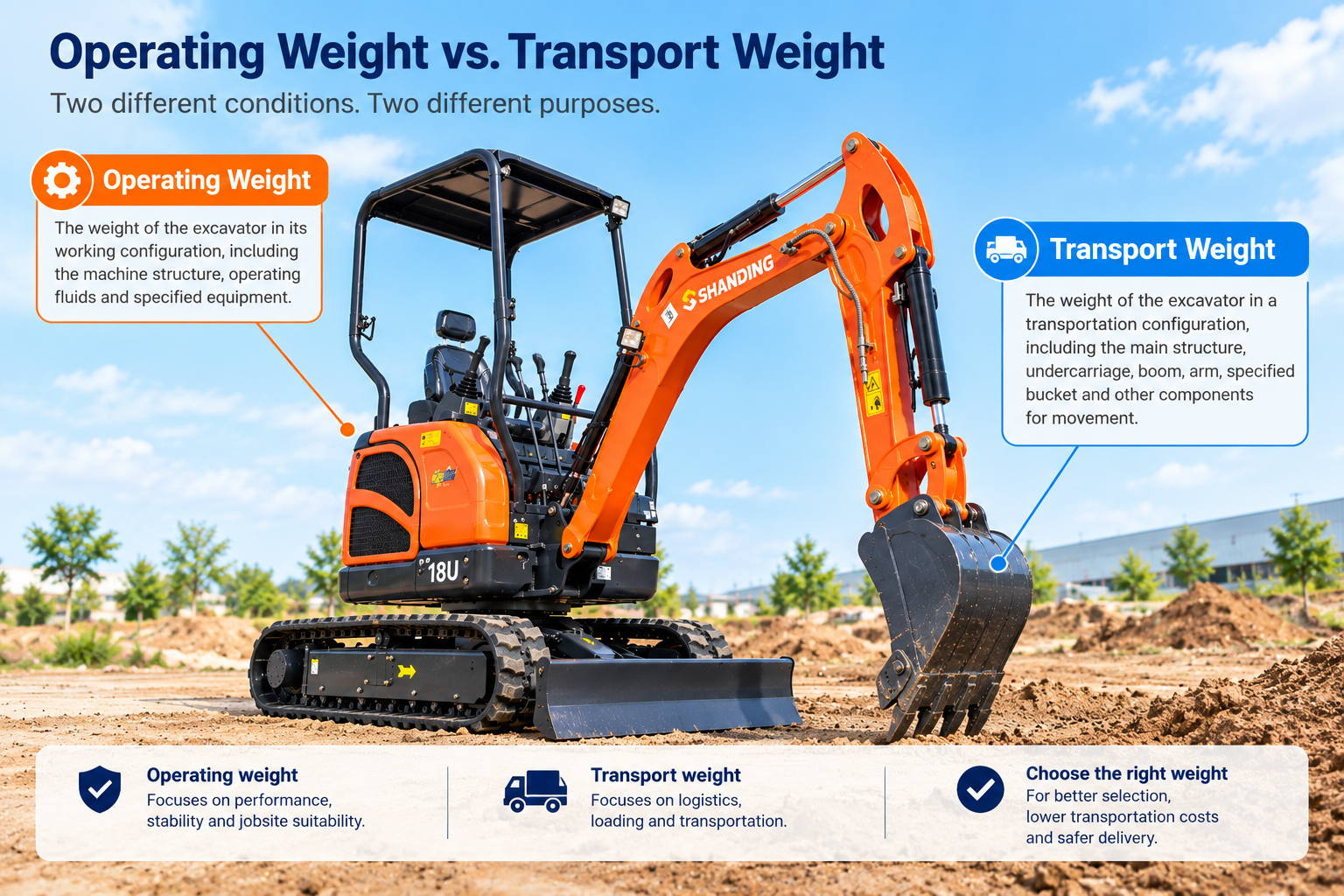
1. What Is Excavator Operating Weight?
Operating weight refers to the weight of an excavator in its defined working configuration.
It generally includes the machine structure, operating fluids, and specified standard equipment.
Depending on the manufacturer and applicable standard, it may also include the operator, bucket, and other components.
Operating weight is important because it affects several aspects of machine performance:
- Stability: Machine mass and weight distribution influence stability during digging and lifting.
- Ground Pressure: The relationship between machine weight and track contact area determines the average ground pressure.
- Lifting Capacity: Operating weight and counterweight contribute to machine stability, while lifting capacity also depends on working radius, boom position, and hydraulic capability.
- Jobsite Suitability: The machine’s weight helps determine whether it is suitable for specific ground conditions and access requirements.
For mini excavators, operating weight is particularly important when working on residential properties, landscaped areas, and other sites with limited space or ground-bearing capacity.
However, operating weight should always be checked against the manufacturer’s specifications because the included components may differ between models.
2. What Is Excavator Transport Weight?
Transport weight refers to the weight of an excavator in a specified transportation configuration.
Unlike operating weight, transport weight may reflect a machine prepared for movement between job sites or for shipment.
Depending on the manufacturer’s definition, the transport configuration may include:
- The excavator’s main structure and undercarriage
- The boom, arm, and specified bucket
- Installed counterweights
- A defined fuel level
- Selected accessories or transportation equipment
Some manufacturers publish transport weight separately, while others provide shipping weight or machine weight instead.
These terms should not automatically be considered interchangeable.
The exact definition must be confirmed in the technical documentation.
For overseas buyers, transport weight is especially important when arranging trailers, trucks, container loading, or international freight.
3. What Are the Main Differences?
Operating weight and transport weight serve different purposes.
Operating weight describes the excavator in its defined working condition.
It is primarily used to evaluate machine performance, stability, and suitability for construction tasks.
Transport weight describes the machine in a specified transportation configuration. It is mainly used for logistics planning, loading arrangements, and transportation capacity calculations.
The main differences include:
- Purpose: Operating weight supports machine selection, while transport weight supports transportation planning.
- Configuration: Operating weight generally includes specified operating equipment and fluids. Transport weight depends on the components included in the shipping configuration.
- Operator: The operator may be included in operating weight under certain standards but is generally excluded from transport weight.
- Attachments: A standard bucket may be included in operating weight, while transport weight depends on the manufacturer’s specified configuration.
- Practical Application: Operating weight is relevant to jobsite performance, while transport weight is essential for transportation and shipping.
The two values may be close, but their difference depends on the machine configuration and the manufacturer’s measurement method.
For this reason, buyers should not assume that transport weight is always lower than operating weight.
4. Why Does Excavator Weight Matter for Transportation?
Transporting a mini excavator requires more than checking the machine’s advertised tonnage.
The actual transportation load depends on the excavator, trailer, attachments, and any additional equipment being carried.
Trailer Capacity
The trailer’s rated payload must be sufficient for the excavator and all other transported items.
The total loaded trailer weight must also remain within the applicable gross vehicle weight limits.
Transportation Safety
An overloaded trailer can affect braking performance, tire loading, and vehicle stability.
Proper loading, securement, and weight distribution are essential for safe transportation.
International Shipping
For overseas buyers, transportation planning may involve container dimensions, loading arrangements, shipping documentation, and freight calculations.
The machine’s weight alone does not determine whether it can fit into a container. Overall dimensions and loading configuration must also be considered.
5. How Do Mini Excavator Configurations Affect Weight?
The weight of a mini excavator can change depending on its configuration.
Cab or Canopy: An enclosed cab generally adds weight compared with an open canopy configuration.
Bucket Size: A larger or heavier bucket changes the machine’s total weight and working configuration.
Attachments: Hydraulic breakers, augers, thumbs, and other attachments can significantly affect the machine’s actual weight.
Counterweight: Additional counterweight changes machine mass and weight distribution, influencing stability and lifting performance.
Track Type: Rubber tracks and steel tracks have different weights and operating characteristics.
Therefore, two mini excavators with the same model designation may have different operating or transport weights.
Buyers should always compare specifications based on the same configuration.
6. How to Choose the Correct Weight Specification
Before purchasing or transporting a mini excavator, consider the following steps:
- Check the Operating Weight: Confirm the machine’s working configuration and included equipment.
- Confirm the Transport Weight: Ask the manufacturer for the weight of the exact transportation configuration.
- Review Attachments: Determine whether buckets, hydraulic breakers, or other accessories are included.
- Check Transportation Capacity: Verify the trailer payload, vehicle limits, and applicable local regulations.
- Confirm the Dimensions: Check overall length, width, and height for loading and transportation.
For international orders, buyers should request the manufacturer’s latest technical specifications and shipping information before arranging transportation.
Conclusion
Operating weight and transport weight describe different aspects of a mini excavator.
Operating weight is primarily used to understand the machine’s working condition, stability, and suitability for construction tasks.
Transport weight is used to plan equipment movement, loading, and shipping.
For contractors, operating weight is an important reference for machine selection.
For overseas importers and dealers, transport weight and dimensions are essential for logistics planning.
Understanding both specifications helps buyers select the right mini excavator and avoid unnecessary transportation costs or equipment compatibility issues.

