
Residential construction projects often involve limited working space, underground utilities, landscaping, and foundation excavation.
Choosing the right mini excavator can improve productivity, reduce operating costs, and minimize site disturbance.
The best choice depends on the project’s requirements rather than machine size alone.
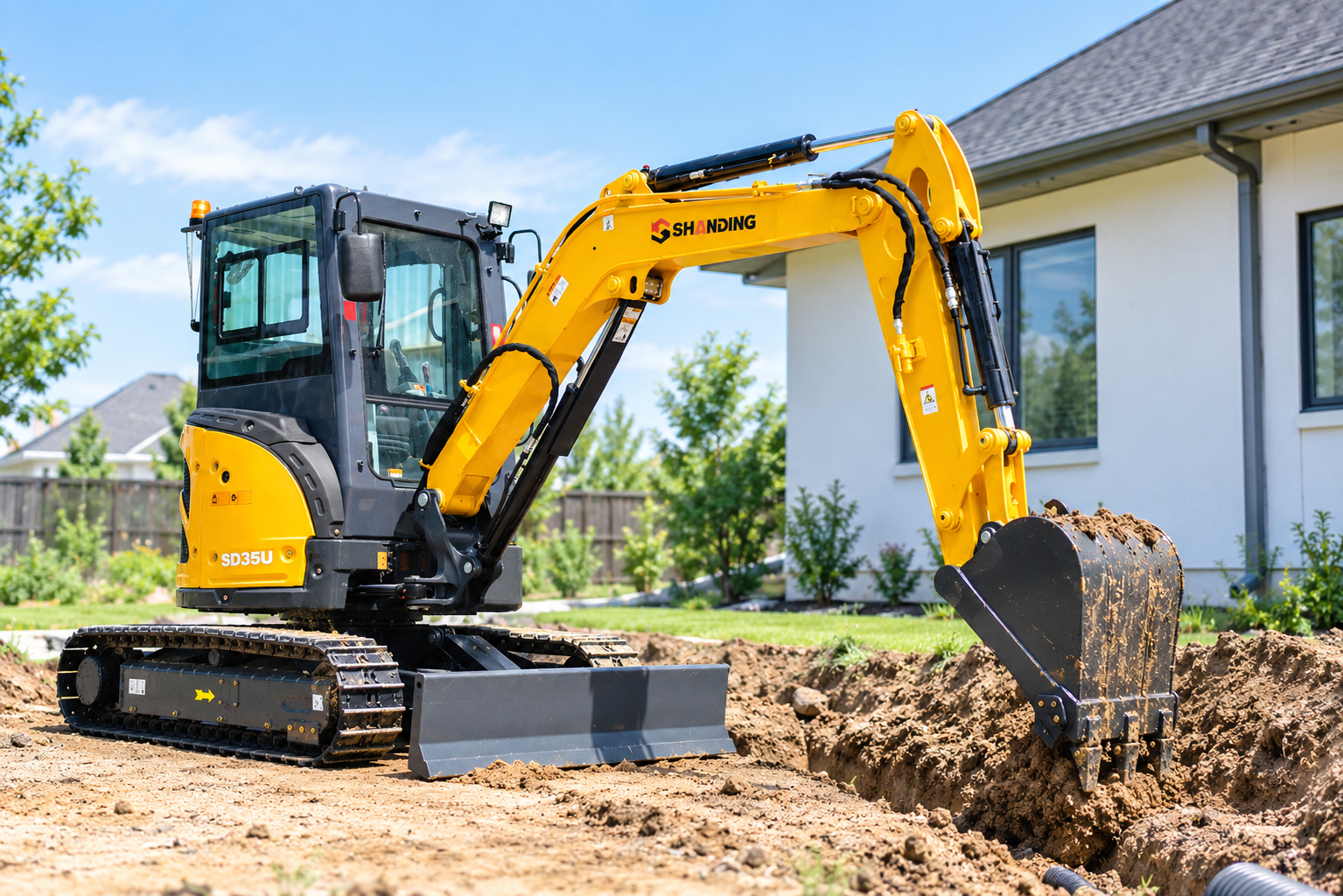
1. Evaluate the Available Working Space
Residential construction sites often have narrow access points, fences, buildings, and existing landscaping.
Before selecting a machine, measure the entrance width, working area, and available turning space.
A compact mini excavator with a narrow body and zero-tail-swing or reduced-tail-swing design can be advantageous in confined areas.
However, the machine’s overall width, tail swing radius, and operating clearance must all be considered.
2. Select the Appropriate Operating Weight
Mini excavators in different weight classes offer different balances between maneuverability, digging performance, and transport requirements.
- 1–2 ton class: Suitable for many small landscaping jobs, narrow-access projects, and light excavation tasks.
- 2–3 ton class: Often provides a practical balance of compact dimensions and digging capability for residential foundations, drainage, and utility trenches.
- Above 3 tons: May be more suitable for larger excavation volumes, deeper digging requirements, and heavier workloads when site access permits.
These ranges are general guidelines. The required digging depth, soil conditions, bucket capacity, and machine specifications should determine the final choice.
3. Check Digging Depth and Working Reach
Different residential tasks require different digging capabilities. Foundation preparation may demand greater digging depth, while drainage and utility installation require suitable trench dimensions and controlled excavation.
Compare the machine’s maximum digging depth, maximum digging reach, dumping height, and digging force with the project requirements.
Selecting a machine with insufficient reach may require frequent repositioning, while excessive capacity can increase acquisition and transport costs unnecessarily.
4. Consider Ground Conditions and Surface Protection
Residential sites may include grass, paving, soft soil, or recently finished landscaping. Rubber tracks can help reduce surface damage compared with steel tracks in suitable applications.
For soft or unstable ground, consider the machine’s operating weight, track width, and ground pressure.
Lower ground pressure can help distribute machine weight over a larger contact area, although actual performance also depends on soil strength and site conditions.
5. Match Attachments to the Job
The right attachment can expand a mini excavator’s versatility across residential projects.
- Narrow trenching bucket: For water pipes, drainage, and cable trenches.
- Standard digging bucket: For general excavation and soil removal.
- Grading bucket: For backfilling and surface leveling.
- Hydraulic breaker: For suitable concrete-breaking tasks, subject to hydraulic compatibility.
Always verify attachment weight, hydraulic flow, operating pressure, and machine compatibility before use.
6. Compare Total Operating Costs
The purchase price is only one part of the overall cost. Fuel consumption, routine maintenance, spare parts availability, transportation, and expected downtime all affect long-term operating expenses.
For contractors who frequently handle residential projects, a reliable machine with accessible service points and suitable after-sales support may provide better long-term value than a cheaper machine with higher maintenance demands.
Conclusion
Choosing the right mini excavator for residential construction requires balancing working-space limitations, operating weight, digging performance, ground conditions, attachment compatibility, and total ownership costs.
By matching these factors to the actual job requirements, contractors can select equipment that delivers efficient excavation while helping control costs and minimize site disturbance.
Explore Shanding’s mini excavator range to identify a suitable configuration for your residential construction projects.

