
Regular inspection helps maintain mini excavator performance, reduce unexpected downtime, and identify wear before it develops into a more serious failure.
Components exposed to friction, hydraulic pressure, vibration, and repeated loading generally require closer attention.
Inspection frequency should follow the manufacturer’s maintenance schedule and be adjusted according to operating hours, workload, and working conditions.
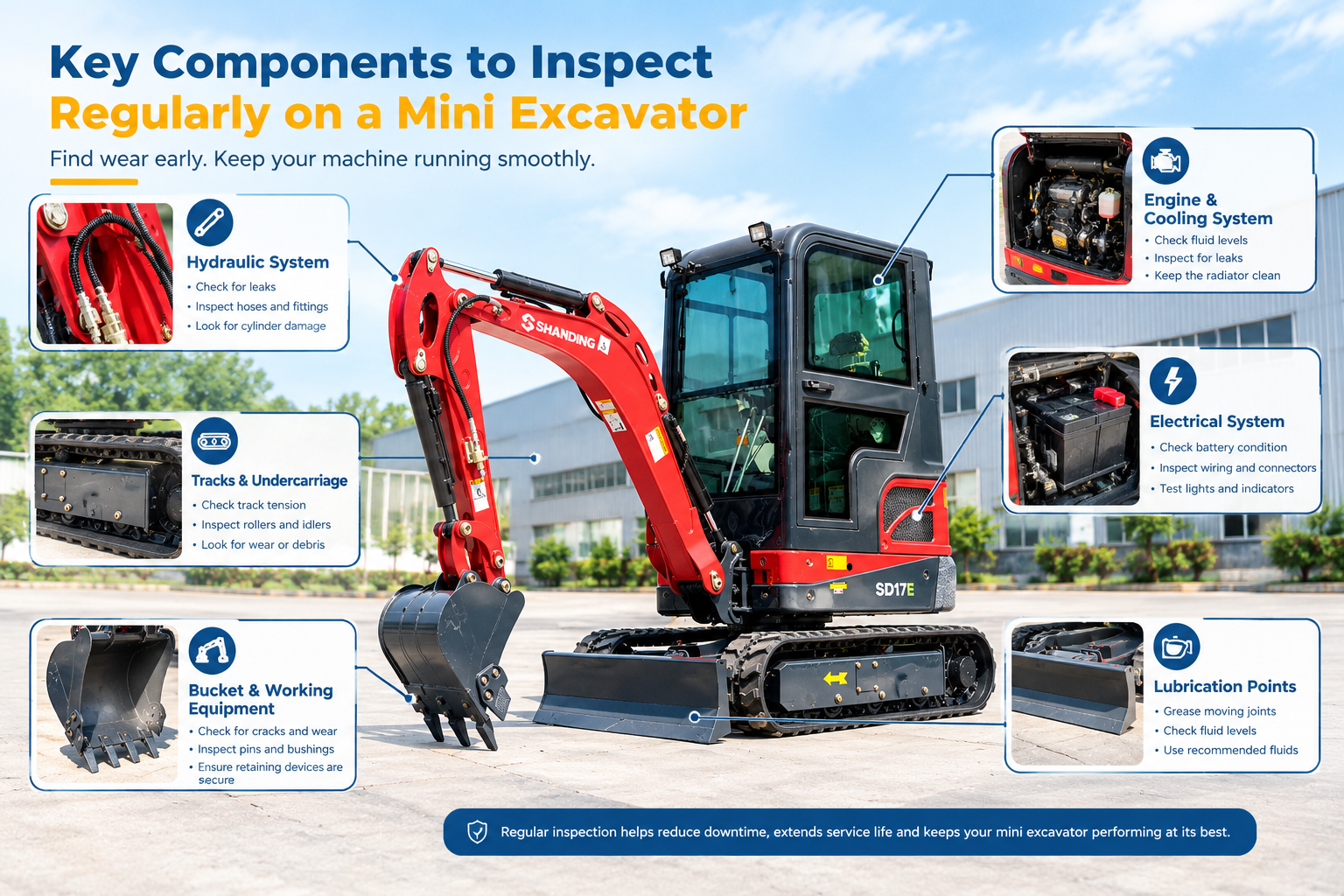
1. Hydraulic Hoses and Cylinders
Hydraulic hoses, fittings, and cylinders operate under pressure and are exposed to repeated movement.
Leaks, damaged hoses, loose connections, or scratched cylinder rods can reduce system efficiency and lead to equipment failure.
Check for oil leakage, hose cracks, damaged fittings, and abnormal cylinder movement.
Never use your hands to search for high-pressure hydraulic leaks.
2. Tracks and Undercarriage
Tracks, rollers, idlers, and sprockets experience continuous contact with the ground.
Abrasive soil, stones, and incorrect track tension can accelerate wear.
Inspect track tension, track condition, loose hardware, and accumulated debris.
Excessive tension increases component loading, while insufficient tension may increase the risk of track derailment.
3. Engine and Cooling System
The engine and cooling system are essential to reliable operation.
Low fluid levels, blocked cooling passages, or damaged hoses can contribute to overheating and reduced performance.
Before operation, check engine oil, coolant, visible leaks, air intake restrictions, and radiator cleanliness according to the operator’s manual.
4. Boom, Arm, Bucket, and Pins
These components withstand repeated digging forces and mechanical impacts.
Wear in pins and bushings can increase joint clearance, reduce control precision, and accelerate damage to connected parts.
Inspect welds, structural surfaces, pins, bushings, retaining devices, bucket teeth, and cutting edges. Investigate unusual movement, cracks, or abnormal noise promptly.
5. Electrical System and Battery
Electrical connections are vulnerable to vibration, moisture, corrosion, and loose terminals.
These problems may cause starting difficulties, warning indicators, or intermittent control faults.
Check battery condition, cable connections, wiring insulation, lights, switches, and warning systems.
Disconnect the battery only according to the manufacturer’s safety instructions.
6. Lubrication Points and Fluid Levels
Insufficient lubrication increases friction and wear in moving joints.
Contaminated or incorrect fluids can also affect component life and system performance.
Check grease points, engine oil, hydraulic oil, and coolant at the intervals specified by the manufacturer.
Use the recommended fluid types and keep service areas clean to reduce contamination.
7. How Often Should These Components Be Inspected?
A practical inspection routine can be organized into three levels:
- Before each shift:Check fluid levels, visible leaks, tracks, attachments, safety devices, and other items specified for daily inspection.
- At scheduled service intervals:Inspect wear, lubrication points, filters, fluid condition, and component clearances according to the maintenance manual.
- After severe operating conditions:Check for damage or abnormal wear after working in abrasive soil, muddy terrain, heavy workloads, or other demanding conditions.
Always follow the maintenance intervals specified for the particular model.
More demanding applications may require additional checks.
Conclusion
Hydraulic components, the undercarriage, engine and cooling system, working equipment, electrical connections, and lubrication points deserve regular attention on a mini excavator.
A consistent inspection routine helps identify early signs of wear, improve reliability, and reduce avoidable repair costs.
For long-term performance, combine routine visual checks with scheduled maintenance and prompt repairs based on the manufacturer’s recommendations.

