
When choosing a mini excavator, buyers often focus on operating weight, engine power, and digging depth.
However, maximum digging reach is another important specification that directly affects how efficiently a machine can complete different jobs.
Understanding digging reach can help contractors select a mini excavator that matches their working environment and project requirements.
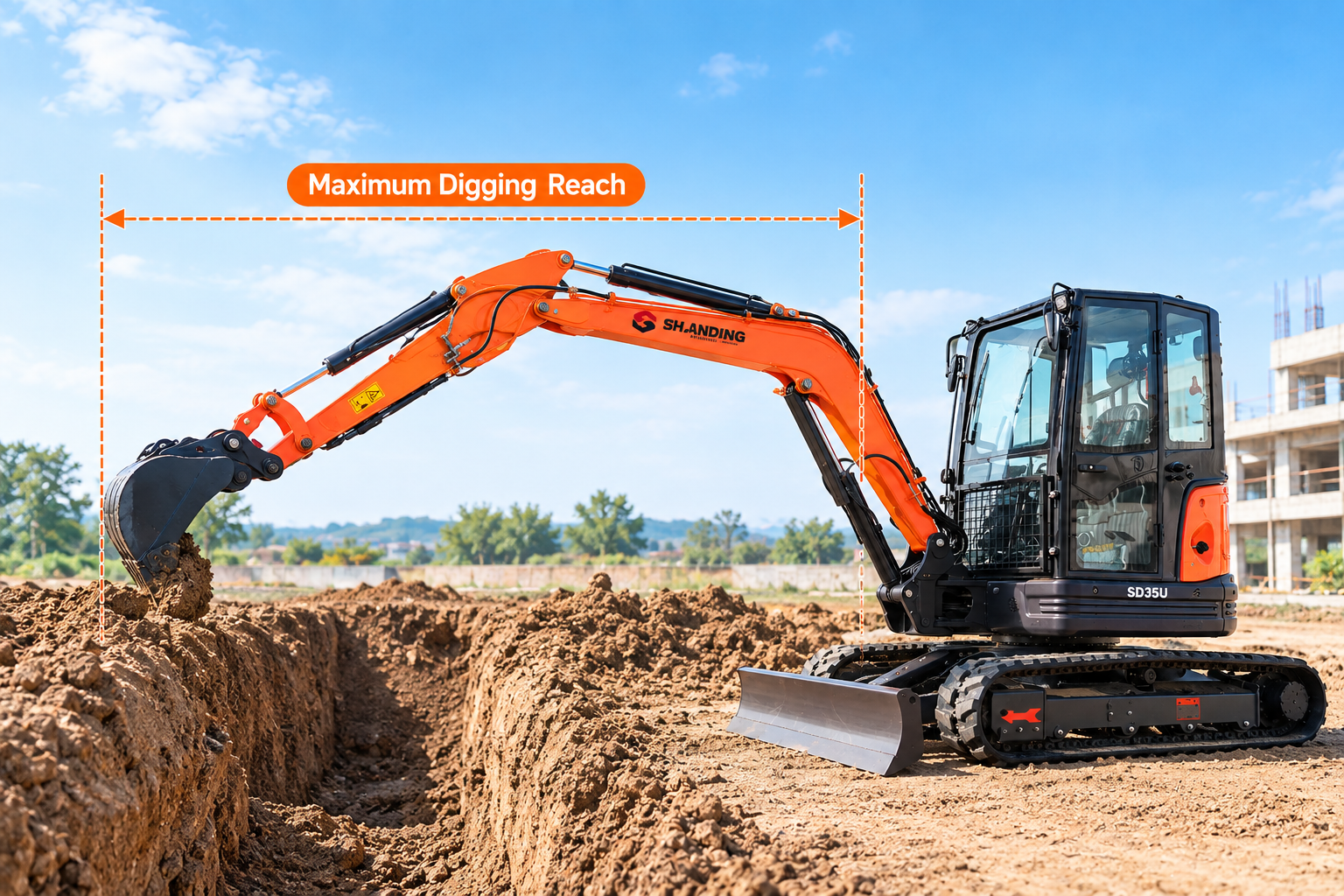
What Is Maximum Digging Reach?
Maximum digging reach refers to the greatest horizontal distance from the excavator’s working center to the furthest point the bucket can reach when the boom and arm are fully extended.
It determines how far the machine can work without repositioning.
A longer digging reach allows the operator to cover a larger working area from a single position, while a shorter reach may require the excavator to move more frequently.
Why Does Digging Reach Matter?
1.Reduces Machine Repositioning
A mini excavator with sufficient digging reach can complete more work from one operating position.
This reduces unnecessary movement and can improve overall productivity.
For trenching, landscaping, and foundation work, fewer repositioning cycles can make the operation more efficient.
2. Improves Access to Difficult Areas
Some jobs require digging beyond obstacles, beside structures, or from a limited working position.
Adequate digging reach allows the operator to access these areas without placing the entire machine directly beside the excavation.
This can be particularly useful on narrow construction sites and residential projects.
3. Supports More Efficient Trenching
For utility installation and drainage projects, digging reach affects how much trench can be excavated from a single position.
If the machine’s reach matches the required trench width and working distance, operators can spend less time repositioning and more time excavating.
4. Works Together With Other Specifications
Maximum digging reach should not be considered separately.
It works together with digging depth, dumping height, bucket capacity, operating weight, and swing capability.
For example, a machine may have a long maximum reach but still be unsuitable for a particular project if its digging depth or lifting capacity is insufficient.
Therefore, buyers should evaluate the complete working range rather than focusing on one specification.
How to Choose the Right Digging Reach
Before purchasing a mini excavator, consider:
- The maximum distance you need to excavate
- The width and layout of the job site
- Whether the machine will work around buildings or obstacles
- The required digging depth
- How often the machine will need to reposition
- The attachments that will be used
The ideal digging reach is not necessarily the longest available.
It is the reach that provides sufficient working coverage while maintaining suitable machine stability and maneuverability.
Conclusion
Maximum digging reach is an important specification because it determines how far a mini excavator can work from a given position.
A suitable reach can reduce repositioning, improve access to confined areas, and increase efficiency in applications such as trenching, landscaping, and foundation work.
When selecting a mini excavator, buyers should consider digging reach together with operating weight, digging depth, lifting capacity, and other working specifications.
Choosing the right combination helps ensure that the machine matches the actual requirements of the job.
For contractors and equipment buyers, understanding these specifications is an important step toward selecting a mini excavator that delivers practical performance on different job sites.

