
When choosing a mini excavator, maximum digging depth is one of the most important specifications to consider.
It directly affects whether a machine can handle trenching, drainage, foundation preparation, landscaping, and other excavation jobs.
But digging depth is not determined by machine size alone.
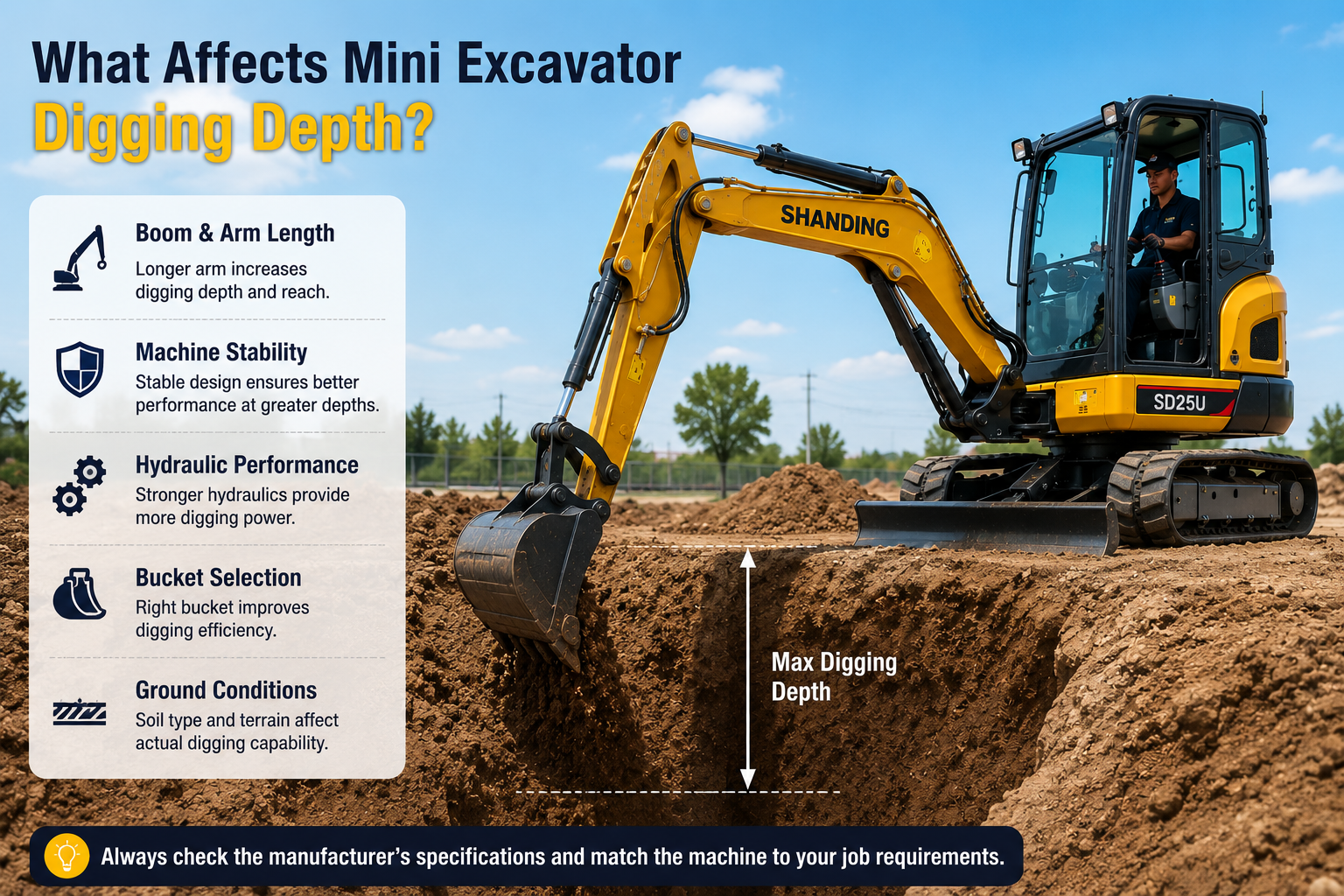
Boom and arm geometry, hydraulic performance, bucket configuration, machine stability, and ground conditions all influence the actual working depth.
How Deep Can a Mini Excavator Dig?
As a general reference, smaller mini excavators in the 1–3 ton class commonly provide around 1.5–2.5 m (5–8 ft) of digging depth.
Larger machines can typically reach deeper, with some 3–6 ton models reaching approximately 2.5–4 m (8–13 ft) depending on configuration.
However, buyers should always check the manufacturer’s specifications for the exact model.
For example, the Bobcat E16 lists a maximum digging depth of 2,230 mm, while the E27z lists 2,547 mm with its standard configuration.
What Determines Mini Excavator Digging Depth?
1. Boom and Arm Length
The boom and arm determine the machine’s working geometry.
A longer arm can increase digging depth and horizontal reach, although it may reduce digging or lifting force at maximum extension. Manufacturers may offer long-arm configurations for applications requiring additional reach.
2. Machine Size and Stability
Operating weight, counterweight, and undercarriage design affect stability when the bucket is extended deep into the ground.
A properly matched machine provides better control and digging performance at greater depths.
3. Hydraulic Performance
Hydraulic cylinders generate the force needed to move the boom, arm, and bucket.
Adequate hydraulic pressure and flow help the excavator penetrate and remove soil efficiently, particularly when working in compacted or difficult ground.
4. Bucket Selection
Bucket size and design can affect practical digging performance.
A narrow trenching bucket is often more suitable for utility trenches because it removes less soil per cycle and can work efficiently in confined spaces.
5. Ground Conditions
Rated digging depth is generally based on specified machine geometry and test conditions.
Hard clay, rocks, roots, uneven terrain, or wet ground can make reaching and maintaining maximum depth more difficult.
Match Digging Depth to the Job
The deepest possible specification is not always the best choice.
For landscaping and residential work, a compact machine with moderate digging depth may provide better maneuverability.
For utility trenching, drainage, foundation work, or deeper excavation, additional reach and digging depth become more important.
When comparing machines, look beyond maximum digging depth and also consider digging reach, vertical digging depth, bucket digging force, operating weight, and machine width.
Choose the Right Mini Excavator for Better Results
The right mini excavator should provide enough digging depth for the job while maintaining stability, hydraulic performance, and maneuverability.
Instead of selecting a machine only by its maximum depth, evaluate the complete working range and actual site requirements.
For manufacturers such as Shanding, providing clear working-range specifications helps buyers select the right mini excavator for different construction and landscaping applications.

