
The hydraulic system is the core power system of a mini excavator.
It converts engine power into hydraulic energy and then into the movement required for digging, lifting, swinging, traveling, and attachment operation.
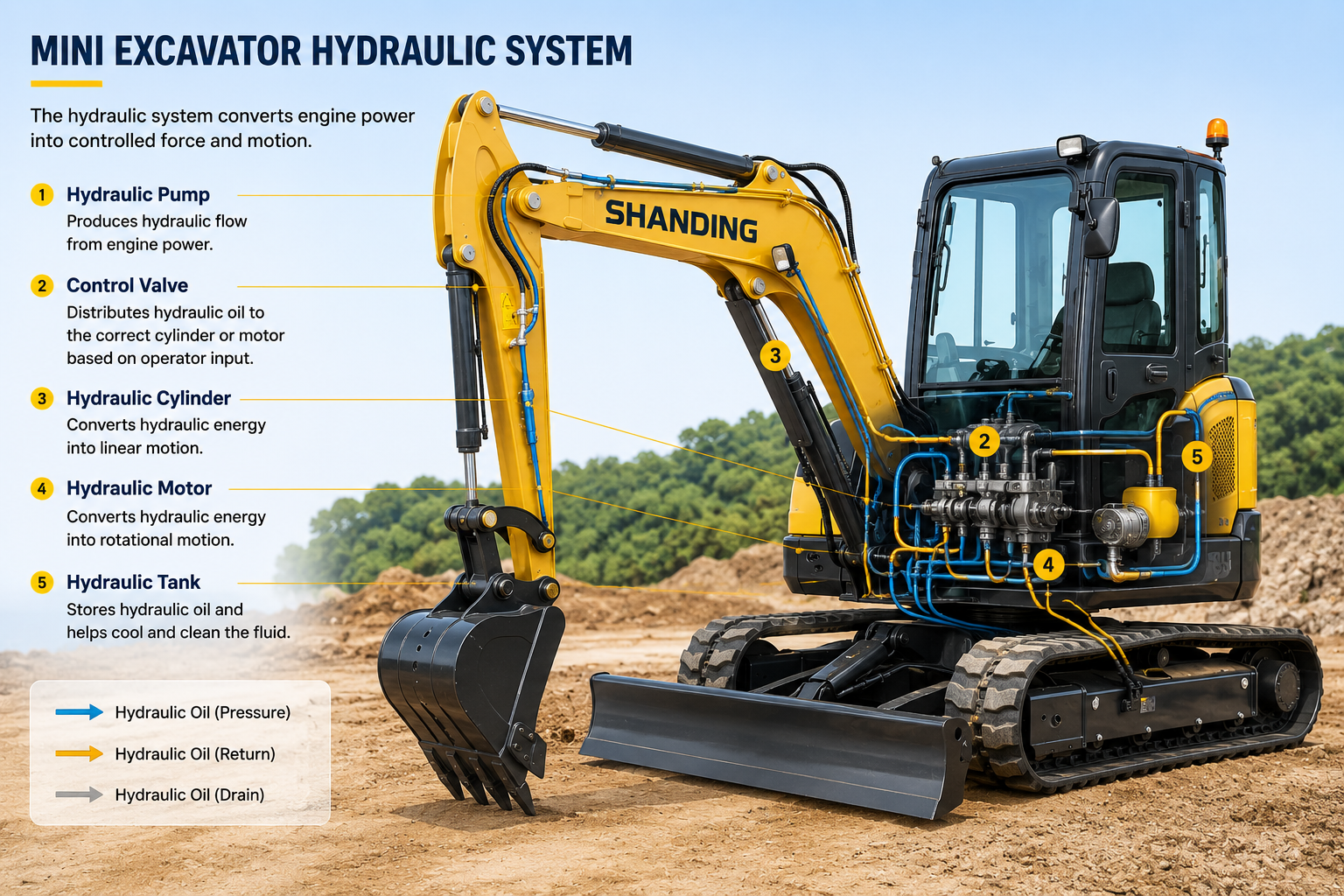
How Does the Hydraulic System Work?
The basic process can be understood as:
Engine → Hydraulic Pump → Control Valve → Hydraulic Actuator → Return to Tank
First, the engine drives the hydraulic pump.
The pump draws hydraulic oil from the tank and sends it through the hydraulic circuit.
When the operator moves a joystick, the control valve directs pressurized oil to the required hydraulic cylinder or motor.
The oil pressure then produces movement.
For example, when the operator raises the boom, hydraulic oil enters the boom cylinder and pushes the piston.
The cylinder extends, lifting the boom. After the movement, the oil returns through the hydraulic circuit and is reused.
Key Components of a Mini Excavator Hydraulic System
Hydraulic Pump
The pump provides hydraulic flow and transfers engine power into the hydraulic system.
Its performance directly affects machine responsiveness and working efficiency.
Control Valve
The control valve controls the direction and distribution of hydraulic oil.
It allows the operator to perform different movements, sometimes simultaneously.
Hydraulic Cylinders
Cylinders convert hydraulic pressure into linear force.
The boom, arm, and bucket commonly rely on hydraulic cylinders for movement.
Hydraulic Motors
Hydraulic motors create rotational movement and are mainly used for track travel and upper-structure swing.
Hydraulic Oil and Filters
Hydraulic oil transfers power while also helping lubricate and cool system components.
Filters remove contaminants, making oil cleanliness important for long-term hydraulic performance.
Pressure and Flow: What Is the Difference?
Two factors are particularly important in hydraulic performance.
Hydraulic pressure mainly determines force, while hydraulic flow mainly affects movement speed.
In simple terms, higher pressure can provide greater hydraulic force, while greater flow can allow an actuator to move faster when other conditions remain the same.
A well-designed mini excavator needs a suitable balance between pressure, flow, engine power, and machine size.
Simply increasing hydraulic pressure does not automatically mean better overall performance.
Why Hydraulic System Design Matters
A good hydraulic system should provide:
- Smooth and responsive controls
- Sufficient digging and lifting force
- Efficient power transmission
- Stable operation under load
- Reliable attachment performance
- Effective heat management
Hydraulic performance is particularly important when using attachments such as hydraulic breakers, augers, grapples, and trenchers because these tools depend on the excavator’s auxiliary hydraulic circuit.
How to Maintain Hydraulic Performance
Regular maintenance can help protect the hydraulic system.
Operators should check the hydraulic oil level, inspect hoses and fittings for leaks, replace filters according to the manufacturer’s maintenance schedule, and keep hydraulic components clean.
Unusual noise, slow movements, weak digging force, jerky operation, or excessive oil temperature may indicate a hydraulic problem and should be inspected promptly.
Conclusion
A mini excavator hydraulic system works by converting engine power into controlled hydraulic energy.
The pump generates oil flow, valves distribute it, and cylinders or motors transform that energy into machine movement.
For buyers, understanding this basic principle makes it easier to evaluate a mini excavator beyond engine horsepower and operating weight. A properly matched hydraulic system is essential for power, precision, efficiency, and long-term reliability.

