
Mini excavators are designed for long-term performance, but their actual lifespan depends on more than just the number of years they are used. In the construction equipment industry, service life is typically measured in operating hours rather than calendar years.
A well-maintained mini excavator can often achieve 7,000–10,000 working hours or more, while poor maintenance and improper operation can significantly shorten its lifespan.
So, what determines how long a mini excavator will last? Here are the key factors every buyer should understand.
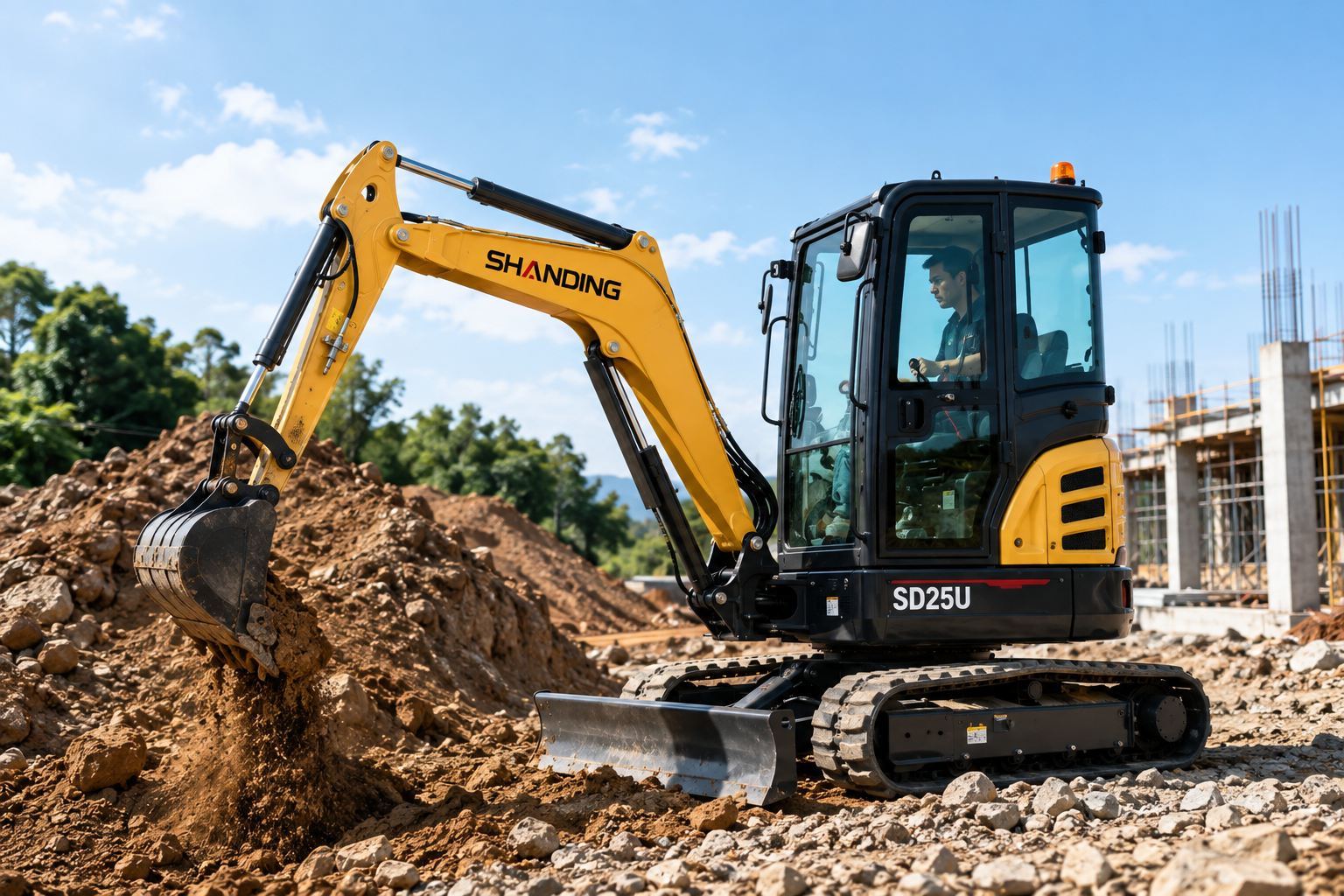
1. Build Quality and Component Reliability
The foundation of a long-lasting mini excavator is its manufacturing quality.
High-strength steel structures, durable hydraulic components, precision welding, and reliable engines all contribute to extended service life.
A machine built with reinforced booms, quality hydraulic systems, and strict quality control is generally more resistant to fatigue, wear, and heavy-duty operation.
Structural strength is especially important because cracks or frame deformation can significantly reduce machine longevity.
2. Regular Maintenance
Maintenance is widely recognized as the most important factor affecting excavator lifespan.
Routine servicing helps prevent small issues from becoming costly repairs.
Key maintenance practices include:
- Changing engine oil and filters on schedule
- Replacing hydraulic oil and filters as recommended
- Lubricating pins and bushings regularly
- Checking track tension and undercarriage wear
- Inspecting hoses, seals, and hydraulic connections
Machines that follow a consistent maintenance schedule often exceed expected service life, while neglected equipment may experience major failures much earlier.
3. Operating Conditions
The working environment has a direct impact on wear rates.
For example:
- Landscaping and agricultural work typically create less stress.
- Rock excavation, demolition, and heavy-duty trenching increase component wear.
- Dust, mud, extreme temperatures, and abrasive materials accelerate deterioration.
Machines operating in harsh conditions require more frequent inspections and maintenance to maintain long-term reliability.
4. Operator Skill and Working Habits
Even the best machine can suffer premature wear if operated incorrectly.
Common practices that reduce service life include:
- Overloading the machine
- Sudden starts and stops
- Excessive use of hydraulic breakers
- Operating at maximum capacity continuously
- Ignoring daily inspections
Professional operators use smoother movements, follow load limits, and perform routine checks, helping reduce stress on hydraulic systems, pins, bushings, and undercarriage components.
5. Hydraulic System Health
The hydraulic system is often considered the heart of a mini excavator. Hydraulic pumps, valves, cylinders, and hoses work together to generate digging power.
Contaminated hydraulic oil, overheating, or delayed filter replacement can lead to premature pump wear and reduced efficiency.
Maintaining clean hydraulic fluid and replacing filters on time helps maximize machine performance and lifespan.
6. Undercarriage Maintenance
The undercarriage experiences constant contact with the ground and is one of the most heavily stressed areas of the machine.
To extend undercarriage life:
- Clean mud and debris regularly
- Maintain proper track tension
- Avoid excessive travel on abrasive surfaces
- Inspect rollers, sprockets, and idlers periodically
Proper undercarriage care reduces operating costs and helps maintain overall machine stability.
How to Extend the Service Life of Your Mini Excavator
To maximize return on investment, owners should focus on three principles:
- Follow the manufacturer’s maintenance schedule.
- Train operators in proper machine operation.
- Use quality replacement parts and fluids.
When these practices are combined with a reliable machine, a mini excavator can provide years of dependable service while minimizing downtime and repair costs.
Conclusion
The lifespan of a mini excavator is influenced by build quality, maintenance, operating conditions, operator behavior, hydraulic system health, and undercarriage care.
While many machines can achieve 7,000–10,000 working hours or more, long-term performance ultimately depends on how the equipment is maintained and operated.
Investing in a high-quality mini excavator and following proper maintenance practices will help ensure maximum productivity and value throughout its service life.

