
In the global construction equipment market, Chinese mini excavator manufacturers have significantly improved their reputation in recent years.
One of the key reasons behind this progress is a more structured and systematic approach to quality control.
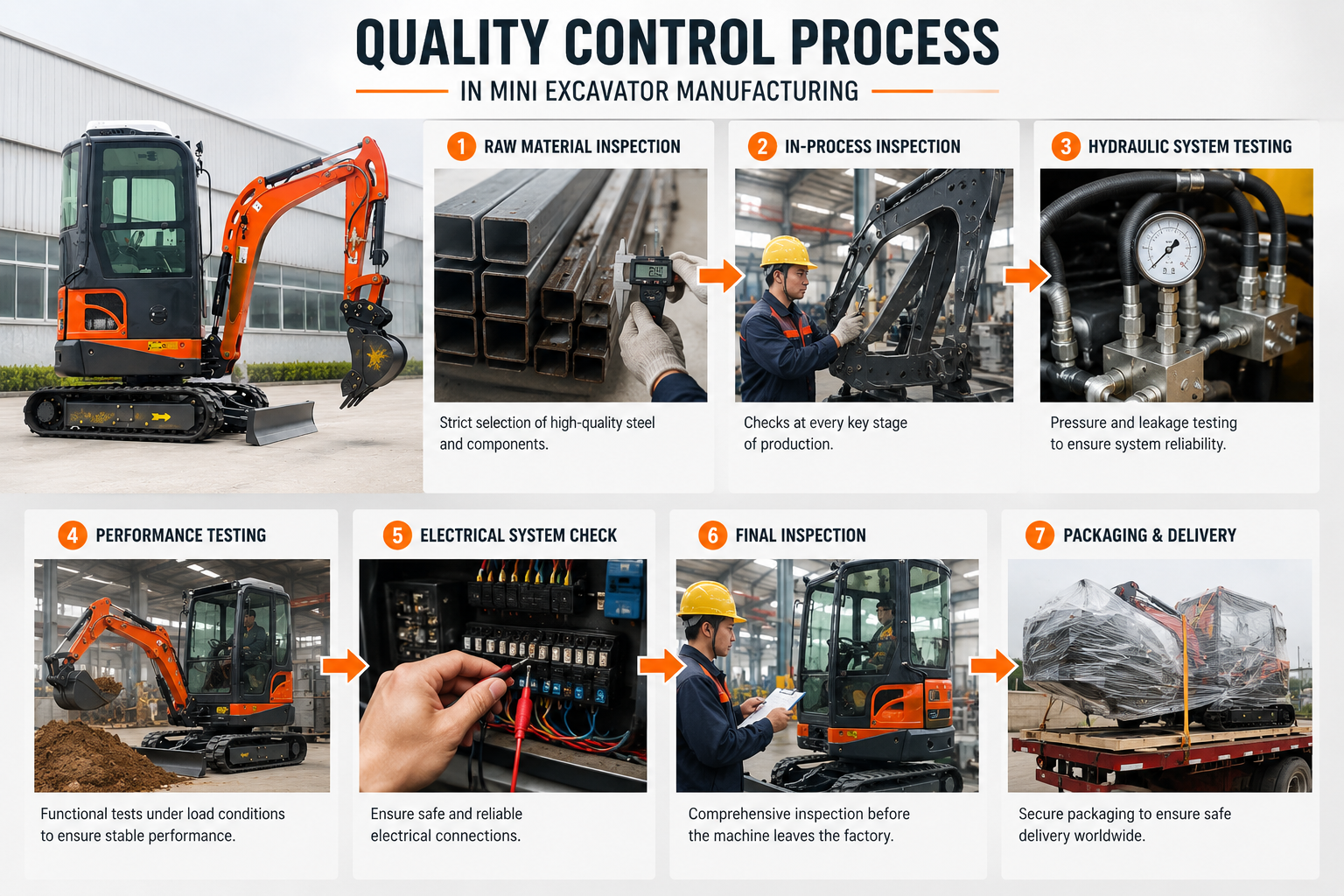
Rather than relying on final inspection alone, modern factories apply multi-stage quality assurance systems that integrate engineering standards, process control, and real-world performance testing.
1. Standardized Production Systems Based on Engineering Principles
Most professional manufacturers follow internationally recognized quality frameworks such as ISO 9001. These systems are built on process control theory, which emphasizes consistency over individual inspection.
In mini excavator production, this means every step—from welding the frame to assembling hydraulic systems—is governed by standardized operating procedures (SOPs). The goal is to reduce variability, which is a primary cause of mechanical failure in heavy equipment.
By controlling inputs (materials and processes), manufacturers can stabilize outputs (machine performance and durability).
2. Strict Raw Material Selection and Supplier Management
Quality control begins long before assembly. Reliable manufacturers apply supplier qualification systems, where steel, hydraulic components, engines, and seals are sourced only from certified suppliers.
Materials are often tested for:
- Tensile strength (for structural steel)
- Heat resistance (for hydraulic seals)
- Pressure endurance (for hoses and cylinders)
This step is critical because material failure in excavators usually occurs under high-load, cyclic working conditions. Poor material selection can significantly shorten machine lifespan.
3. In-Process Quality Control
Unlike traditional end-of-line inspection, modern factories apply in-process quality control at multiple production stages.
Key checkpoints include:
- Frame welding accuracy measurement using laser alignment tools
- Hydraulic system pressure testing during assembly
- Electrical wiring continuity and insulation testing
This approach is based on statistical process control (SPC), which identifies defects early and reduces cumulative production errors.
4. Final Performance Testing Under Load Conditions
After assembly, each mini excavator undergoes functional testing that simulates real working environments.
Typical tests include:
- Full hydraulic load operation
- Arm and boom cycle durability testing
- Turning and travel system stress tests
- Leakage and temperature stability checks
These tests ensure that the machine is not only assembled correctly but also performs reliably under continuous workload conditions.
5. Continuous Improvement and Feedback Loops
Modern manufacturers apply the PDCA (Plan–Do–Check–Act) cycle to continuously improve product quality.
Feedback comes from:
- Dealer reports
- End-user operational data
- After-sales maintenance records
This data-driven approach helps engineers identify recurring issues and refine design or production processes accordingly.
6. Skilled Workforce and Digital Manufacturing Support
Quality is also dependent on human expertise. Many factories invest heavily in technician training programs, especially in welding, hydraulic assembly, and electrical systems.
At the same time, digital tools such as CNC machining, automated welding systems, and real-time production monitoring reduce human error and increase precision.
The combination of skilled labor and automation creates a balanced manufacturing environment where consistency is easier to maintain.
Conclusion
Quality control in Chinese mini excavator manufacturing is no longer a single inspection step—it is a multi-layered system built on engineering standards, material science, process control, and continuous improvement.
As a result, modern machines are increasingly competitive in durability, performance, and reliability across global markets.
For buyers, understanding these systems helps evaluate manufacturers more objectively and choose equipment that delivers long-term value rather than just low upfront cost.

