
Choosing a mini excavator for the first time can feel complex, especially with different sizes, specs, and brands on the market. A structured decision approach helps avoid overpaying or selecting a machine that doesn’t match real job needs.
This guide breaks the process down using basic engineering and equipment-selection logic commonly applied in construction planning.
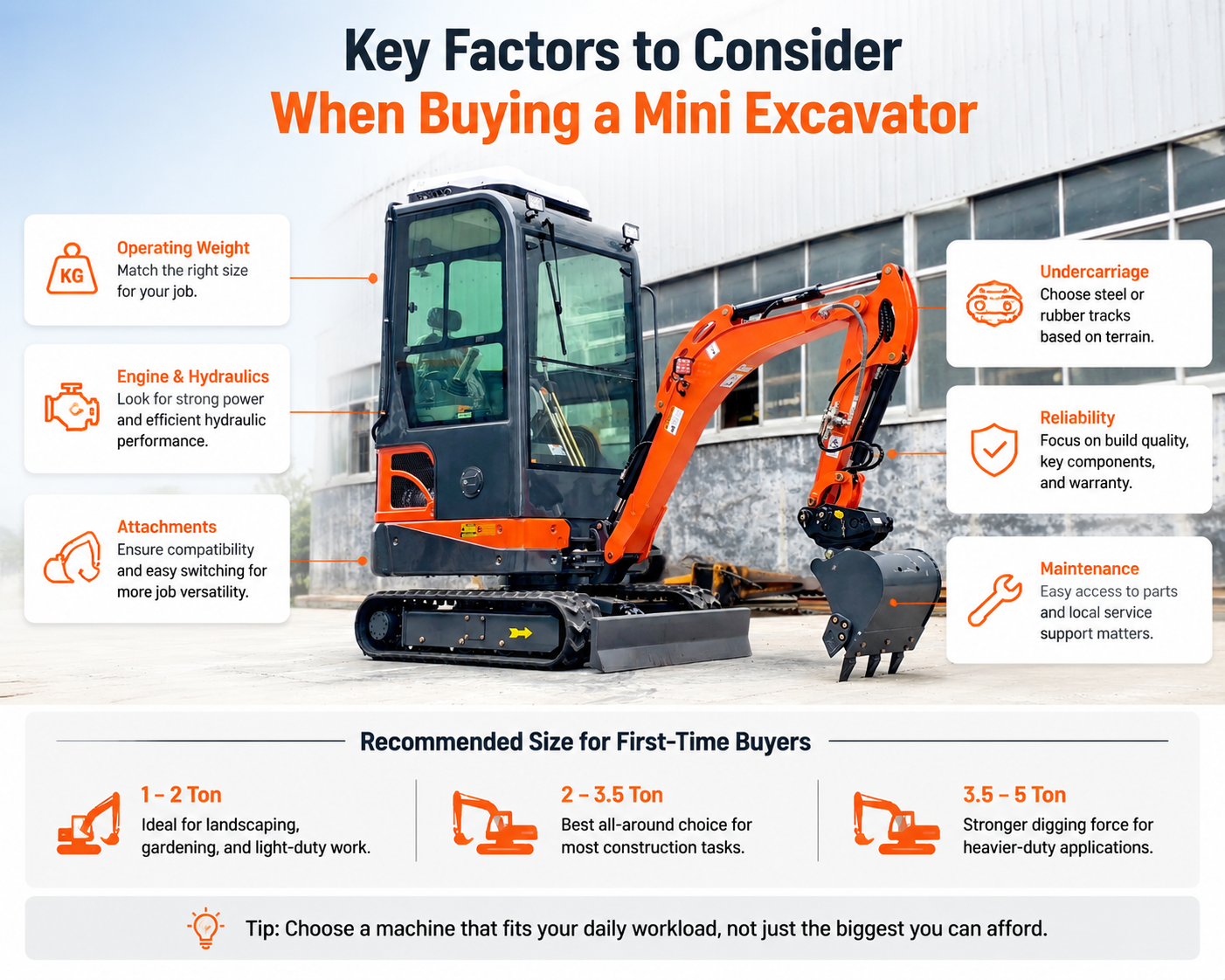
1. Define Your Workload (Core Principle: “Application Matching”)
In equipment selection theory, the most important rule is task-load matching: the machine should be sized according to typical working conditions, not maximum occasional demand.
Ask these questions:
- What type of work? (digging, trenching, landscaping, demolition)
- Soil condition? (soft soil, clay, gravel, mixed ground)
- Work space size? (tight urban areas vs open sites)
- Daily working hours?
👉 Example:
- Landscaping → 1–2 ton mini excavator
- Small construction → 2–3.5 ton
- Light infrastructure → 3.5–5 ton
If the machine is oversized, it reduces efficiency and increases fuel cost. If undersized, it increases cycle time and wear.
2. Choose the Right Operating Weight (Stability vs Mobility Balance)
Operating weight directly affects stability and lifting force, based on basic mechanics:
Greater mass = higher ground stability but lower transport flexibility
Key ranges:
- 1–2 tons: highly flexible, limited digging force
- 2–3.5 tons: balanced performance (most popular category)
- 5–5 tons: stronger digging power, reduced maneuverability
👉 First-time buyers usually perform best in the 2–3.5 ton range, as it balances cost, power, and transportability.
3. Engine Power and Hydraulic System (Efficiency Factor)
Mini excavators rely mainly on hydraulic transmission efficiency, not just engine horsepower.
Important indicators:
- Engine power (kW/HP)
- Hydraulic flow rate (L/min)
- Pump type (gear vs piston)
A stronger hydraulic system improves:
- Digging force
- Arm speed consistency
- Multi-function attachment performance
👉 Theory note: Hydraulic output efficiency determines “usable work capacity,” not just engine size.
4. Check Attachments Compatibility (Functional Expansion Principle)
Modern mini excavators are multi-tool platforms. Productivity depends on attachment compatibility.
Common attachments:
- Bucket (standard digging)
- Auger (drilling)
- Hydraulic breaker (demolition)
- Ripper (hard soil breaking)
👉 First-time buyers should ensure:
- Quick coupler availability
- Standard hydraulic piping
- Easy attachment switching system
This directly affects long-term ROI (return on investment).
5. Undercarriage Type (Terrain Adaptation)
The undercarriage determines ground interaction behavior:
- Steel track: better durability, higher traction
- Rubber track: less surface damage, ideal for urban or residential areas
Theory basis:
Ground pressure distribution affects machine stability and soil disturbance
Lower ground pressure = less sinking in soft soil.
6. Maintenance and Serviceability (Lifecycle Cost Principle)
Buying cost is only part of total ownership cost. A better metric is:
Total Cost of Ownership (TCO)
Consider:
- Easy access to filters and engine parts
- Availability of spare parts
- Hydraulic system simplicity
- Local service support
A machine that is easy to maintain reduces downtime and increases productivity over its lifecycle.
7. Brand Reliability and Manufacturing Quality
For first-time buyers, consistency matters more than extreme performance specs.
Evaluate:
- Welding quality and structural reinforcement
- Hydraulic component brand (pump, valve, motor)
- Factory testing standards
- Warranty terms
Stable manufacturing quality reduces unexpected repair risks.
Conclusion
A good mini excavator purchase is not about choosing the biggest or cheapest machine—it is about matching engineering parameters with real job requirements.
A practical decision formula is:
Application Needs + Operating Weight Balance + Hydraulic Efficiency + Maintenance Cost Control
For most first-time buyers, a 2–3.5 ton mini excavator with reliable hydraulics and simple maintenance design is the most balanced and risk-free starting point.

