
Mini excavators are widely used in construction, landscaping, agriculture, and municipal projects due to their flexibility and efficiency in confined spaces.
However, like all heavy machinery, their long-term performance depends heavily on proper maintenance practices.
From an engineering perspective, most premature failures in mini excavators are not caused by manufacturing defects, but by lubrication breakdown, hydraulic contamination, thermal stress, and improper load management.
Understanding these mechanisms is the key to extending machine life and reducing operating costs.
This article provides a structured maintenance guide based on mechanical principles and field-proven maintenance standards used in construction equipment engineering.
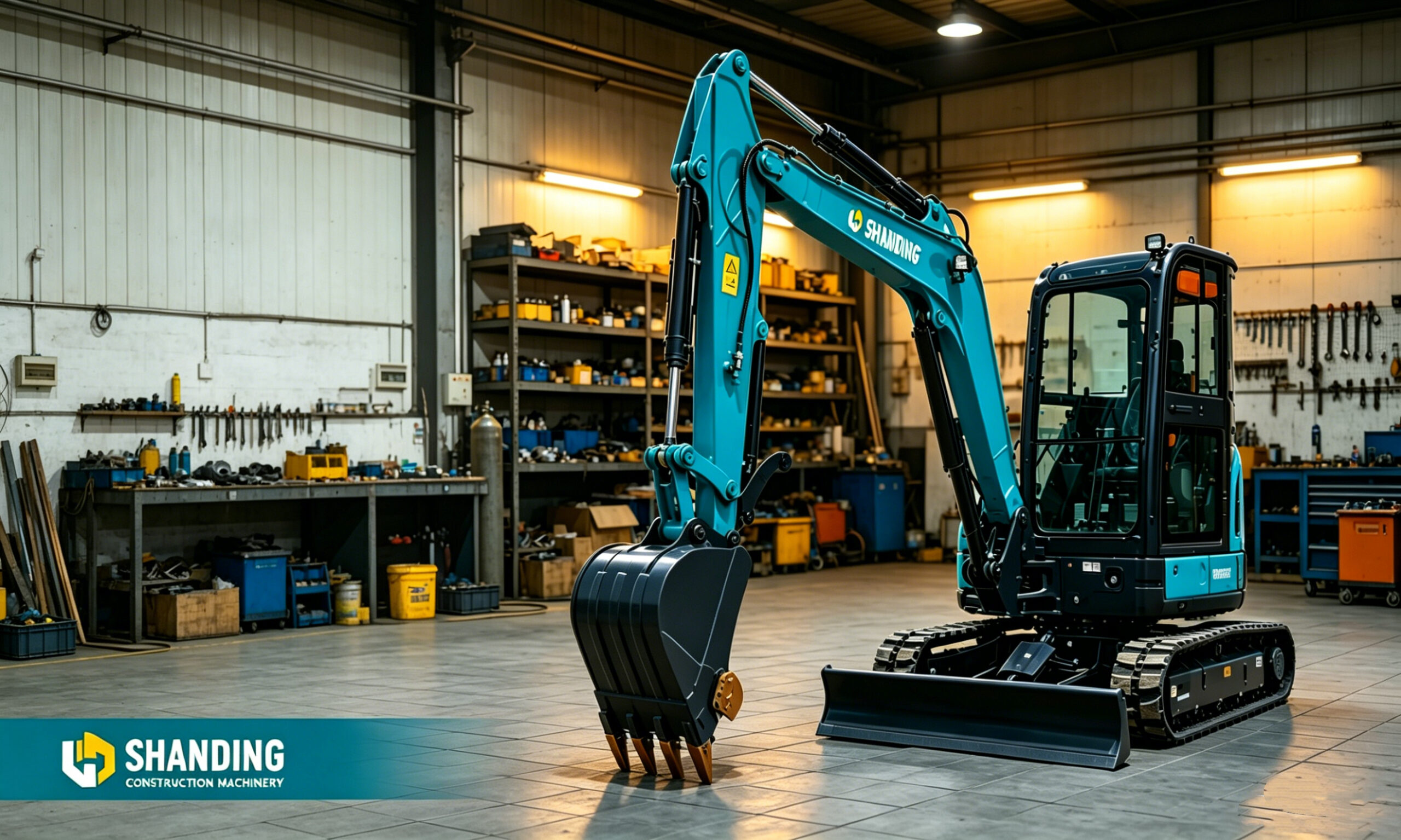
1. Why Maintenance Matters: The Engineering Principle Behind Machine Longevity
A mini excavator is a system composed of three critical subsystems:
- Hydraulic system (power transmission)
- Mechanical structure (load-bearing components)
- Power unit (engine and drivetrain)
According to tribology (the science of friction and wear), more than 70% of mechanical failures in hydraulic machinery originate from contamination and insufficient lubrication.
Even microscopic particles in oil can accelerate wear in pumps, valves, and cylinders.
Therefore, maintenance is not just “routine service”—it is contamination control and stress management.
2. Hydraulic System Maintenance: The Core of Excavator Health
The hydraulic system is the heart of a mini excavator. It converts engine power into controlled mechanical movement.
Key maintenance practices:
- Regular hydraulic oil replacement
Hydraulic oil degrades over time due to oxidation and thermal breakdown. High temperature accelerates viscosity loss, reducing efficiency and lubrication capacity. - Filter replacement based on pressure differential
Filters should not only be changed by time intervals but also by pressure indicators. A clogged filter increases backpressure and can damage the pump. - Avoid mixing hydraulic oils
Different oil formulations may contain incompatible additives, leading to sludge formation and valve sticking.3. Engine Maintenance: Combustion Efficiency and Thermal Stability
The engine provides the primary mechanical energy source. Long-term performance depends on maintaining combustion efficiency and thermal balance.
Key maintenance practices:
- Air filter cleaning/replacement
Dust accumulation reduces air-fuel ratio efficiency, leading to incomplete combustion and carbon deposits. - Fuel system cleanliness
Diesel contamination introduces water and particulates, which affect injector spray patterns and combustion quality. - Cooling system monitoring
Overheating leads to thermal expansion stress, which can cause gasket failure or cylinder deformation over time.
Engineering insight:
Internal combustion engines operate within narrow thermal efficiency windows. Even a 10–15°C increase in operating temperature can significantly reduce component lifespan due to accelerated oxidation and material fatigue.
4. Undercarriage and Structural Wear: Load Distribution Science
The undercarriage system (tracks, rollers, sprockets) carries the full machine load and is subject to continuous ground contact stress.
Key maintenance practices:
- Track tension adjustment
Over-tight tracks increase friction losses and accelerate wear. Loose tracks increase derailment risk. - Regular cleaning of mud and debris
Soil buildup increases abrasive wear between moving components. - Roller and sprocket inspection
Uneven wear often indicates improper load distribution or misalignment.
5. Hydraulic Cylinder and Seal Protection: Preventing Micro-Leakage
Hydraulic cylinders convert fluid pressure into linear motion and rely heavily on seal integrity.
Key maintenance practices:
- Inspect rod surface for scratches or corrosion
- Avoid operation in highly abrasive environments without protection
- Clean cylinder rods before retraction
Engineering insight:
Seal failure often begins with micro-scratches that allow high-pressure fluid bypass. Once leakage starts, pressure imbalance accelerates seal degradation exponentially.
Conclusion
Long-term performance of a mini excavator is not determined by a single factor, but by a combination of fluid cleanliness, thermal control, mechanical load management, and operator behavior.
From an engineering standpoint, maintenance should be viewed as a process of controlling wear mechanisms rather than simply replacing parts. Machines that are properly maintained can often achieve service lives far beyond their expected operational cycles while maintaining stable performance.
For construction companies and equipment owners, a structured maintenance strategy is not just a cost-saving measure—it is a direct investment in productivity and asset reliability.
- Air filter cleaning/replacement

