
Fuel costs represent a significant portion of the operating expenses for mini excavator owners.
Whether you are working in construction, landscaping, agriculture, or utility projects, improving fuel efficiency can help reduce operating costs, extend machine life, and increase overall profitability.
While modern mini excavators are designed to be fuel-efficient, operator habits, maintenance practices, and jobsite planning all play critical roles in determining actual fuel consumption.
This article explores proven strategies to reduce fuel usage in mini excavators while maintaining productivity and performance.
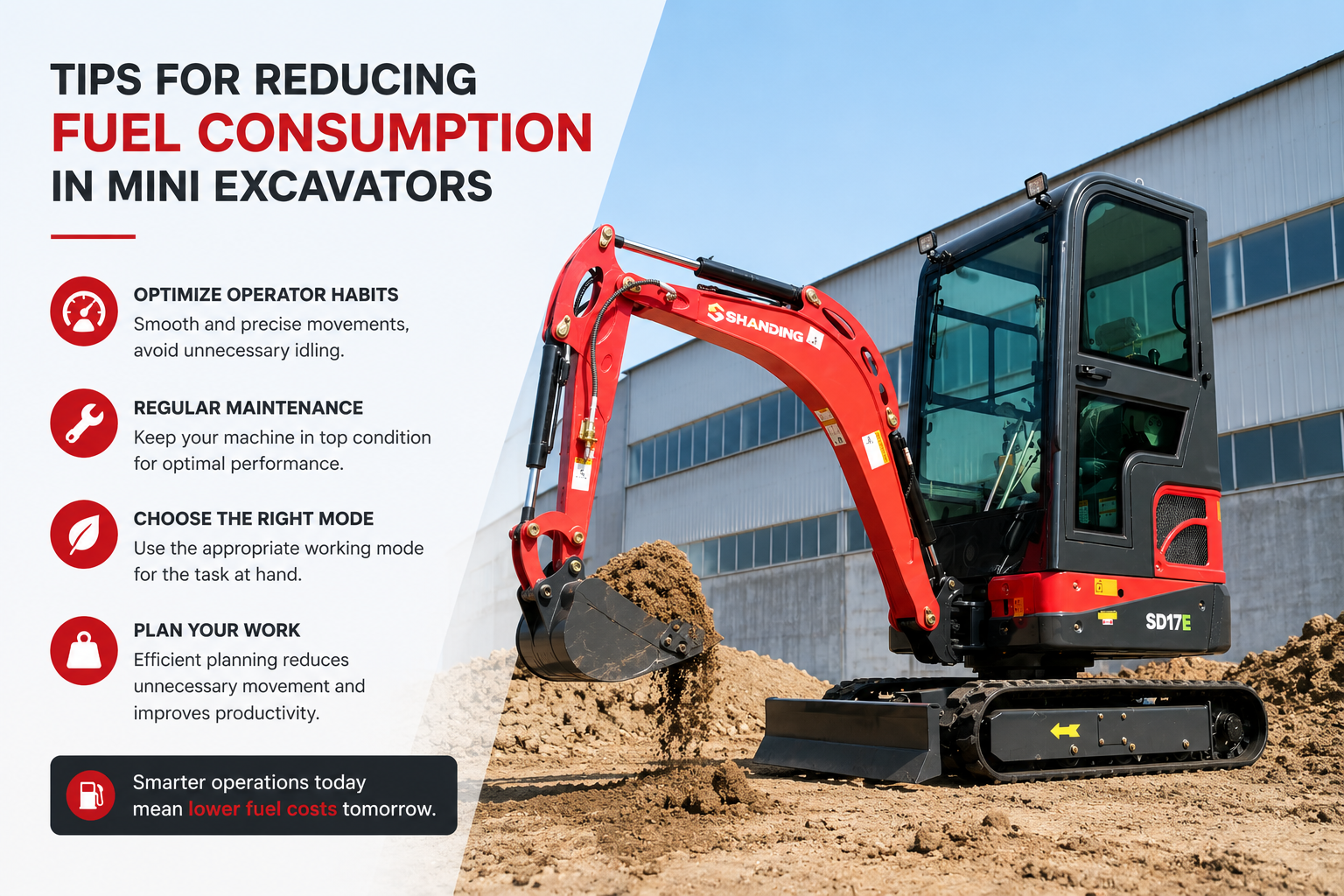
Why Fuel Efficiency Matters
Fuel consumption directly affects the total cost of ownership of a mini excavator. Studies in construction equipment management have shown that fuel expenses can account for up to 30% of a machine’s operating costs over its lifetime.
Reducing unnecessary fuel usage not only lowers expenses but also decreases carbon emissions and supports sustainable construction practices.
By adopting efficient operating techniques and maintenance routines, operators can often reduce fuel consumption by 10–20% without sacrificing productivity.
Choose the Right Excavator Size for the Job
One of the most common mistakes is using a machine that is larger than necessary. Larger excavators consume more fuel because they have bigger engines and hydraulic systems.
Before starting a project, consider:
- Digging depth requirements
- Material type and volume
- Jobsite space limitations
- Attachment compatibility
Selecting the appropriate machine size ensures that engine power is utilized efficiently rather than wasted.
Avoid Excessive Engine Idling
Engine idling is one of the biggest contributors to fuel waste. Even when no work is being performed, a diesel engine continues consuming fuel.
Best Practices:
- Turn off the engine during long breaks.
- Use automatic idle reduction systems if equipped.
- Avoid warming up the machine longer than recommended by the manufacturer.
Many modern mini excavators can reduce engine speed automatically when controls are inactive, significantly lowering fuel consumption.
Operate at Optimal Engine Speed
Running the engine at maximum RPM throughout the day does not always improve productivity.
Most digging and grading tasks can be completed efficiently at moderate engine speeds.
Operating within the machine’s optimal power range allows the hydraulic system to work effectively while consuming less fuel.
Benefits of Proper Engine Speed:
- Lower fuel consumption
- Reduced engine wear
- Less heat generation
- Longer component life
Operators should match engine speed to the specific task rather than continuously operating at full throttle.
Maintain the Hydraulic System
The hydraulic system is the heart of a mini excavator. Hydraulic inefficiencies force the engine to work harder, increasing fuel consumption.
Regular maintenance should include:
- Checking hydraulic oil levels
- Replacing hydraulic filters on schedule
- Inspecting hoses for leaks
- Monitoring hydraulic pressure
Even small hydraulic leaks can lead to noticeable fuel losses over time because the engine must compensate for reduced system efficiency.
Use the Correct Attachments
Attachments affect machine performance and fuel consumption. Oversized or poorly matched attachments place additional strain on the hydraulic system.
Choose attachments that are:
- Properly sized for the machine
- Suitable for the application
- Well maintained
For example, a correctly sized bucket can move more material per cycle while requiring less energy than an oversized alternative.
Conclusion
Reducing fuel consumption in mini excavators is not simply about using less fuel—it is about maximizing efficiency. Choosing the right machine, minimizing idle time, maintaining hydraulic and engine systems, planning jobs effectively, and training operators can all contribute to substantial fuel savings.
For contractors, farmers, landscapers, and equipment rental businesses, even small improvements in fuel efficiency can lead to significant cost reductions over the life of a machine.
By implementing these best practices, operators can improve productivity, lower operating expenses, and extend the service life of their mini excavators. At Shanding Machinery, our mini excavators are engineered with fuel-efficient hydraulic systems, reliable engines, and durable components to help customers achieve maximum productivity with lower operating costs.
Contact us today to learn more about our complete range of mini excavators for construction, agriculture, and landscaping applications.

